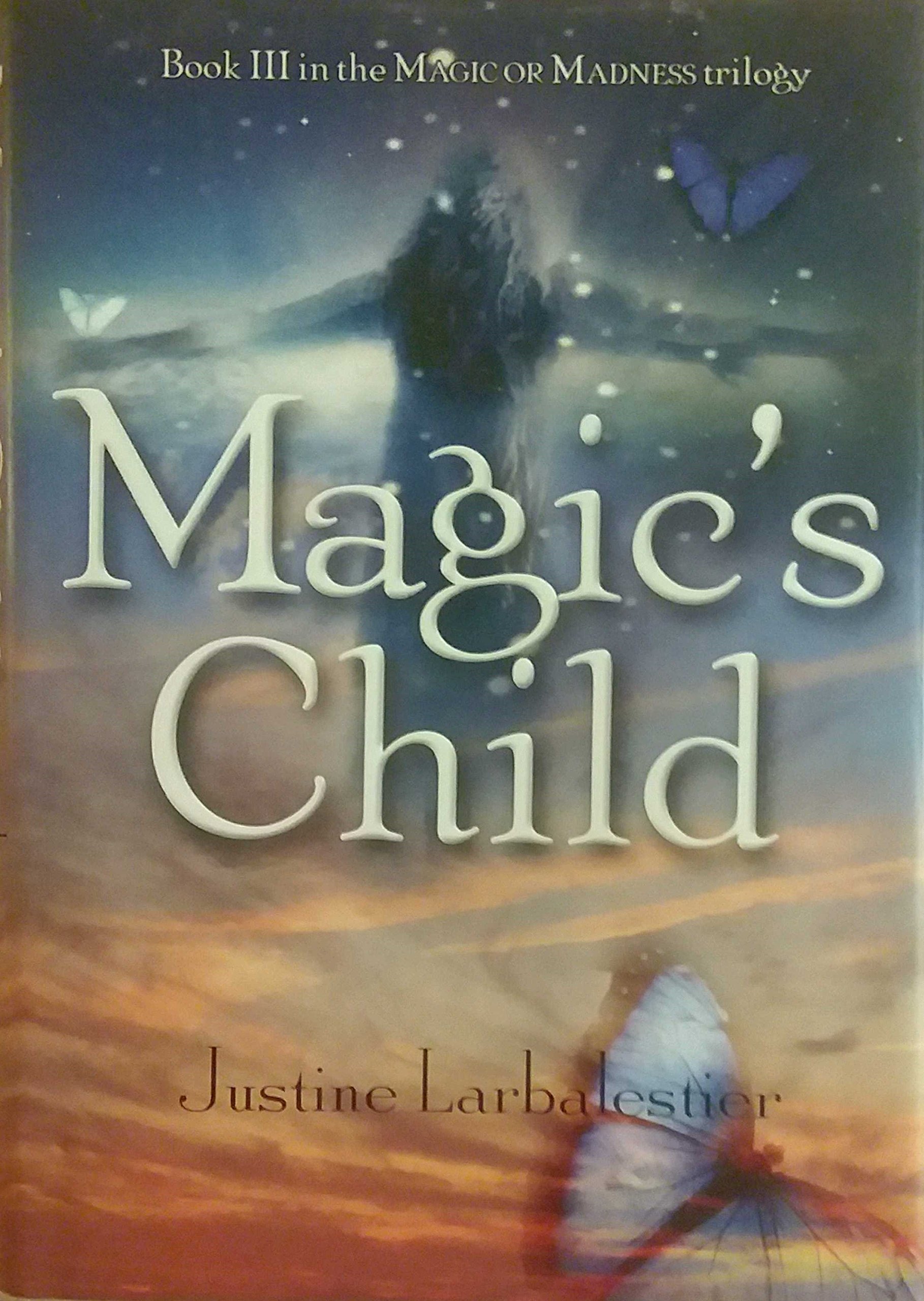



When her mother goes missing from the mental hospital in Sydney and her best friend is exhausted to the point of death from using all her magic, Reason Cansino turns to her own family's magic to save those she loves, in the third installment of a fantastical trilogy for young adults. Grade 9 Up–As the concluding volume of this trilogy opens, Reason Cansino is fifteen years old, pregnant, and magic. In the world that Larbalestier has created, magic users have a choice–to use it and die young, or not to use it and go mad. However, at the conclusion of the previous volume, Magic Lessons (Penguin, 2006), Reason was given a different, more powerful type of magic. Her new abilities begin to change her and her unborn child, drawing her deeper into the world of magic and farther from her friends and family. Reason and her soon to-be-born child both have aspects of the title magic's child, adding complexity to the book's themes of identity, choice, and power. Fans of the first two volumes will be glad to rejoin Reason and her friends in New York City and in Australia, though new readers may be confused by references to past events. Reason is a sympathetic and conflicted protagonist, and her struggles are fully realized and compelling. This is a strong conclusion to a compelling trilogy, and the epilogue offers a suitable twist and perhaps a chance to rejoin Reason in the future.– Beth L. Meister, Pleasant View Elementary School, Franklin, WI Copyright © Reed Business Information, a division of Reed Elsevier Inc. All rights reserved. Previously in the Magic or Madness trilogy, a godlike ancestor has made 15-year-old Reason immune to magic's double-edged sword (use it and face early death, or abstain and go "bat-shit crazy"). However, plenty of other dilemmas keep her occupied in this, the series finale. Pregnant and rejected by the baby's father, Reason faces concerns about the future and untrustworthy elders who covet her new powers. Throughout, magic emerges as a potent emblem of personal identity, as Reason and friends Jay-Tee and Tom, each speaking in turn, express joy in their abilities and horror at losing them, like "being all three-dimensional and colorful and waking up 2-D and gray." In the end, the story doesn't quite hang together, hampered by too many incidental scenes and rehashings of the series' central conflicts. However, the inventive premise and amiable teen characters, whose immediate language brings everything down to earth ("How the hell do you tell someone that you're magic?"), give reason to hope for more from Larbalestier as her storytelling powers mature. Jennifer Mattson Copyright © American Library Association. All rights reserved Justine Larbalestier lives in Sydney, Australia, and New York City. Used Book in Good Condition