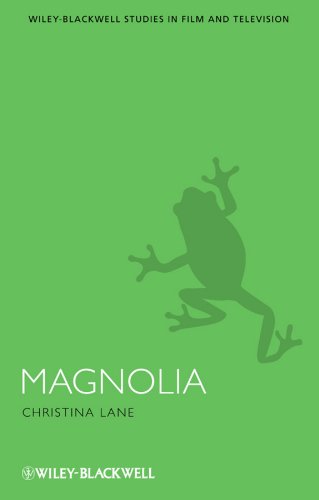



There are certain films and shows that resonate with audiences everywhere―they generate discussion and debate about everything from gender, class, citizenship and race, to consumerism and social identity. This new 'teachable canon' of film and television introduces students to alternative classics that range from silent film to CSI. Magnolia is one of those films students know and love. From the over-the-top performances by male and female leads to the "ripped from the pages of the Old Testament" conclusion, it is a cult favorite in American cinema - This is the first book to examine the diverse themes, performances, and influences on this polarizing film, encouraging students to look beyond the film's style in order to fully engage with questions about its substance - Lane develops a careful analysis of the film, its director, as well as the contemporary context in which it was produced - exploring topics including the role of the auteur, what constitutes cinema / media literacy in the digital age, the politics of postmodernism, and the film's critique of the mass media - in order to challenge students to ask themselves why they are so riveted by this controversial and unusual film What you really want to watch There are certain films and shows that resonate with audiences everywhere—they generate discussion and debate about everything from gender, class, citizenship and race to consumerism and social identity. This new “teachable canon” of film and television introduces students to alternative classics that range from silent film to CSI. What other film can claim that it ends with frogs falling from the sky as the rain pours and the male leads cry? The final catharsis offered in Paul Anderson’s Magnolia drips with affect that would rival any “weepie” film. - From the over-the-top performances by male and female leads to the "ripped from the pages of the Old Testament" conclusion, Magnolia it is a cult favorite in American cinema that students know and love. - Magnolia is a powerful pedagogical vehicle allowing for an exploration of a range of topics including the role of the auteur, what constitutes cinema and media literacy in the digital age, and the politics of postmodernism - in order to challenge students to ask themselves why they are so riveted by this controversial and unusual film. What you really want to watch There are certain films and shows that resonate with audiences everywhere―they generate discussion and debate about everything from gender, class, citizenship and race to consumerism and social identity. This new “teachable canon” of film and television introduces students to alternative classics that range from silent film to CSI. What other film can claim that it ends with frogs falling from the sky as the rain pours and the male leads cry? The final catharsis offered in Paul Anderson’s Magnolia drips with affect that would rival any “weepie” film. - From the over-the-top performances by male and female leads to the "ripped from the pages of the Old Testament" conclusion, Magnolia it is a cult favorite in American cinema that students know and love. - Magnolia is a powerful pedagogical vehicle allowing for an exploration of a range of topics including the role of the auteur, what constitutes cinema and media literacy in the digital age, and the politics of postmodernism - in order to challenge students to ask themselves why they are so riveted by this controversial and unusual film. Christina Lane is Chair and Associate Professor in the Department of Cinema and Interactive Media at the University of Miami, where she also directs the Norton Herrick Center for Motion Picture Studies. She teaches courses on film history, women and media, and directors. Her scholarship focuses on silent cinema, classic Hollywood, and contemporary American independent film. Dr. Lane is the author of Feminist Hollywood: From Born in Flames to Point Break (Wayne State UP, 2000). She has published essays in numerous scholarly journals as well as Culture, Trauma, and Conflict: Cultural Studies Perspectives on the War (Cambridge Scholars, 2007), Feminism at the Movies: Understanding Gender inContemporary Popular Cinema , (Routledge, 2011), Hitchcock and Adaptation: From Script to Screen (Rowman & Littlefield, 2014), and I ndie Reframed: Women and Contemporary American Cinema (Edinburgh University Press, 2017).