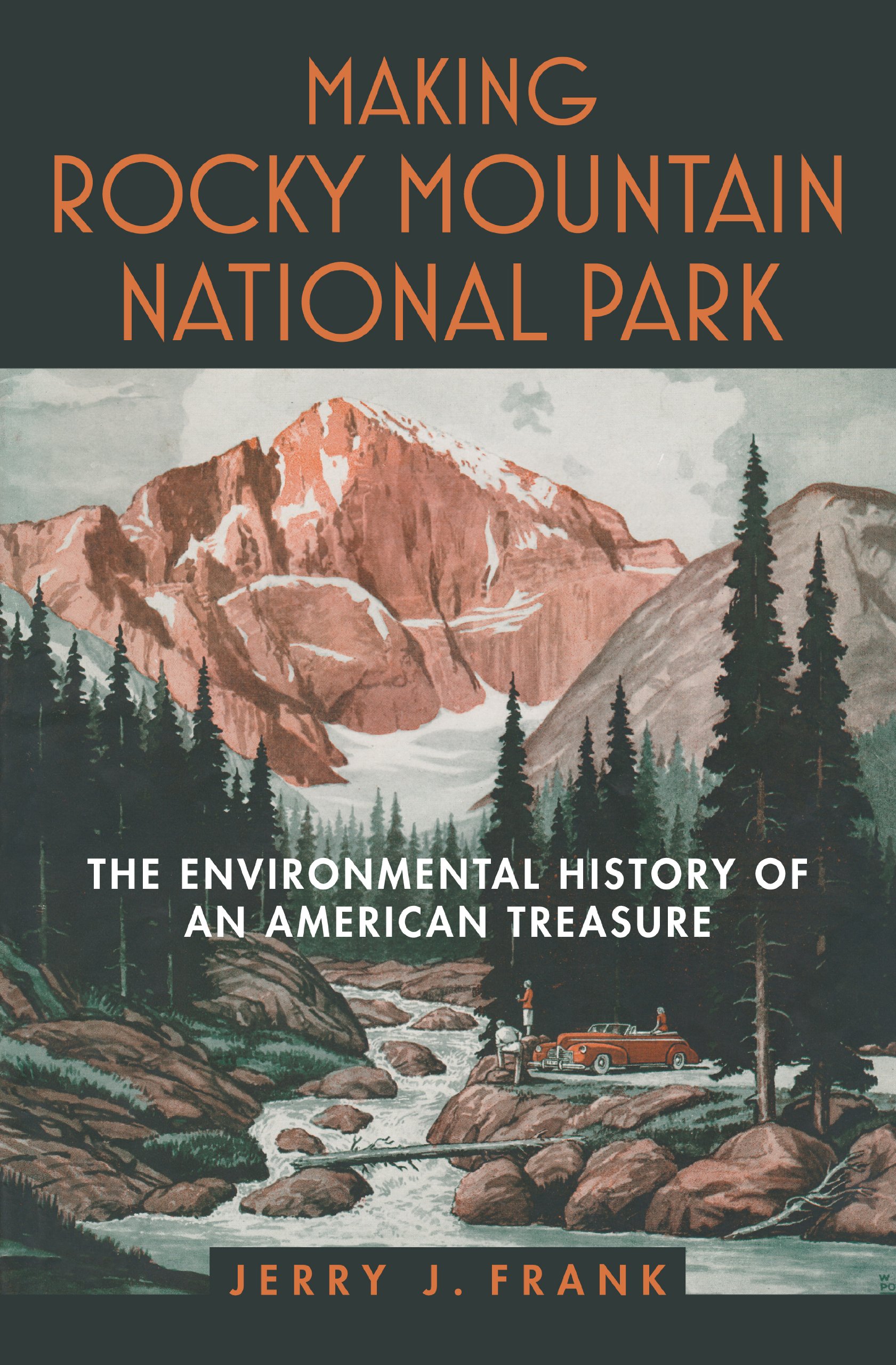
Making Rocky Mountain National Park: The Environmental History of an American Treasure
$19.95
by Jerry J. Frank



On September 4, 1915, hundreds of people gathered in Estes Park, Colorado, to celebrate the creation of Rocky Mountain National Park. This new nature preserve held the promise of peace, solitude, and rapture that many city dwellers craved. As Jerry Frank demonstrates, however, the park is much more than a lovely place. Rocky Mountain National Park was a keystone in broader efforts to create the National Park Service, and its history tells us a great deal about Colorado, tourism, and ecology in the American West. To Frank, the tensions between tourism and ecology have played out across a natural stage that is anything but passive. At nearly every turn the National Park Service found itself face-to-face with an environment that was difficult to anticipate—and impossible to control. Frank first takes readers back to the late nineteenth century, when Colorado boosters—already touting the Rocky Mountains’ restorative power for lung patients—set out to attract more tourists and generate revenue for the state. He then describes how an ecological perspective came to Rocky in fits and starts, offering a new way of imagining the park that did not sit comfortably with an entrenched management paradigm devoted to visitor recreation and comfort. Frank examines a wide range of popular activities including driving, hiking, skiing, fishing, and wildlife viewing to consider how they have impacted the park’s flora and fauna, often leaving widespread transformation in their wake. He subjects the decisions of park officials to close but evenhanded scrutiny, showing how in their zeal to return the park to what they understood as its natural state, they have tinkered with its features—sometimes with less than desirable results. Today’s Rocky Mountain National Park serves both competing visions, maintaining accessible roads and vistas for the convenience of tourists while guarding its backcountry to preserve ecological values. As the park prepares to celebrate its centennial, Frank’s book advances our understanding of its past while also providing an important touchstone for addressing its problems in the present and future. "Jerry Frank’s environmental history of Colorado’s Rocky Mountain National Park is an admirable presentation of how two competing visions of the area over the past century worked together to make and remake the park."— Montana The Magazine of Western History "Frank’s writing is lively and engaging, and his arguments are clear. . . . [A]n accessible case study of national park policy that will appeal to thoughtful part visitors and to students of environmental history."— Journal of American History "Help[s] us to understand not only the individual park but also the total park system."— Pacific Historical Review "Succinct, well researched, clearly written, and accessible to anyone interested in learning more about this particular park and the national park idea more generally."— Environmental History "Frank’s book is a valuable addition to our literature on the histories of Colorado, the NPS, and the western environment. Throw a copy in your back seat or backpack the next time you visit the RMNP; Frank’s narrative will help explain the complex history behind much of the seemingly pristine natural world you encounter."— Western Historical Quarterly "This book is as beautiful as its subject. . . . A landscape so many of its visitors love and which, by reading Making Rocky Mountain National Park , they will now better understand."— Journal of Tourism History "Frank has added to our understanding of how Rocky Mountain National Park came to be the place and experience it is today."— New Mexico Historical Review "A highly readable volume that will be of interest to park visitors and scholars interested in environmental history of the United States, national parks and protected areas, wildlife conservation, the American West, tourism, outdoor recreation, and natural resource management policy."— H-Net Reviews "This well-researched, engaging, and visitor-center worthy study traces the first century of Rocky Mountain National Park. Refreshingly, the author proceeds thematically rather than chronologically, devoting a cleverly titled chapter each to cars, trails, trees, elk, fish, and ski slopes."— Kansas History “America’s national parks may be the best idea we ever had, but as this book powerfully argues, the idea of what a park should be has had many different answers. With remarkable research and crystal-clear prose, Frank has tracked those answers through the history of one of our most beloved parks. After reading his story of conflicts and interventions, we will never again be able to say with naïve assurance that a park is where nature is protected.” — Donald Worster , author of A Passion for Nature: The Life of John Muir “It is tempting to see the preservation of a national park as a singular and heroic act. But as Frank shows us, park landscapes are not simply preserved; they are constantly made, unmade, an