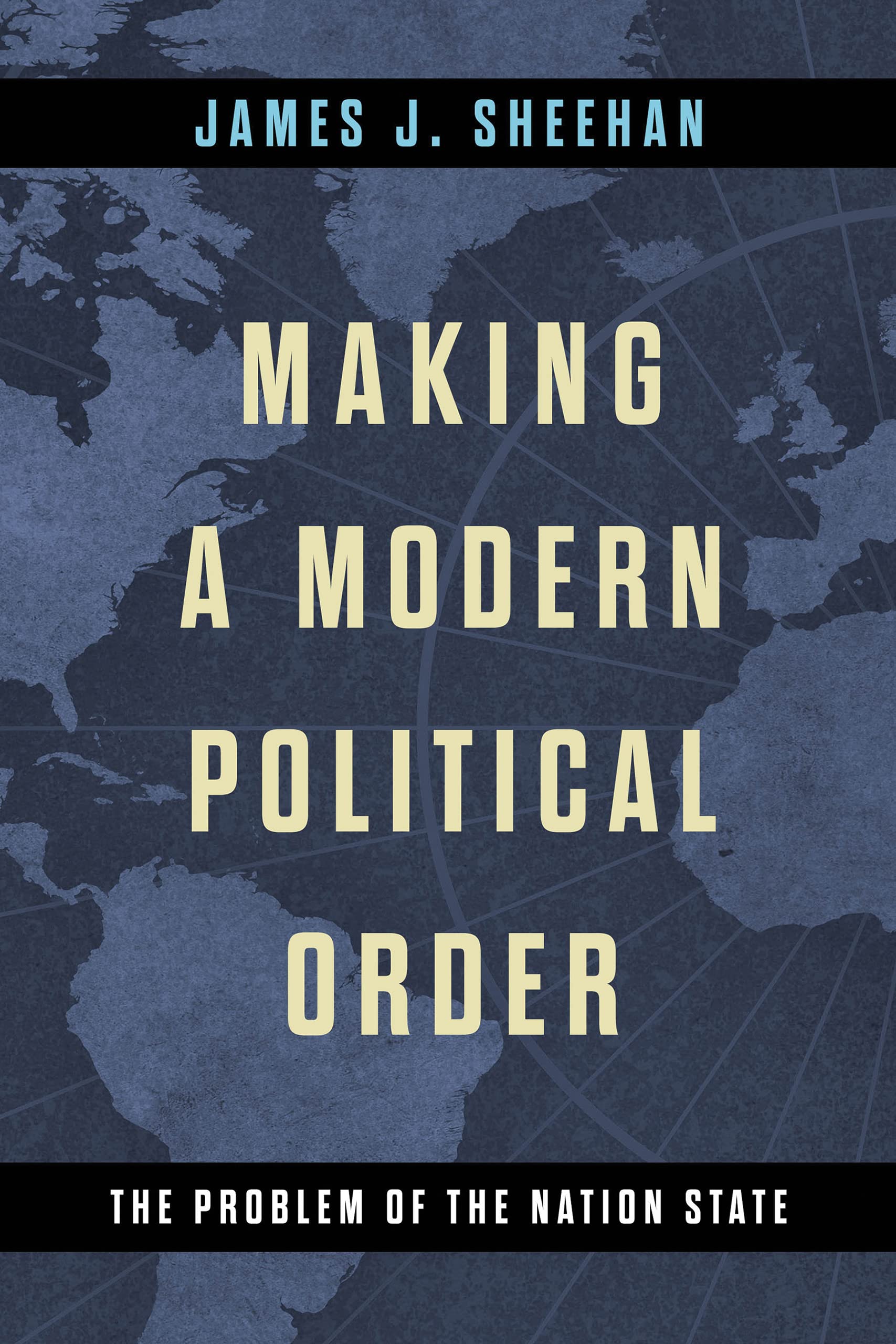
Making a Modern Political Order: The Problem of the Nation State (Kellogg Institute Series on Democracy and Development)
$50.00
by James J. Sheehan



Sheehan’s thoughtful book makes a convincing case that the modern political order arises out of people’s shared expectations and hopes, without which the nation state could not exist. Every political order depends on a set of shared expectations about how the order does and should work. In Making a Modern Political Order , James Sheehan provides a sophisticated analysis of these expectations and shows how they are a source of both cohesion and conflict in the modern society of nation states. The author divides these expectations into three groups: first, expectations about the definition and character of political space, which in the modern era are connected to the emergence of a new kind of state; second, expectations about the nature of political communities (that is, about how people relate to one another and to their governments); and finally, expectations about the international system (namely, how states interact in a society of nation states). Although Sheehan treats these three dimensions of the political order separately, they are closely bound together, each dependent on―and reinforcing―the others. Ultimately, he claims, the modern nation state must balance all three organizing principles if it is to succeed. Sheehan’s project begins with an examination of people’s expectations about political space, community, and international society in the premodern European world that came to be called the “ancien régime.” He then, in chapters on states, nations, and the society of nation states, proceeds to trace the development of a modern political order that slowly and unevenly replaced the ancien régime in Europe and eventually spread throughout the world. To close, he offers some speculations about the horizon ahead of us, beyond which lies a future order that may someday replace our own. “This fine book manages to cover more ground in its short span than do many books two or three times its length. Students at many levels, from the undergraduate to the postdoctoral, will learn much from it.” ― Perspectives on Political Science "Sheehan's conclusions capture the balance of change and continuity in human experience." ― Law & Liberty “This is a wonderful book. Sheehan is a gifted historian, the subject perennially important, large themes clearly announced and pursued, an impressive range of secondary materials adroitly deployed, the writing unobtrusive yet graceful.” ―Nicholas Greenwood Onuf, author of The Mightie Frame “In a time when scholars regularly call for big-picture histories that tackle global themes, this is the rare book that actually accomplishes that goal.” ―Alexander M. Martin, author of Enlightened Metropolis "Sheehan’s book asks us to reconsider which social theorist lurks more influentially behind the issue of state formation and so-called world order: Hobbes or Marx?" ― Journal of Modern History James J. Sheehan is the Dickason Professor in the Humanities, Emeritus, at Stanford University. He was president of the American Historical Association in 2005 and is the author and editor of numerous books, including Where Have All the Soldiers Gone? Challenges to a political order come from many different directions. Some come from the outside, invading armies, devastating epidemics, natural disasters; others come from within, corrupt leaders, social dislocation, spiritual crises. Even when these challenges are manageable, few political orders meet people’s expectations. There is usually a gap between aspirations and accomplishments, between what people think ought to happen and what actually does occur. Dissatisfaction, distrust, and disappointment are part of most people’s political experience. That is why every important thinker about politics has viewed the world with a certain amount (and sometimes a great deal) of anxiety. At the beginning of the twenty-first century’s third decade, it is not difficult to find good reasons for dissatisfaction with the present and anxiety about the future. There is nothing new about this. Like its predecessors, the contemporary political order provides many things to be discontented about: corruption, dictatorship, endemic violence, rampant inequality, institutional paralysis―the list goes on and on. And yet these problems, while surely worrisome and, in some places, cruel and debilitating, should not distract us from the underlying strengths that sustain our political institutions. In the contemporary world, for example, the infrastructure of most states is more robust than ever before in human history. Governments have an unprecedented capacity to define their territory, count and classify their populations, formulate and enforce laws, and provide services to their citizens. Of course even relatively successful states can and do fail to meet our expectations. States are rarely as fair, efficient, and competent as we wish them to be; most stimulate more demands for services than they can provide; few fulfill their own promise to create