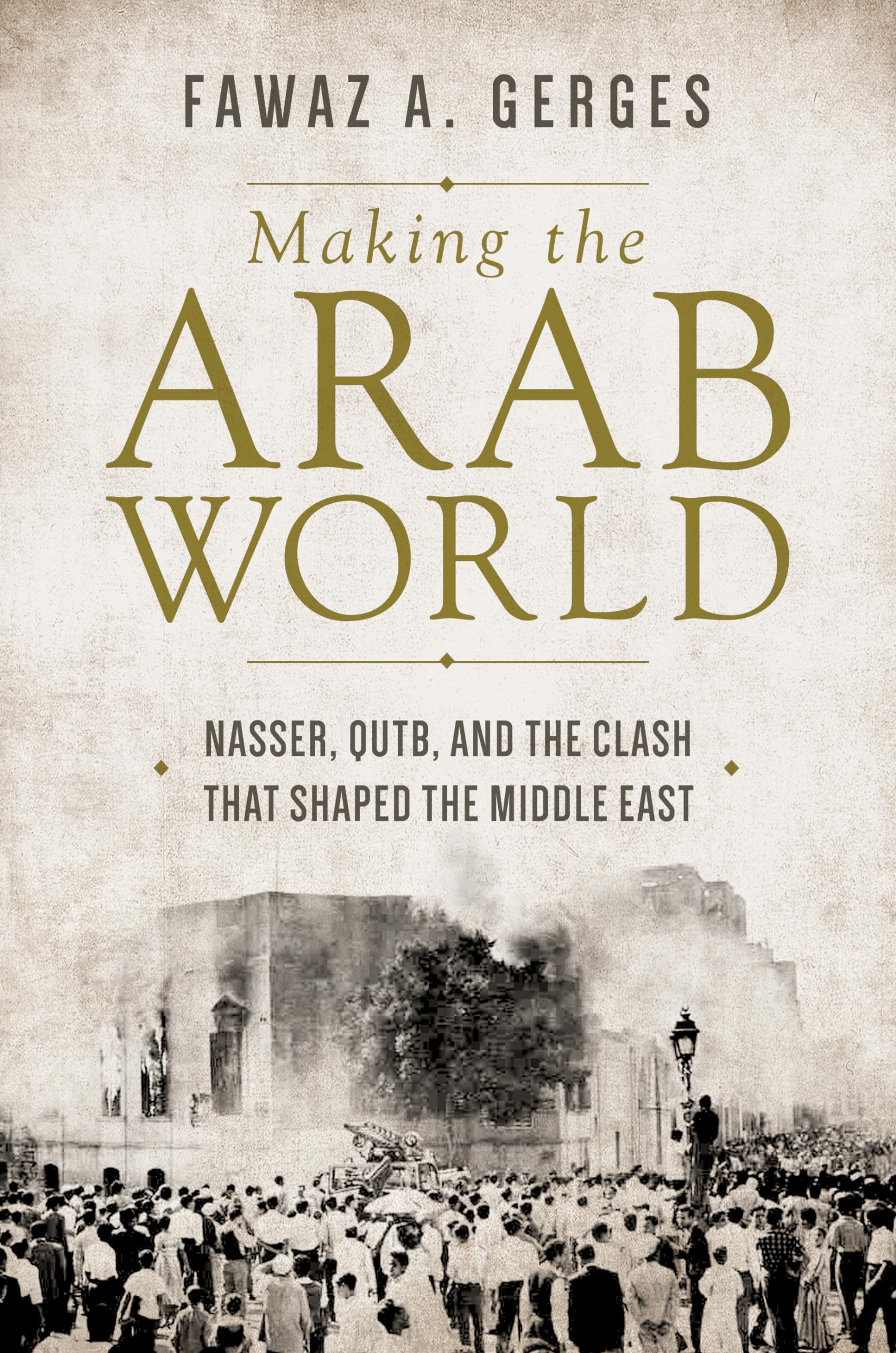
Making the Arab World: Nasser, Qutb, and the Clash That Shaped the Middle East
$15.98
by Fawaz A. Gerges



How the conflict between political Islamists and secular-leaning nationalists has shaped the history of the modern Middle East In 2013, just two years after the popular overthrow of Hosni Mubarak, the Egyptian military ousted the country’s first democratically elected president―Mohamed Morsi of the Muslim Brotherhood―and subsequently led a brutal repression of the Islamist group. These bloody events echoed an older political rift in Egypt and the Middle East: the splitting of nationalists and Islamists during the rule of Egyptian president and Arab nationalist leader Gamal Abdel Nasser. In Making the Arab World , Fawaz Gerges, one of the world’s leading authorities on the Middle East, tells how the clash between pan-Arab nationalism and pan-Islamism has shaped the history of the region from the 1920s to the present. Gerges tells this story through an unprecedented dual biography of Nasser and another of the twentieth-century Arab world’s most influential figures―Sayyid Qutb, a leading member of the Muslim Brotherhood and the father of many branches of radical political Islam. Their deeply intertwined lives embody and dramatize the divide between Arabism and Islamism. Yet, as Gerges shows, beyond the ideological and existential rhetoric, this is a struggle over the state, its role, and its power. Based on a decade of research, including in-depth interviews with many leading figures in the story, Making the Arab World is essential reading for anyone who wants to understand the roots of the turmoil engulfing the Middle East, from civil wars to the rise of Al-Qaeda and ISIS. "A highly knowledgeable history that is helpful in explaining recent developments in Egypt and elsewhere in the Middle East." ― Kirkus "Gerges . . . writes with brilliant insight about these two competing forces in the Arab world: pan-nationalism and pan-Islamist movements." ---Steve Donoghue, The National "This is an important work of journalism as well as history." ---Richard Spencer, The Times "In Making the Arab World, Fawaz Gerges traces the intertwining biographies and intellectual trajectories of these two titans of Egyptian history. The result is a fascinating and deeply researched revisionist history―one that sheds light on the forces still roiling in Egypt under the surface calm of Sisi’s rule. Today, Nasser and Qutb are remembered as representatives of opposing visions for Egypt. Gerges, however, tells a far more interesting and complicated story about the relationship between the two men and the movements they helped shape. Behind their competing ideologies were flawed individuals with complex and sometimes contradictory motivations. Gerges’ reexamination of a crucial period in Egyptian history usefully illustrates how all ideologies―even the ones that seem most fixed and unyielding―are in fact fluid and contingent on events." ---Shadi Hamid, Foreign Affairs "At 400-plus pages, the new book from Fawaz Gerges, professor of international relations at the London School of Economics, is a weighty tome drawing on more than 12 years of research but it is also accessible and refreshing." ---Gareth Smyth, Arab Weekly " Making the Arab World: Nasser, Qutb, and the Clash that Shaped the Middle East is a significant contribution to Middle East studies. It draws together incredible research to tell an important story about two figures who had a great impact on life in their own historical moment and beyond." ---Caleb Elfenbein, American Academy of Religion "This dual biography of two Egyptians, Gamal Abdel Nasser and Sayyid Qutb, shows clearly that the conflagration in Middle Eastern lands was kindled a long time ago. In the face of a complex civilizational dynamic, Gerges gives the reader the fundamental answer: What we have intervened in is an intra-Islamic war between the secular nationalists and the Islamists; or, in the words of one of Gerges’s Islamist interviewees, a war between ‘Islam versus apostasy.’" ---Lima Simms, Law and Liberty "Fawaz Gerges gives a novel, nuanced, and extremely interesting view of the relationship between the hero of Arab nationalism, Gamal Nasser, and the main intellectual of the Muslim Brotherhood Sayyid Qutb. I enjoyed reading it both from a pleasure point of view as well as from an informative one. It is highly readable and informative." ---Karim Mezran, Atlantic Council "To understand the current environment within Egypt and its neighboring countries, Gerges provides both an analytical as well as empirical framework to assist in understanding the difficulties between nationalism and activist Islam." ---Lt. Col. Stephen Harvey, U.S. Army, Retired, Military Review "What we have is a solid, clearly written work of scholarship by a talented and experienced historian of the Middle East. Over a decade in the writing, it is an important contribution to the growing number of books that aim to explicate Islamism’s dialectical relationship with the Arab state." ---John Calvert,