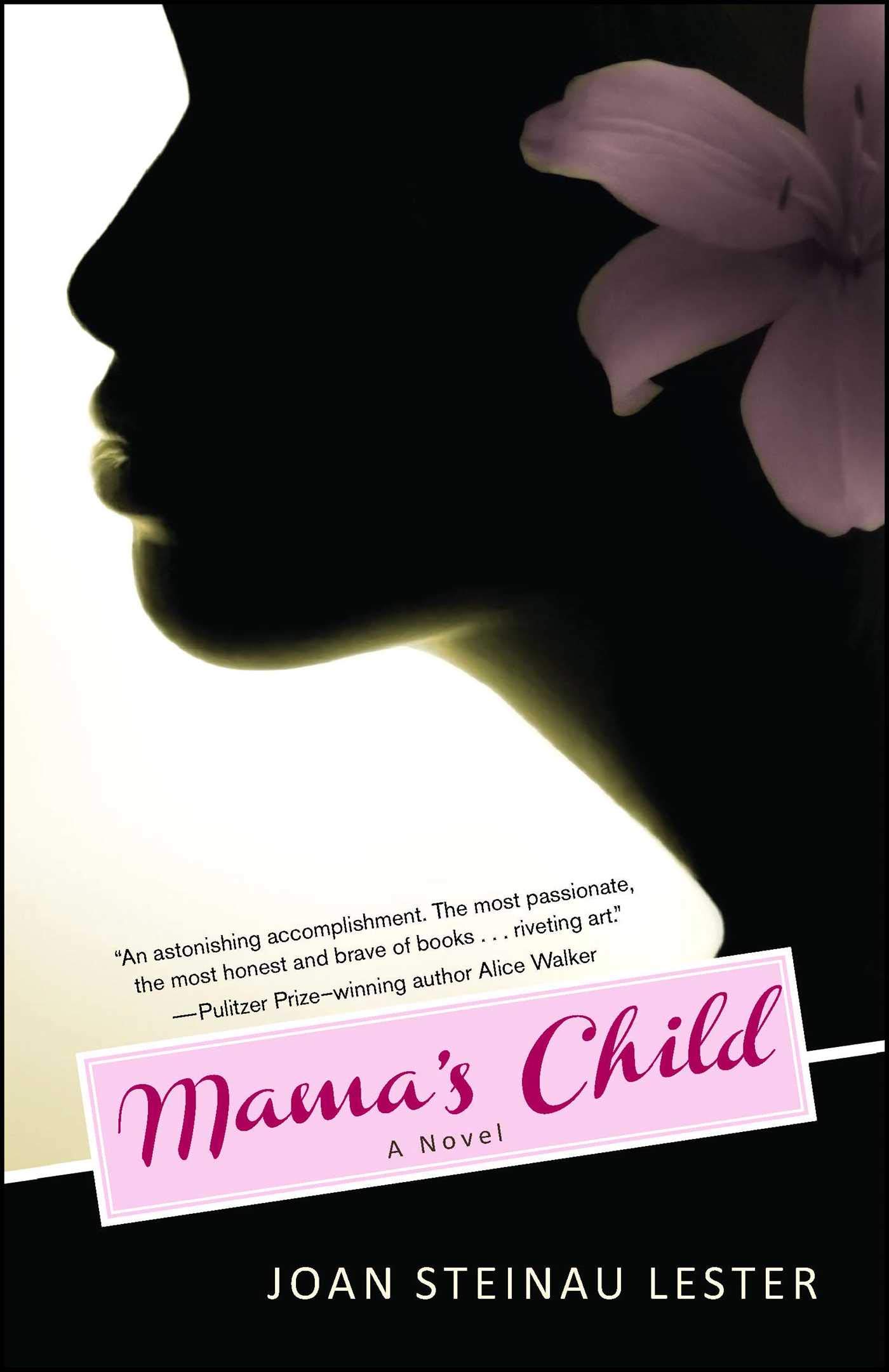



Ruby Jordan, the daughter of a white mother and black father, has always struggled with her identity, but becoming a wife and mother herself brings new awareness and understanding of her own mother's strength and love. Ruby is a biracial child growing up in the 1980s, marching in demonstrations with her mother, Elizabeth, a white civil rights activist, and her African American father, Solomon. When outside pressures and Elizabeth’s budding feminism ultimately destroy the marriage, Solomon moves out, taking with him Ruby’s beloved brother. Ruby feels out of place living in her mother’s world of lesbianism, drinking, and pot smoking. Over time, as she learns more about her African heritage from her father, Ruby embraces her black identity, unleashing her anger on Elizabeth and formally disowning her mother. It isn’t until Ruby becomes the mother of a biracial child herself that she fully understands the power of love to transcend race. Mama’s Child is a deeply felt novel of a daughter on a quest for selfhood and a mother striving to come back to her own. Through alternating perspectives, Lester sensitively illuminates the challenges of living in a world still viewed through the filter of race. This is reminiscent of Alix Kates Shulman’s Burning Questions (1978) in terms of a woman’s consciousness awakening through a historic social movement. --Diane Holcomb “An astonishing accomplishment. The most passionate, the most honest and brave of books…riveting art.” -- Pulitzer Prize-winning author Alice Walker "A powerful story brilliantly capturing the complications of the mother-daughter relationship from both sides." -- Marissa Moss, author of the award-winning Amelia's Notebook series Mama’s Child is a stunning portrait of a family amidst the agony of recovery from near-drowning in the sea of racism. Joan Steinau Lester writes of the desperate vulnerabilities and the personal triumphs with a deft emotional hand that makes the struggles that have ripped apart this nation more personal than most have ever experienced. -- Jewelle Gomez, novelist & playwright “ Mama’s Child is a welcome addition to the growing body of mixed-race literature. Joan Steinau Lester’s innovation is a shift in gaze from the experience of the confused child to the often overlooked, complicated white mother. It’s a turn that’s long overdue." -- Emily Raboteau, author of Searching for Zion and The Professor’ “Poignant narrative . . . . no matter a person’s ethnic or cultural background, this book is relatable.” ― Kirkus “ Mama’s Child is a deeply felt novel of a daughter on a quest for selfhood and a mother striving to come back to her own. Through alternating perspectives, Lester sensitively illuminates the challenges of living in a world still viewed through the filter of race.” ― Booklist Joan Steinau Lester, Ed.D., is an award-winning journalist and author of four critically acclaimed books. Her writing has appeared in many newspapers and magazines, including Essence , Los Angeles Times , Chicago Tribune , and Cosmopolitan. She lives in Northern California. Mama’s Child CHAPTER 1 Elizabeth “I need to see you today,” Gladys, the New Harmony School director, growled into our answering machine. “We’ve had an incident.” Her deep voice intimated this was no ordinary farewell meeting for Ruby’s final days of sixth grade. “Looking forward—” her gravelly voice murmured, as if she hadn’t just raised my anxiety. Solomon had his own full schedule that day—like every other—so, given the urgency of “see you today” and “incident,” I called Inez to teach my Merritt College class and, sweating, navigated Ashby up to Telegraph and turned right toward Oakland. At Sixty-fifth I angled left toward the brown shingled house our group of community parents had converted to a school, building an addition nearly every year. Pushing through the noisy halls filled with children’s voices, I slid alone into Gladys’s office. Her secretary, Laverne, waved her hand toward the small battered chair facing Gladys’s desk. “She’s running a little late, but she’ll be back momentarily. Take a load off.” Laverne’s soft shoulder-width Afro brushed my cheek when she patted my arm. Why, I wondered after she left the room, had she done that? After squeezing myself into the chair—had I gained that much weight?—I scrutinized the posters filling the wall: a white woman in an orange-print skirt held hands with a black sister in slacks over the words WOMEN HOLD UP HALF THE SKY. An oversized UNICEF calendar featured a blue globe ringed by multihued children. GIVE! the calendar urged. And everywhere paintings, blue, red, green tempura paint slathered across butcher paper, bright yellow suns lighting the upper corners of landscapes. Several papers bore titles. I saw a curling, faded paper labeled RUBY’S FAMILY: four stick figures hovering under the ubiquitous bright yellow sun. Three of the figures were brown, one was colored pink. Gladys bustled in, trail