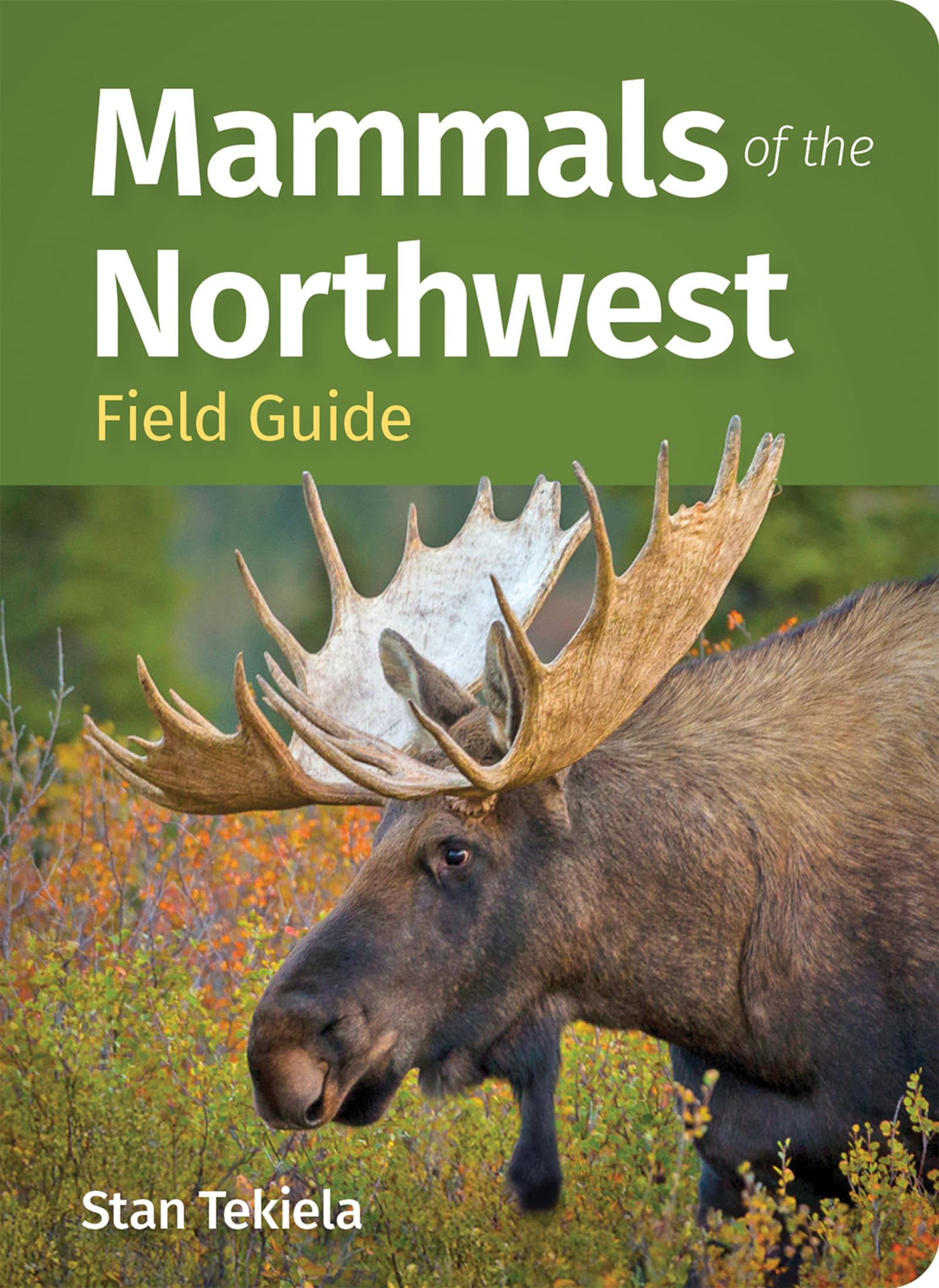



Identify mammals throughout the Northwest with this easy-to-use field guide, organized by family and featuring full-color photographs and helpful information. Whether you happen upon an animal track or actually see wildlife in nature, encountering mammals is a thrill. Learn to identify mammals in the northwestern United States. With Stan Tekiela’s famous field guide, mammal identification is simple and informative. The Mammals of the Northwest Field Guide features more than 170 species found in the region, organized by family and then by size. When you see a mammal, you can determine its family by common visual characteristics and then turn to the corresponding section to find out what it is! Fact-filled information contains the particulars that you want to know, while full-color photographs provide the visual detail needed for accurate identification. Inside you’ll find: More than 170 of the Northwest’s mammals, from mice to moose - Facts about size, habitat, range, young, and more - Times each animal is most likely to be active and signs it might leave behind - Professional photos, range maps, and track patterns - Stan’s naturalist notes and fascinating facts This field guide is applicable to the states of Alaska, Idaho, Montana, Oregon, Washington, and Wyoming. So grab the Mammals of the Northwest Field Guide for your next outing to help ensure that you positively identify the wildlife you see. Stan Tekiela has been a professional naturalist for more than 35 years and is a member of the Minnesota Naturalists’ Association, Outdoor Writers Association of America, North American Nature Photography Association, and Canon Professional Services. Stan actively studies and photographs wildlife throughout the United States and Canada. He has received various national and regional awards for outdoors education and writing. His syndicated nature column appears in more than 20 cities, and his wildlife programs are broadcast on a number of Midwest radio stations. Stan has authored hundreds of field guides, quick guides, nature books, children’s books, and more. Mountain Goat Oreamnos americanus Family: Goats, Sheep, and Cattle (Bovidae) Size: L 4–5' (1.2–1.5 m); T 3–8" (7.5–20 cm); H 3–4.5' (1–1.4 m) Weight: M 150–180 lb (68–81 kg); F 100–150 lb (45–68 kg) Description: All white (sometimes yellowish). Large thick body. Slightly humped shoulders. Distinctive beard, up to 6" (15 cm) long. Backward-curving, non-branching black horns. Short pointed ears. Black hooves, nose, and eyes. In winter, long shaggy fur covers most of the legs. In summer, smooth and clean-looking with clearly visible legs. Origin/Age: native; 5–12 years Compare: Bighorn sheep (pg. 307) is slightly larger, tan in color, and lacks a beard. Look for the white fur of the mountain goat to help identify. Habitat: mountains, rocky cliffs; elevations above 10,000' (3,050 m) Home: no den or nest; rests in open terrain, does not seek shelter to give birth or escape bad weather Food: herbivore; grasses and other green plants Sounds: usually quiet, gives a typical goat-like call Breeding Nov–Dec mating; 6 months gestation Young: 1 (sometimes 2) offspring once per year in May or June; able to walk within minutes of birth, grayer than adult, acquires adult coloration at about 1 month Signs: oval depressions in snow or grass are evidence of beds; scat in groups of small oval pellets when it has eaten dried woody plants, masses of large segmented scat when it has fed upon green plants Activity: diurnal, nocturnal; seen grazing on high windswept mountainsides and valleys Tracks: front hoof 2.5–3" (6–7.5 cm) long, hind hoof slightly smaller, widely split at the front, heart shape with the point in the front; neat line of single tracks; hind hooves fall near or directly onto fore prints (direct register) when walking, often obliterating the front hoof tracks, heart shape widens when walking in mud or running Stan’s Notes: This is a hardy animal of high mountaintops and windswept mountain valleys. Eats plants but seeks exposed earth, where it licks soil for minerals such as salt. Generally sedentary, not moving very far, even for migration. Moves down to the tree line during winter for some shelter. A thick-bodied, large animal with shaggy, woolly fur, which suits it well for the cold, snowy environments in which it lives. During warm summer days, it cools off by laying on snow fields. In colder weather, it stretches out on sun-warmed rocks. Instead of getting wet to bathe in such harsh environments, it frequently takes dust baths, which keep the coat in good condition. Hooves have a sharp outer sheath with a soft center, enabling the animal to move across rocky surfaces with ease. Traverses steep cliffs all the time, but accidents do occur, which usually result in death or severe injury. Often in small herds of fewer than 50 individuals. Fights between rival males are uncommon, but during breeding season, males will assume a threatening post