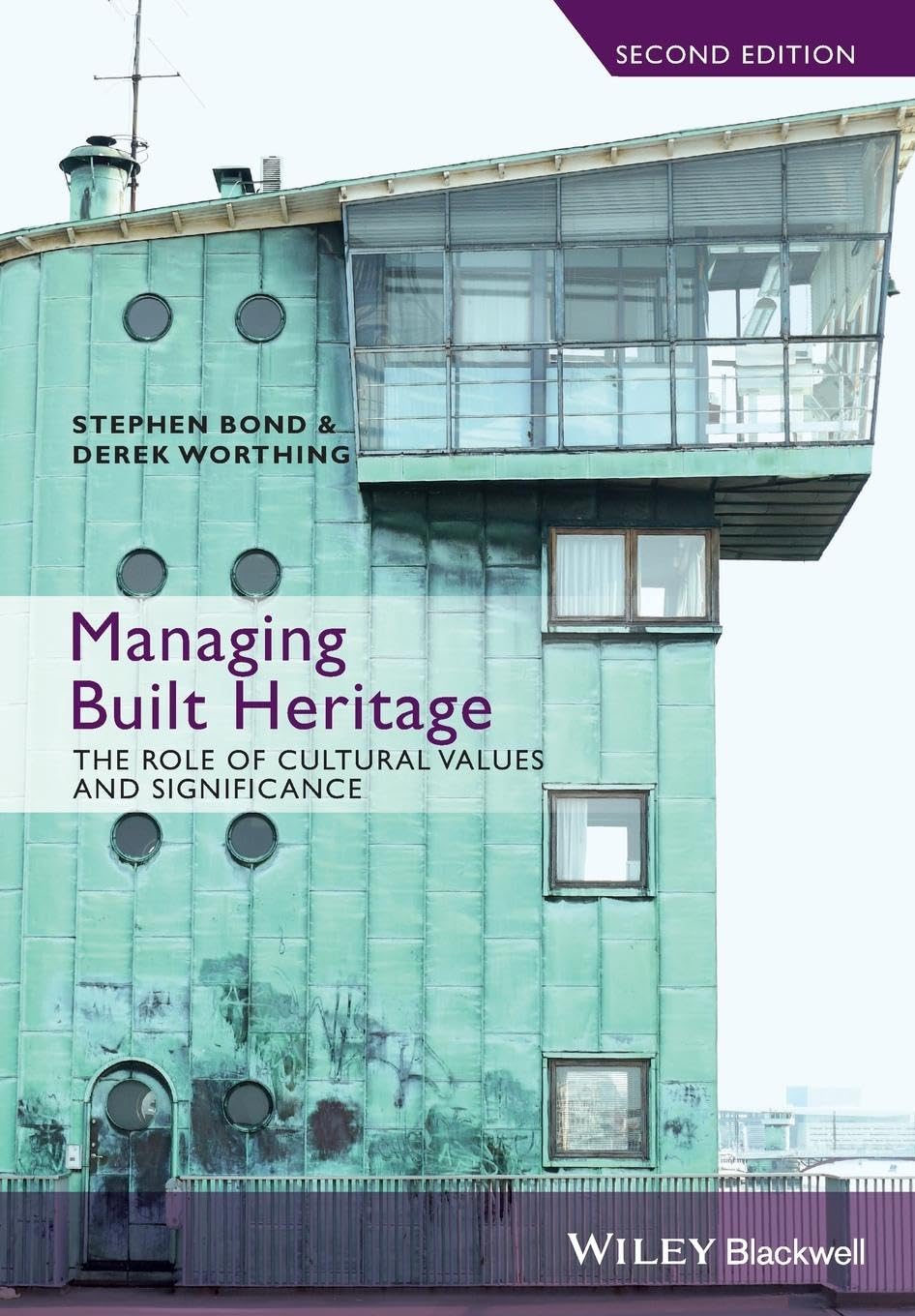
Managing Built Heritage: The Role of Cultural Values and Significance
$70.31
by Stephen Bond



This new edition examines management of built heritage through the use of values-led decision making, based on an understanding of the significance of the cultural asset. It considers how significance is assessed and used as an effective focus and driver for management strategies and processes. The authors consider key policies and procedures that need to be implemented to help ensure effective management. The book will be useful for specialists in built heritage - conservation officers, heritage managers, architects, planners, engineers and surveyors - as well as for facilities and estates managers whose building stock includes protected or designated structures or buildings in conservation or other historic areas. describes management strategies and tools for a wide range of built heritage assets - a reflective and informative guide on current conservation management - explains how understanding and using conservation values (significance ) is essential to the protection of the built heritage - uses real-life examples to draw out best practice 'Worthing and Bond have achieved their aim of a practical guide to the policies and practices surrounding managing the built heritage based on an open and useful framework. The book should be of interest to those working in the field, offering well considered practical measures, grounded in recent critical thinking.' -- Raymond Lucas, Construction History Society News This new edition of a reflective and informative guide on current conservation management offers practical measures for managing the built cultural heritage and is grounded in critical thinking. The authors examine management issues through the use of values-led decision making based on an understanding of the significance of the cultural asset. They consider how significance is assessed and used as an effective focus and driver for management strategies and processes. Effective management of built heritage requires a clear understanding of what makes an asset significant - and how that significance might be vulnerable but the book also emphasises how this understanding must inform all activities in order to ensure that what is important about an asset is protected and enhanced. Since the publication of the first edition, there has been much fundamental rethinking - both nationally and internationally - on approaches to the conservation of the built heritage. This Second Edition of Managing Built Heritage- the role of cultural values and significance remains analytical reflective but also draws on real life examples to illustrate particular issues, looking at current approaches and drawing out best practice. The authors consider key policies and procedures that need to be implemented to help ensure effective management and describe management strategies and tools for a wide range of built heritage assets. They explain how understanding and using conservation values (significance) is essential to the protection of the built heritage. The book will be useful for specialists in built heritage - conservation officers, heritage managers, architects, planners, engineers and surveyors - as well as for facilities and estates managers whose building stock includes protected or designated structures or buildings in conservation or other historic areas. This new edition of a reflective and informative guide on current conservation management offers practical measures for managing the built cultural heritage and is grounded in critical thinking. The authors examine management issues through the use of values-led decision making based on an understanding of the significance of the cultural asset. They consider how significance is assessed and used as an effective focus and driver for management strategies and processes. Effective management of built heritage requires a clear understanding of what makes an asset significant - and how that significance might be vulnerable but the book also emphasises how this understanding must inform all activities in order to ensure that what is important about an asset is protected and enhanced. Since the publication of the first edition, there has been much fundamental rethinking - both nationally and internationally - on approaches to the conservation of the built heritage. This Second Edition of Managing Built Heritage- the role of cultural values and significance remains analytical reflective but also draws on real life examples to illustrate particular issues, looking at current approaches and drawing out best practice. The authors consider key policies and procedures that need to be implemented to help ensure effective management and describe management strategies and tools for a wide range of built heritage assets. They explain how understanding and using conservation values (significance) is essential to the protection of the built heritage. The book will be useful for specialists in built heritage - conservation officers, heritage managers, architects, plan