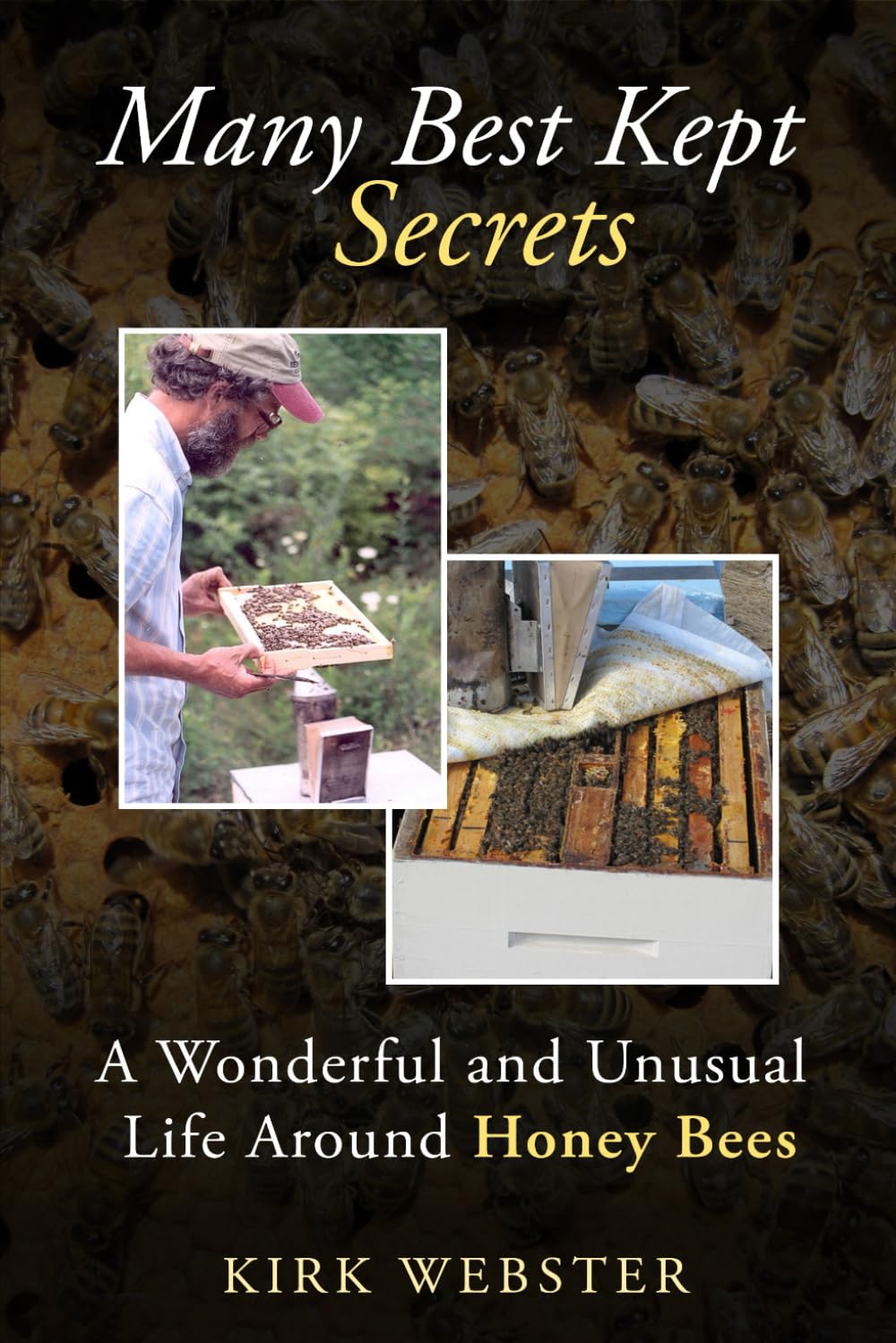
Many Best Kept Secrets: A Wonderful and Unusual Life Around Honey Bees
$30.00
by Kirk Webster



Many Best Kept Secrets is the story of one beekeeper’s lifetime lived in close association with honeybees and the land that sustained them. But this is not a technical manual or a nostalgic memoir. Rather, it is a quietly radical book—one that insists the answers to many of our modern environmental and societal problems are already present in the lived experiences of those who work with, and not against, Nature. This is a book about bees, yes—but more deeply, it’s about mentorship, memory, discovery, loss, and the pursuit of a meaningful life. It follows a trajectory from suburban alienation to rural immersion; from stumbling first steps on a school farm to a resilient apiary built with homemade tools and hard-won knowledge. It’s also a clear-eyed account of how small-scale, nature-oriented farming and beekeeping can succeed—when the work is guided by observation, patience, humility, and respect for systems older and wiser than ourselves. The bees are not just the subject of this story—they are the teacher. Through decades of trial, error, and quiet triumph, they offer insight into how to live attentively and responsibly in a time when both Nature and culture are in peril. The book draws from a life fully lived with seasons, livestock, mentors, and soil—and from the countless conversations overheard through the hum of a beeyard. "The most important success though, was the discovery that even in this extreme case, Sir Albert Howard’s conclusion—that a healthy agriculture can only emerge when pests and diseases become our friends and allies—was correct even with an out-of-balance parasite like varroa. The tracheal mites clearly showed that they were capable of selecting the best honeybee colonies far more effectively than I could. The guidance I received from my microscopic friends showed the way to including varroa as an ally as well. (From chapter 6)" In a world increasingly mediated by technology, this book offers a tangible, grounded alternative. It doesn’t promise easy answers—but it does suggest that a life of purpose, sanity, and sufficiency is still possible, and may begin as simply as watching the flight of bees at the entrance to a hive. Beekeepers will find hard-won wisdom here, but so will farmers, educators, parents, builders, and wanderers of all kinds. From field ecology and fieldwork to the invisible economics of small farms, this book explores how the values of real farming—generosity, humility, self-sufficiency, and care—stand in contrast to a society consumed by speed, greed, and exploitation. Whether you’re a seasoned grower or someone seeking a more grounded path, Many Best Kept Secrets offers something rare: a life lived with integrity, where attention and affection for the natural world form the basis for meaningful work, right livelihood, and hope. This is not just a story about bees. It’s a quiet answer to questions we’ve nearly forgotten how to ask. This book is for readers drawn to natural beekeeping (treatment-free beekeepers), organic farming, off-grid living, homesteading, and regenerative agriculture—but it also speaks to those interested in ecological memoirs, field ecology, and the search for a more intentional life. Many Best Kept Secrets will resonate with people exploring sustainable living, small-scale farming, backyard beekeeping, permaculture, rural self-sufficiency, and low-tech resilience. Whether you’re curious about overwintering bees, queen breeding, or holistic apiary methods—or seeking wisdom on nature-based mentorship, agrarian values, land stewardship, and the spiritual side of husbandry—you’ll find reflections here that blend practical experience with deeper insight. This book is for nature lovers, slow living advocates, organic gardeners, aspiring farmers, climate-conscious readers, and anyone who believes that healing the world may start by listening more closely to what bees—and the land—are telling us.