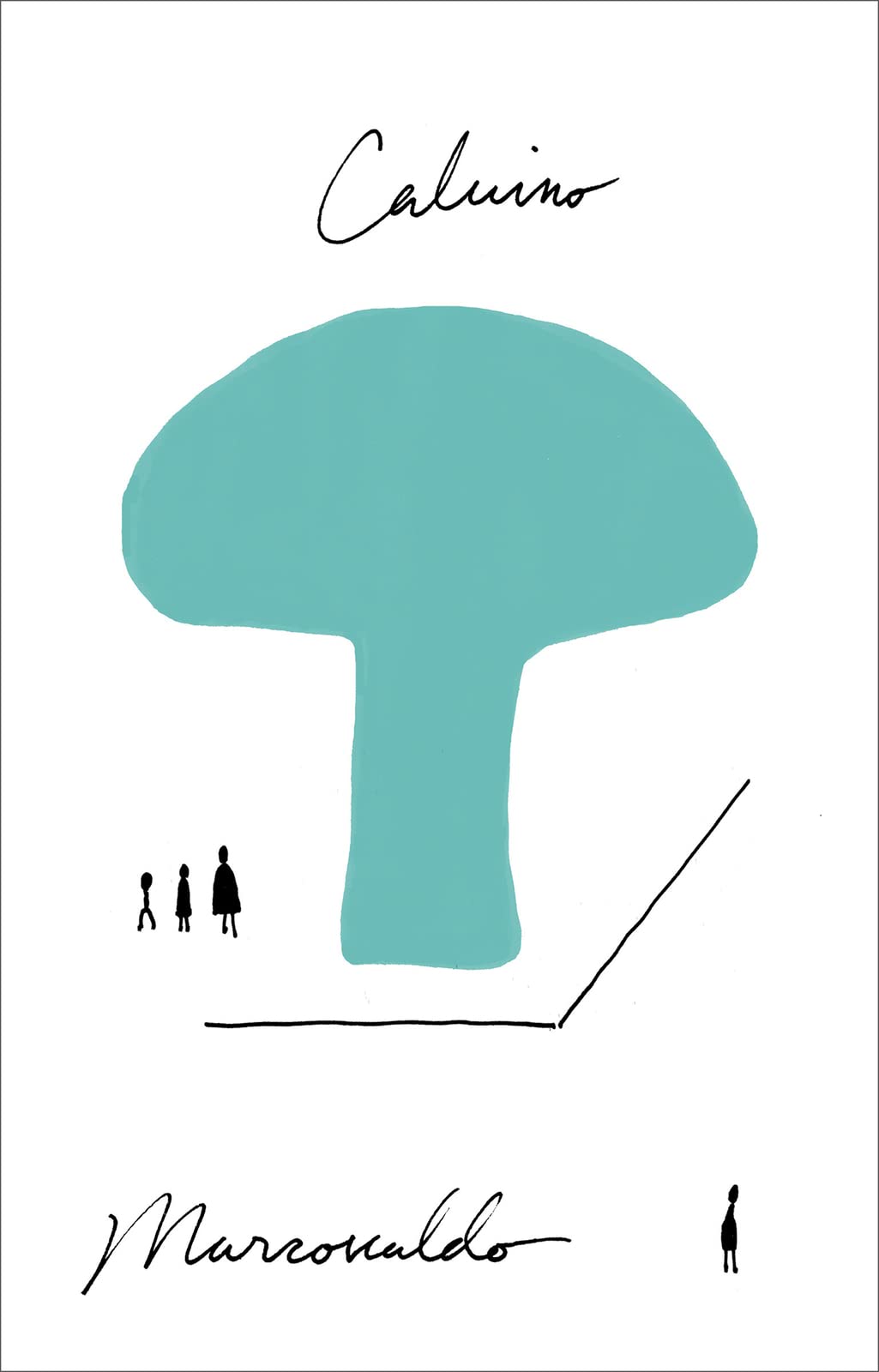



A charming portrait of one man’s dreams and schemes, by “the greatest Italian writer of the twentieth century” ( Guardian ). In this enchanting book of linked stories, Italo Calvino charts the disastrous schemes of an Italian peasant, an unskilled worker in a drab northern industrial city in the 1950s and ’60s, struggling to reconcile his old country habits with his current urban life. Marcovaldo has a practiced eye for spotting natural beauty and an unquenchable longing for the unspoiled rural world of his imagination. Much to the continuing puzzlement of his wife, his children, his boss, and his neighbors, he chases his dreams and gives rein to his fantasies, whether it’s sleeping in the great outdoors on a park bench, following a stray cat, or trying to catch wasps. Unfortunately, the results are never quite what he anticipates. Spanning from the 1950s to the 1960s, the twenty stories in Marcovaldo are alternately comic and melancholy, farce and fantasy. Throughout, Calvino’s unassuming masterpiece “conveys the sensuous, tangible qualities of life” ( New York Times ). Translated from the Italian by William Weaver. An unskilled worker in a drab northern Italian industrial city of the 1950s and 1960s, Marcovaldo has a practiced eye for spotting natural beauty and an unquenchable longing to come a little closer to the unspoiled world of his imagining. Much to the puzzlement of his wife, his children, his boss, and his neighbors, he chases his dreams, gives rein to his fantasies, tries-with more ingenuousness than skill-to lessen his burden and that of those around him. The results are never the anticipated ones. ITALO CALVINO (1923–1985) attained worldwide renown as one of the twentieth century’s greatest storytellers. Born in Cuba, he was raised in San Remo, Italy, and later lived in Turin, Paris, Rome, and elsewhere. Among his many works are Invisible Cities , If on a winter ’ s night a traveler , The Baron in the Trees , and other novels, as well as numerous collections of fiction, folktales, criticism, and essays. His works have been translated into dozens of languages. Marcovaldo or The Seasons in the City By Italo Calvino, William Weaver Houghton Mifflin Harcourt Publishing Company Copyright © 1963 Giulio Einaudi Editore, S.p.A. All rights reserved. ISBN: 978-0-15-657204-0 Contents Title Page, Contents, Copyright, Author's Note:, SPRING, SUMMER, AUTUMN, WINTER, SPRING, SUMMER, AUTUMN, WINTER, SPRING, SUMMER, AUTUMN, WINTER, SPRING, SUMMER, AUTUMN, WINTER, SPRING, SUMMER, AUTUMN, WINTER, About the Author, CHAPTER 1 SPRING 1. Mushrooms in the city The wind, coming to the city from far away, brings it unusual gifts, noticed by only a few sensitive souls, such as hay-fever victims, who sneeze at the pollen from flowers of other lands. One day, to the narrow strip of ground flanking a city avenue came a gust of spores from God knows where; and some mushrooms germinated. Nobody noticed them except Marcovaldo, the worker who caught his tram just there every morning. This Marcovaldo possessed an eye ill-suited to city life: billboards, traffic-lights, shop-windows, neon signs, posters, no matter how carefully devised to catch the attention, never arrested his gaze, which might have been running over the desert sands. Instead, he would never miss a leaf yellowing on a branch, a feather trapped by a roof-tile; there was no horsefly on a horse's back, no worm-hole in a plank, or fig-peel squashed on the sidewalk that Marcovaldo didn't remark and ponder over, discovering the changes of season, the yearnings of his heart, and the woes of his existence. Thus, one morning, as he was waiting for the tram that would take him to Sbav and Co., where he was employed as an unskilled laborer, he noticed something unusual near the stop, in the sterile, encrusted strip of earth beneath the avenue's line of trees; at certain points, near the tree trunks, some bumps seemed to rise and, here and there, they had opened, allowing roundish subterranean bodies to peep out. Bending to tie his shoes, he took a better look: they were mushrooms, real mushrooms, sprouting right in the heart of the city! To Marcovaldo the gray and wretched world surrounding him seemed suddenly generous with hidden riches; something could still be expected of life, beyond the hourly wage of his stipulated salary, with inflation index, family grant, and cost-of-living allowance. On the job he was more absent-minded than usual; he kept thinking that while he was there unloading cases and boxes, in the darkness of the earth the slow, silent mushrooms, known only to him, were ripening their porous flesh, were assimilating underground humors, breaking the crust of clods. "One night's rain would be enough," he said to himself, "then they would be ready to pick." And he couldn't wait to share his discovery with his wife and his six children. "I'm telling you!" he announced during their scant