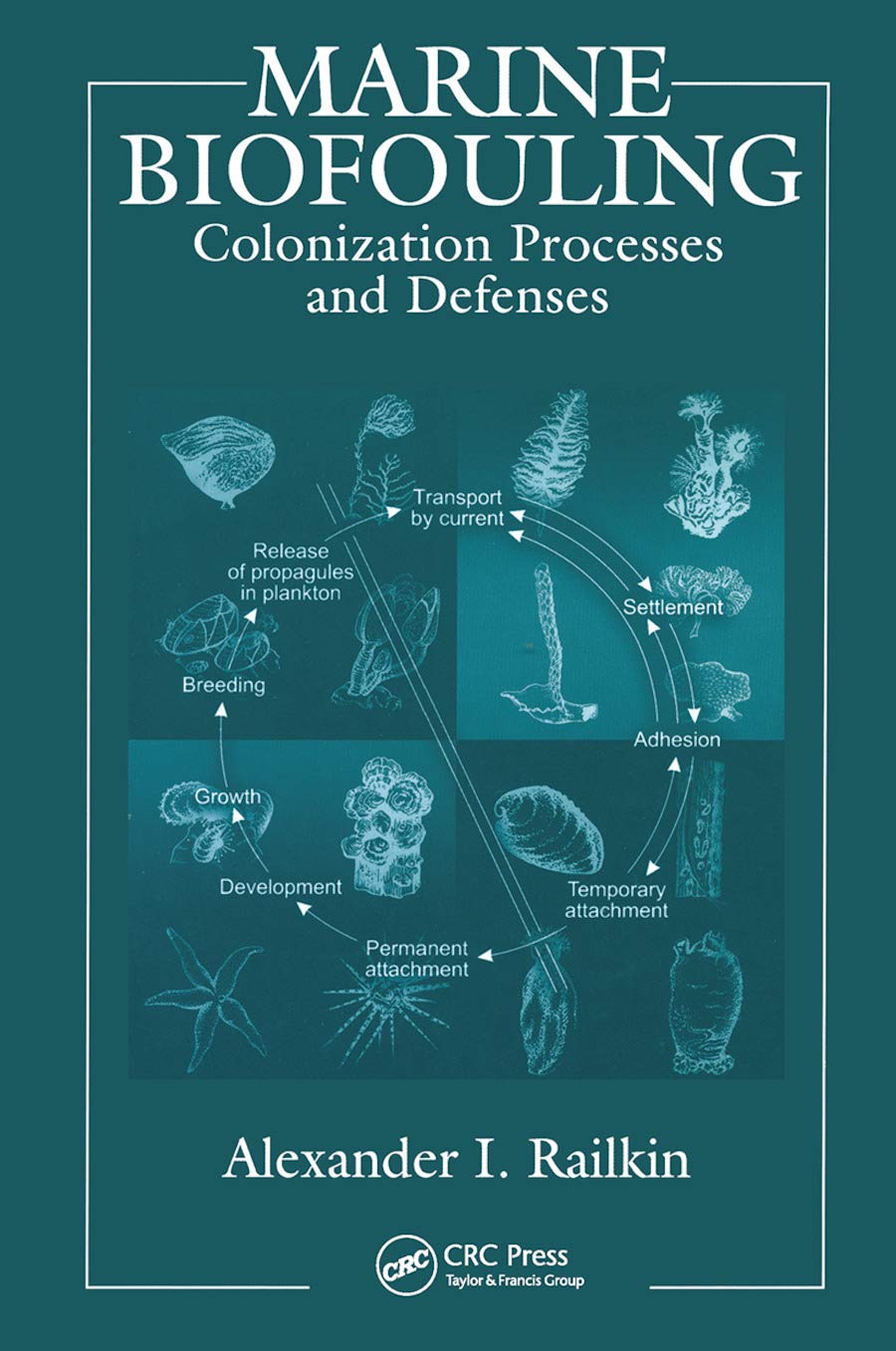



Recent instances of bioinvasion, such as the emergence of the zebra mussel in the American Great Lakes, generated a demand among marine biologists and ecologists for groundbreaking new references that detail how organisms colonize hard substrates, and how to prevent damaging biomass concentrations. Marine Biofouling: Colonization Processes and Defenses is the English language version of a comprehensive work by eminent Russian scientist Alexander I. Railkin, who details the causes of vast biomass concentrations on submerged hard substrates. He also delivers a quantitative description of colonization processes and provides detailed models for preventing biofouling. This volume expounds on many topics rarely discussed in the frame of one book: types of hard substrate communities; comparison of hard and soft substrate communities; harm caused by micro- and macrofoulers; larval taxes and drift; mechanisms of settlement and attachment of microorganisms, invertebrates, ascidians and macroalgae; the impact of currents; protection from epibionts; industrial biofouling protection; successions on hard substrates; and the recovery of disturbed communities or the self-assembly of communities. The text includes much Russian-language research translated for the first time. Through a thorough examination of substrate organisms and an exploration of preventive methods, this monograph prepares those concerned with marine biology to help protect the self-purifying organisms that keep marine ecosystems healthy and productive. "The organization of this book breaks down this complex problem into its fundamental biological and ecological components. … This is an important reference resource for specialists of all kinds." - Southeastern Naturalist, Vol. 3, No. 3, 2004 "The English translation of this monograph makes accessible for the first time a great number of Russian-language works on an important topic of marine ecology. …the writing is scientific and technical, the information is of great value both to biologists and to those practicing marine trades." -Northeastern Naturalist, Issue 12/4, 2005 Alexander I. Railkin