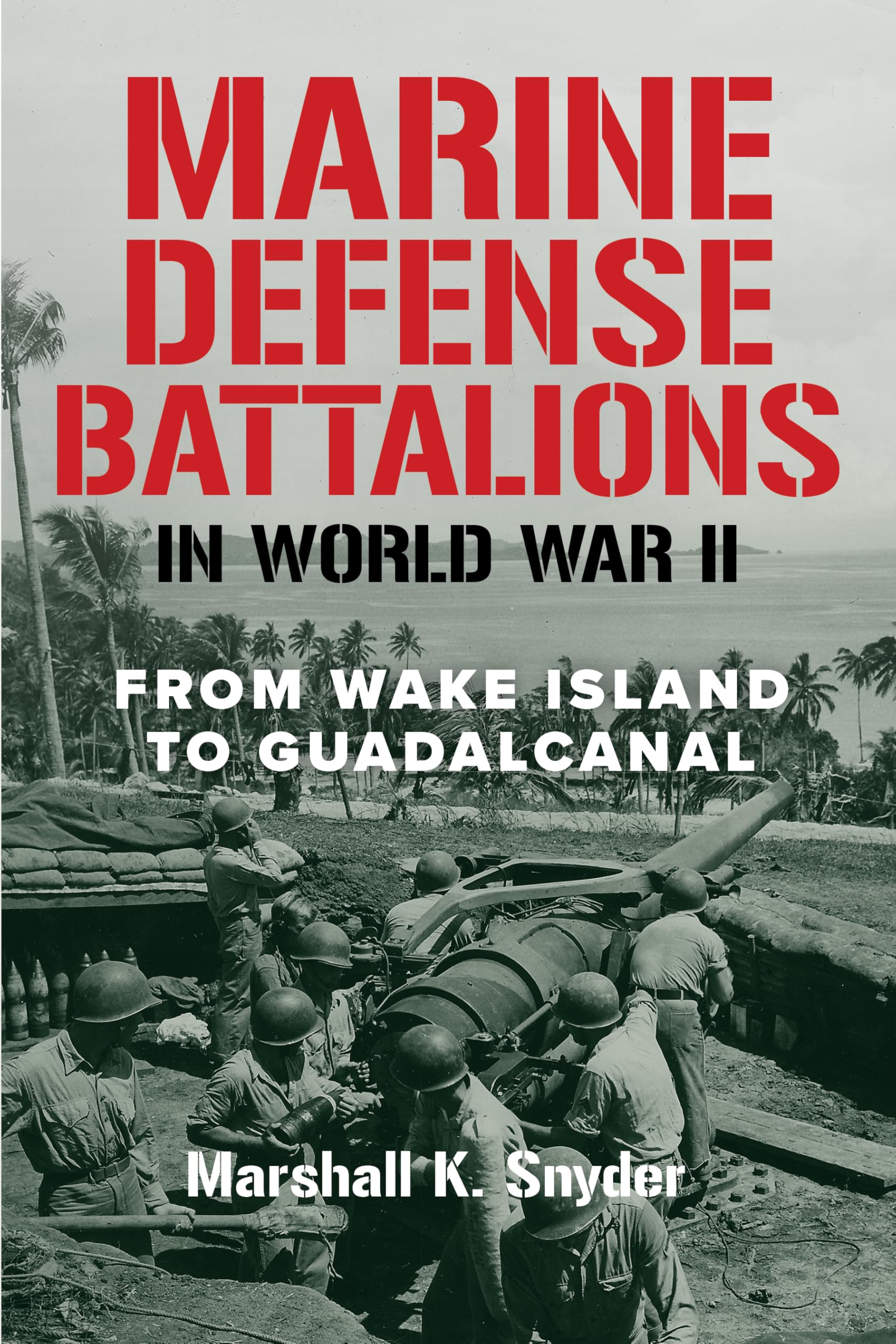
Marine Defense Battalions in World War II: From Wake Island to Guadalcanal (Studies in Marine Corps History and Amphibious Warfare)
$49.95
by Marshall K. Snyder



This account reveals the overlooked role of Marine Defense Battalions in shaping the early Pacific War, from Pearl Harbor to Guadalcanal. Highlighting their coordination with Marine aviation and their legacy in today’s littoral regiments, it shows how these units built the foundation for modern coastal defense strategy. During World War II, the U.S. Marine Corps revolutionized coastal defense with the creation of twenty Defense Battalions, a critical backbone in the early fight for the Pacific. While the heroic stand of the 1st Defense Battalion at Wake Island is legendary, the unsung contributions of these battalions in pivotal battles like Pearl Harbor, Midway, and Guadalcanal tell a story of courage and resilience. These units built a defensive shield across the Pacific, adapting to the shifting tides of war as their role evolved. Equally overlooked is the defense of Bataan and Corregidor by the 4th Marines and the use of Marine Corps aviation in coastal defense, particularly in the Solomon Islands. In addition, while Marine fighter aces are celebrated for their contributions during the Guadalcanal campaign, the broader role of Marine aviation in coastal defense remains underexplored. After the Defense Battalions were paired with Marine Corps aviation, the addition of Marine attack aircraft vastly increased the detection and destruction ranges of the overall Marine defense. In turn, the Defense Battalions provided protection for the aviation units, and in some cases even helped build the airfields. The Marine Corps’ mission of seizing and defending advance naval bases dates to the Spanish-American War, but efforts to create specialized units for these operations were often hindered by the demands of Central American and Caribbean interventions, as well as World War I. The creation of Marine Defense Battalions in the prewar period marked a significant step forward, as these units were specifically tasked with coastal defense and the protection of advanced naval bases. During the early stages of World War II, these battalions were deployed to key locations throughout the Pacific Theater and guarded the strategic route to Australia and New Zealand. As the war progressed, the strategic deployment of Defense Battalions and Marine aviation assets extended to the occupation and garrisoning of numerous South and Central Pacific islands. However, the growing irrelevance of the battalions and the shifting nature of their missions reflected the changing dynamics of the conflict. This evolution ultimately paved the way for the creation of Marine Littoral Regiments in the twenty-first century, which are considered the modern descendants of the Marine Defense Battalions. These regiments continue to embody the legacy of coastal defense and advance base operations in U.S. Marine Corps history. "Marshall K. Snyder deserves laudable credit for taking up an essential story of the Marine air-ground team ignored by division and wing scholars. During World War II, some twenty Defense Battalions served overseas, including two of the first desegregated combat units of the Corps. Tactically employed as the name implies, the Defense Battalions were strategically deployed as the forward elements of the fleet to secure vital naval advanced bases for fuel, communications, and air power."― Charles D. Melson, Chief Historian Emeritus, History Division, Headquarters Marine Corps and Marine Corps University “This book fills a missing segment of Marine Corps and seacoast defense history. The author provides the background on the origin and background of the Marine defense battalions from their doctrine development and tactical uses before the advent of World War II. The book presents both a narrative history that history readers will find engaging and unit-based summaries and literature for the historian.” ― Mark Berhow, editor of the Coast Defense Journal "By uncovering the story of Marine defense battalions in World War II, Marshall Snyder helps us connect broader themes of naval strategy, adaptation, and the crucial interdependence of sea power in the Pacific War. In highlighting the tremendous versatility, industry, and efficiency of these under recognized Marine units, he shares a story as relevant to U.S. national security today as it was in 1941-45." – Chris K. Hemler, author of Delivering Destruction: American Firepower and Amphibious Assault from Tarawa to Iwo Jima “Marshall Snyder has filled an important gap in our knowledge of the Pacific War in this first comprehensive history of the Marine Defense Battalions. As Snyder recounts in this fine detailed study, after being Initially responsible for the static protection of Allied island facilities, including the heroic defense of Wake and Midway islands, the battalions’ primary role changed to providing anti-aircraft defense for airstrips and other invasion objectives during the Allied march to victory." ― Alan Rems, author of South Pacific Cauldron: World War II's Great