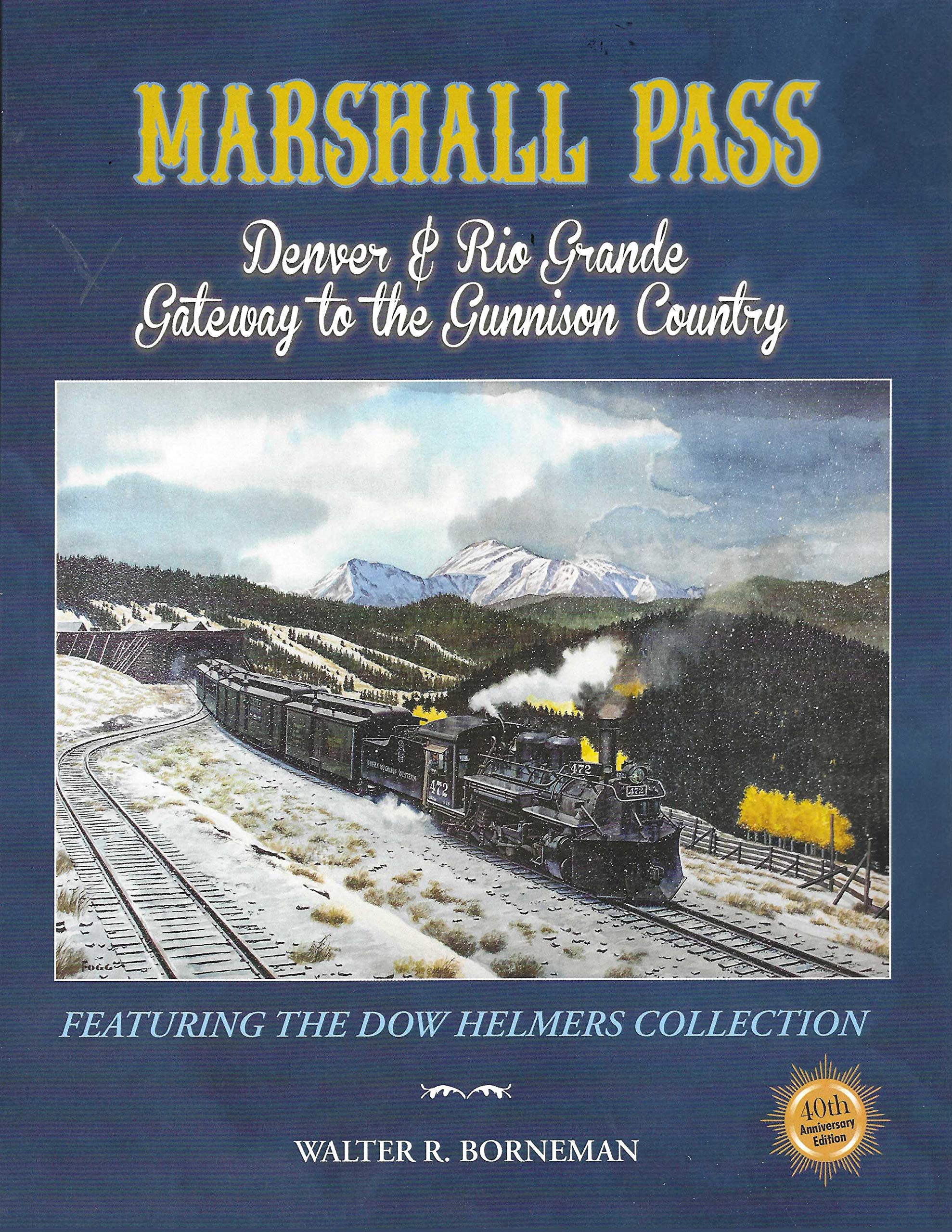



Marshall Pass atop the Continental Divide is one of the "great gates,: as historian Marshall Sprague called the Rocky Mountain passes. In the early 1880s, General William Jackson Palmer's Denver and Rio Grande raced Governor John Evans's Denver, South Park and Pacific to reach the booming Gunnison country, tap the mineral wealth of the San Juan Mountains, and attempt to become a transcontinental route. Thanks to Marshall Pass, the Rio Grande won the race and for seven years was the only transcontinental line through Colorado. Always a narrow gauge, Marshall Pass eventually lost its rails to the Rio Grande's standard gauge route over Tennessee Pass and the paved highway over Monarch Pass. But the rigorous terrain, unforgiving locomotives and a cast of colorful personalities from Otto Mears to postmaster Gus Latham, Marshall Pass remains at the center of Colorado's railroad heritage. Walter R. Borneman has long been known in Colorado's mountains as the co-author along with Lyndon J. Lampert of A Climbing Guide to Colorado's Fourteeners, first published in 1978. Marshall Pass was written during his undergraduate years at Western State College in Gunnison and was originally published in 1980. In the forty years since, Borneman has authored fifteen books on American military and political history and the American West, including Alaska, 1812, Polk, The Admirals, Brothers Down and Iron Horses: America's Race to Bring the Railroads West. His commentary has appeared in the Wall Street Journal, New York Times, and Washington Post. His favorite place is still anywhere in Colorado's mountains.