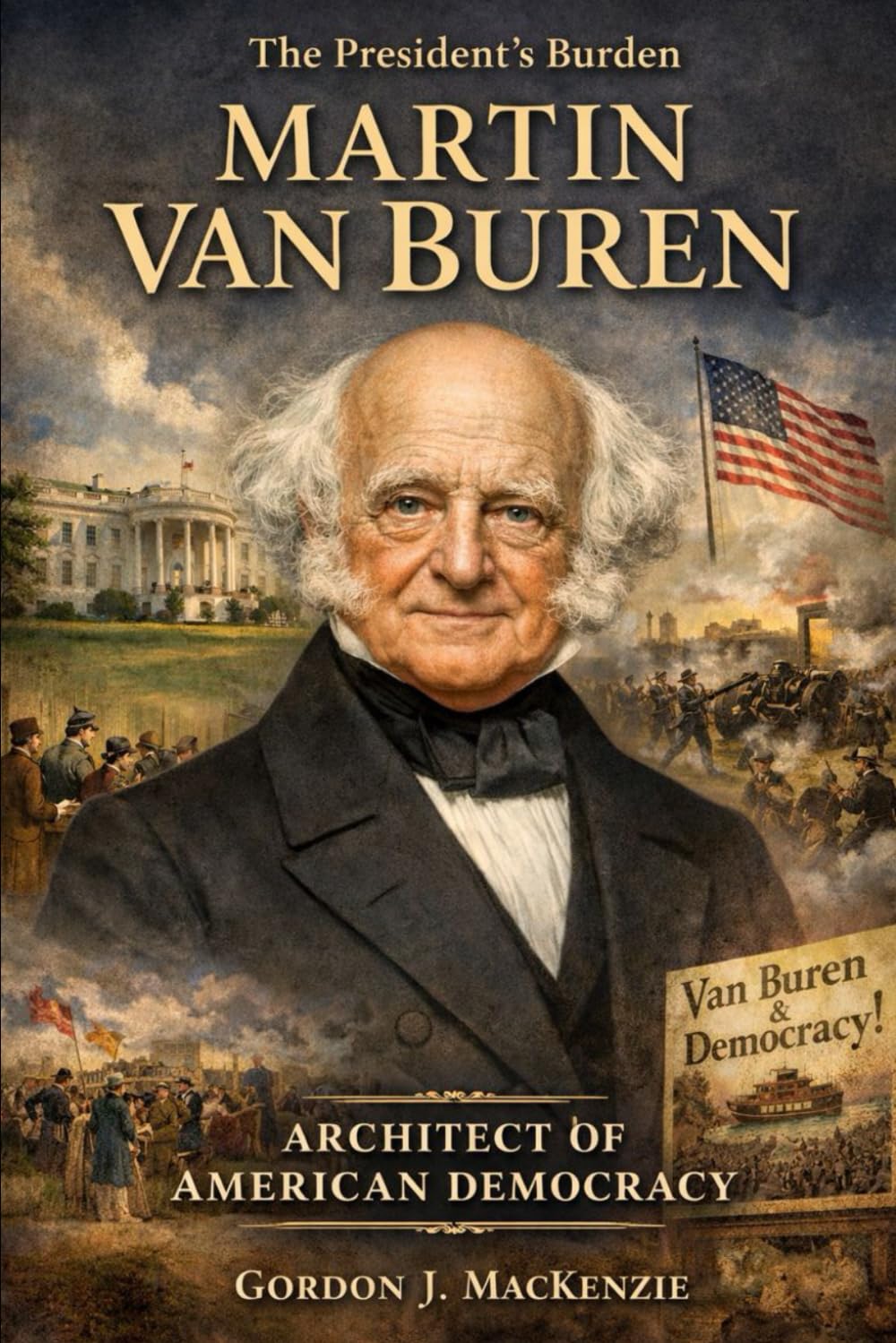
Martin Van Buren: Architect of American Democracy (The President’s Burden)
$9.99
by Gordon J. MacKenzie



Martin Van Buren built the machinery that made American mass democracy work. Long before politics became a permanent campaign, he understood that a republic this large could not run on good intentions and gentlemanly consensus. It needed parties, discipline, and a national organisation that could compete, govern, and accept defeat. From the faction wars of New York to the inner circle of Andrew Jackson, Van Buren emerged as the era’s most effective strategist, turning popular energy into durable power. As president, he faced catastrophe with the Panic of 1837 and chose institutional restraint over short-term rescue, defending a hard line separation between public funds and private banking influence. The choice shaped his reputation, hardened opposition, and helped define an argument Americans still fight about: what government owes the public when markets collapse. This biography follows Van Buren from party architect to embattled president and, finally, to an aging elder watching the Union fracture under the pressure of slavery’s expansion. It is the story of a builder without romance, a man who shaped the rules of modern politics and then lived to see those rules reach their limit.