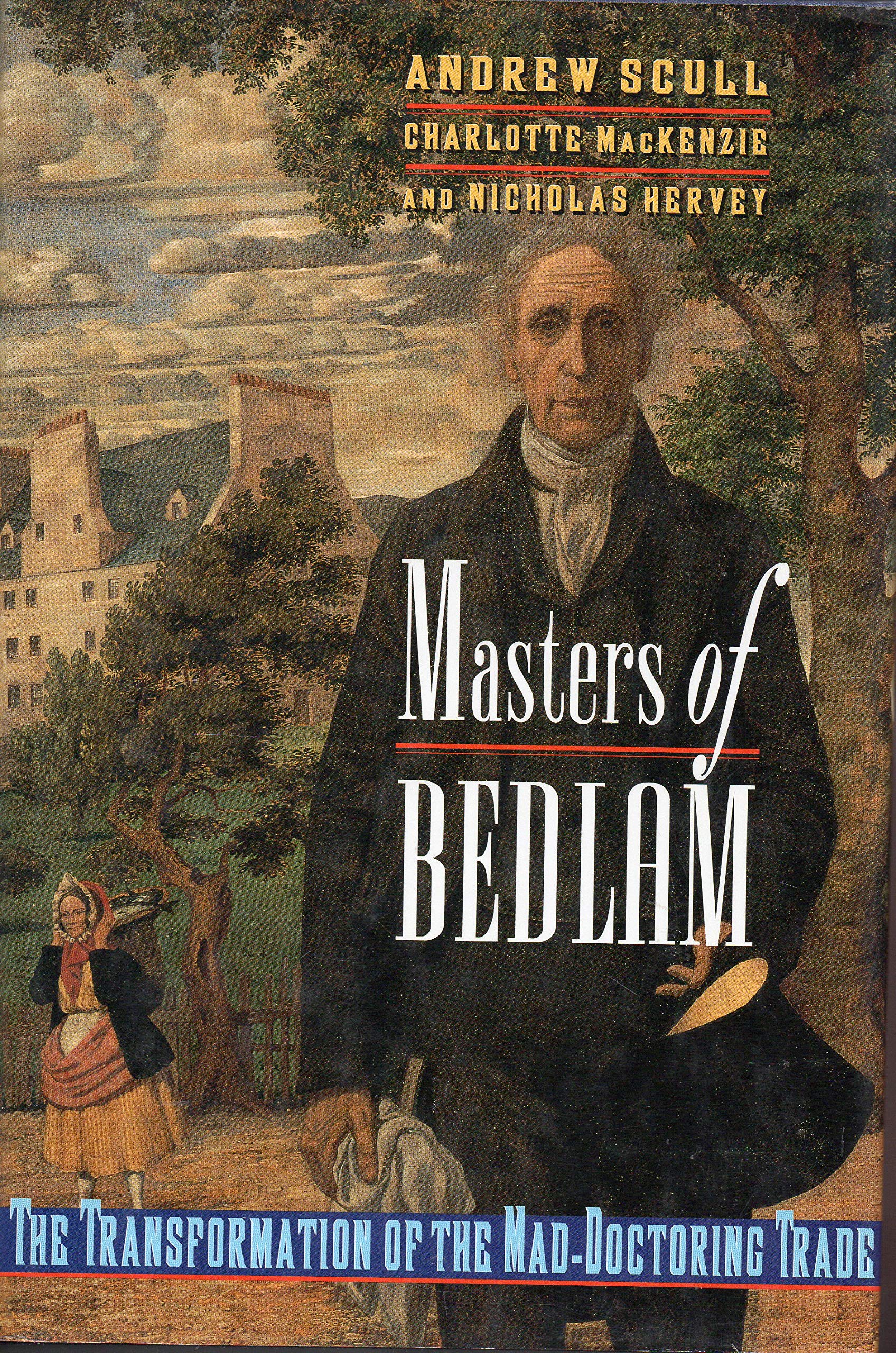



Through an examination of the fascinating lives and careers of a series of nineteenth-century "mad-doctors," Masters of Bedlam provides a unique perspective on the creation of the modern profession of psychiatry, taking us from the secret and shady practices of the trade in lunacy, through the utopian expectations that were aroused by the lunacy reform movement, to the dismal realities of the barracks-asylums--those Victorian museums of madness within which most nineteenth-century alienists found themselves compelled to practice. Across a century that spans the period from an unreformed Bedlam to the construction of a post-Darwinian bio-psychiatry centered on the new Maudsley Hospital, from a therapeutics of bleeding, purging, and close confinement through the era of moral treatment and nonrestraint to a fin-de-siécle degenerationism and despair, men claiming expertise in the treatment of mental disorder sought to construct a collective identity as trustworthy and scientifically qualified professionals. This fascinating series of biographies answers the question: How successful were they in creating such a new identity?. Drawing on an extensive array of sources, the authors vividly re-create the often colorful and always eventful lives of these seven "masters of bedlam." Sensitive to the idiosyncrasies and peculiarities of each man's personal biography, the authors replace hagiographical ac-counts of the great men who founded modern psychiatry with fully rounded portraits of their struggles and successes, their achievements and limitations. In the process Masters of Bedlam provides an extremely subtle and nuanced portrait of the efforts of successive generations of alienists to carve out a popular and scientific respect for their specialty, and reminds us repeatedly of the complexities of nineteenth-century developments in the field of psychiatry. Originally published in 1996. The Princeton Legacy Library uses the latest print-on-demand technology to again make available previously out-of-print books from the distinguished backlist of Princeton University Press. These editions preserve the original texts of these important books while presenting them in durable paperback and hardcover editions. The goal of the Princeton Legacy Library is to vastly increase access to the rich scholarly heritage found in the thousands of books published by Princeton University Press since its founding in 1905. Princeton Univ. Jan. 1997. c.408p. permanent paper. illus. bibliog. index. ISBN Copyright 1996 Reed Business Information, Inc. A terse traipse through Foucault terrain that explores the careers of several Victorians who made a living out of the ``lunacy trade.'' According to sociologist Scull (Univ. of Calif., San Diego) and British health and education experts MacKenzie and Hervey, the advance of capitalism in the 19th century gave rise to a whole class of people who brought ``skill and expertise rather than material goods'' to the marketplace. And while a career associated with the mentally ill was still thought ignominious in England, a number of ambitious men sought to make names for themselves, and make their way in the medical establishment, by proselytizing their ``cures.'' Purging, vomiting, and punitive treatment had formerly been the practice in asylums, but an onslaught of moral reform agents campaigned to revolutionize the system. John Haslam, who rose to prominence at Bethlem Hospital for the insane in London, even published a book promoting the necessity of benevolence in such institutions. Yet when a group of reformers spontaneously toured the asylum, they were aghast to find the patients naked and shackled in their cells, their bodies smeared with excrement. Other, more consistent figures honestly sought change through a variety of non-medical cures but ended up resorting to medical solutions in the face of failing idealism and low recovery rates. Nevertheless, the new social consciousness about the insane, combined with the advent of psychoanalysis, formed the foundation for modern psychiatry. In tracing the lives of the men who shaped the field of psychiatry in Britain, the authors relentlessly drive home the the manner in which the needs of a society shape its principles and theories, while also lucidly emphasizing the effect of social ambitions on personal philosophy. A punchy study that makes up for its occasionally dry tone with scholarly rigor and zeal. (18 photos, not seen) -- Copyright ©1996, Kirkus Associates, LP. All rights reserved. "This book is a triumph of biography, written by three accomplished historians of psychiatry. Individual chapters represent insightful and elegantly presented accounts of prominent alienists, based on meticulous research, judiciously chosen quotations, and an attention to detail and context." ---David Wright, The Times Literary Supplement "This admirably well-researched and well-planned book details [historical] changes with great clarity. The book's