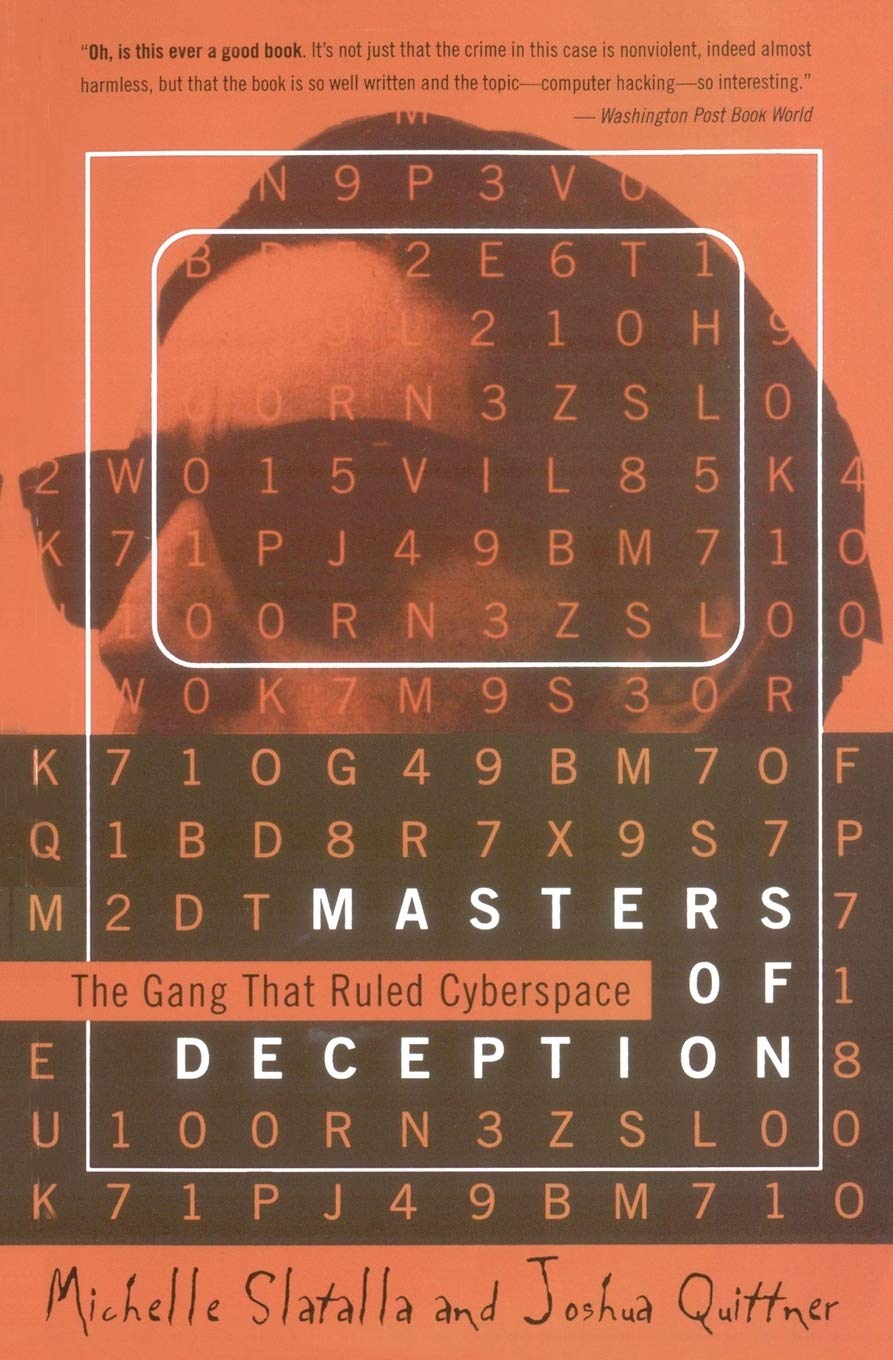



The bestselling account of a band of kids from New York who fought an electronic turf war that ranged across some of the nation's most powerful computer systems. "An immensely fun and -- one cannot emphasize this enough -- accessible history of the first outlaws in cyberspace."-- Glamour On January 15, 1990, the AT&T long-distance phone network crashed. Although it was eventually ruled an accident, the event was a wake-up call to telephone companies and law enforcement agencies everywhere, exposing the fragility of the systems that we all heavily depend on. The feds decided that the time had come to crack down on the handful of computer hackers they had been monitoring for several years in connection with the phone companies. The term "hacker" is about to become a household word, and not in the sense of "great programming." Set against this backdrop, two rival gangs--The Legion of Doom and The Masters of Deception--are about to go to war. What sounds like a clash of comic-book supervillains is actually a feud between factions of teenagers, fueled by misunderstandings and adolescent testosterone. The events leading up to the conflict and its climax are riveting and fun. The book features great depictions of some of the earliest celebrities of hackerdom, including Acid Phreak and Phiber Optik, as well as tales of their exploits and rivalries. Slatalla and Quittner do a great job of portraying the principals as both the powerful cyberspace masters they want to be and the scared, emotional young men they really are. There is also a nostalgic attraction at work in Masters of Deception . Anyone who remembers their first Commie 64 or TRS-80 will long for those golden days and be thankful that they were elsewhere when the Secret Service came calling. The bestselling account of a band of kids from New York who fought an electronic turf war that ranged across some of the nation's most powerful computer systems. "An immensely fun and -- one cannot emphasize this enough -- accessible history of the first outlaws in cyberspace."-- Glamour The Masters of Deception Gang That Ruled Cyberspace, the By Slatalla, Michele Perennial Copyright © 2004 Michele Slatalla All right reserved. ISBN: 0060926945 Prologue You get a crazy-fast busy signal, like on Mother's Day when all the long-distance lines are jammed. Dial again. Busy. Dial again. Busy busy busy busy-- Slam it down. The phone system is crashing. The giant computers that route AT&T customers' long-distance calls, computers called switches, are shutting themselves down, behaving idiotically in a way that only computers can. Switches are the building blocks of the phone network, and when they start throwing electronic tantrums, the world stands still to watch. There's no choice. It's happening today, all across America, as the phone company slogan "We're all connected" took on a new, darker meaning. Suddenly we're all disconnected. It's January 15, 1990, and millions of people are hopelessly jabbing the keypad, dialing the 1, dialing the three-digit area code, dialing the seven-digit number, waiting, getting a busy signal, trying again, getting a recording. One hundred fifty million long-distance calls a day travel these phone lines, threading through a massively intricate complex of earth-orbiting satellites, microwave transmitters, and millions of miles of fiber optic cable webbed across the globe. Thick-sheathed bundles of cable tunnel under the Atlantic Ocean. Long spindly strands are buried beneath railroad tracks or strung from utility poles that crisscross the Great Plains. The signals they carry all converge on some of the most powerful and delicate computers on the planet. So much could go wrong, but AT&T has never failed so spectacularly before, never let its customers down. No natural disaster has ever compromised the phone company's dependability. A few weeks ago, an earthquake measuring 7.2 on the Richter scale collapsed freeways in California, and the phones still worked fine. But not today. AT&T estimates that half of its customers' calls aren't getting through. Seventy-five million calls blocked. And the failure was sudden. At 2:25 p.m., one switch failed. Just one at first. Who knew why? It sent out a distress message to another switch, which should have been able to take over. But instead, the second switch went crazy, too, unable to cope with the bad news. It had a cascading effect, as one switch after another took itself out of service. And it was getting worse. Switch after switch after switch. What caused this damage? What force is so powerful, so dangerous, so heedless, that it crashes a nation's communications system? In AT&T's New Jersey headquarters, dozens of technicians and bosses and engineers and control-center specialists all want the answer. They stare at the world maps, two stories tall, that line one wall in the control room. The maps suddenly flash red in unison, screaming emergency alert. No warning. No gradual