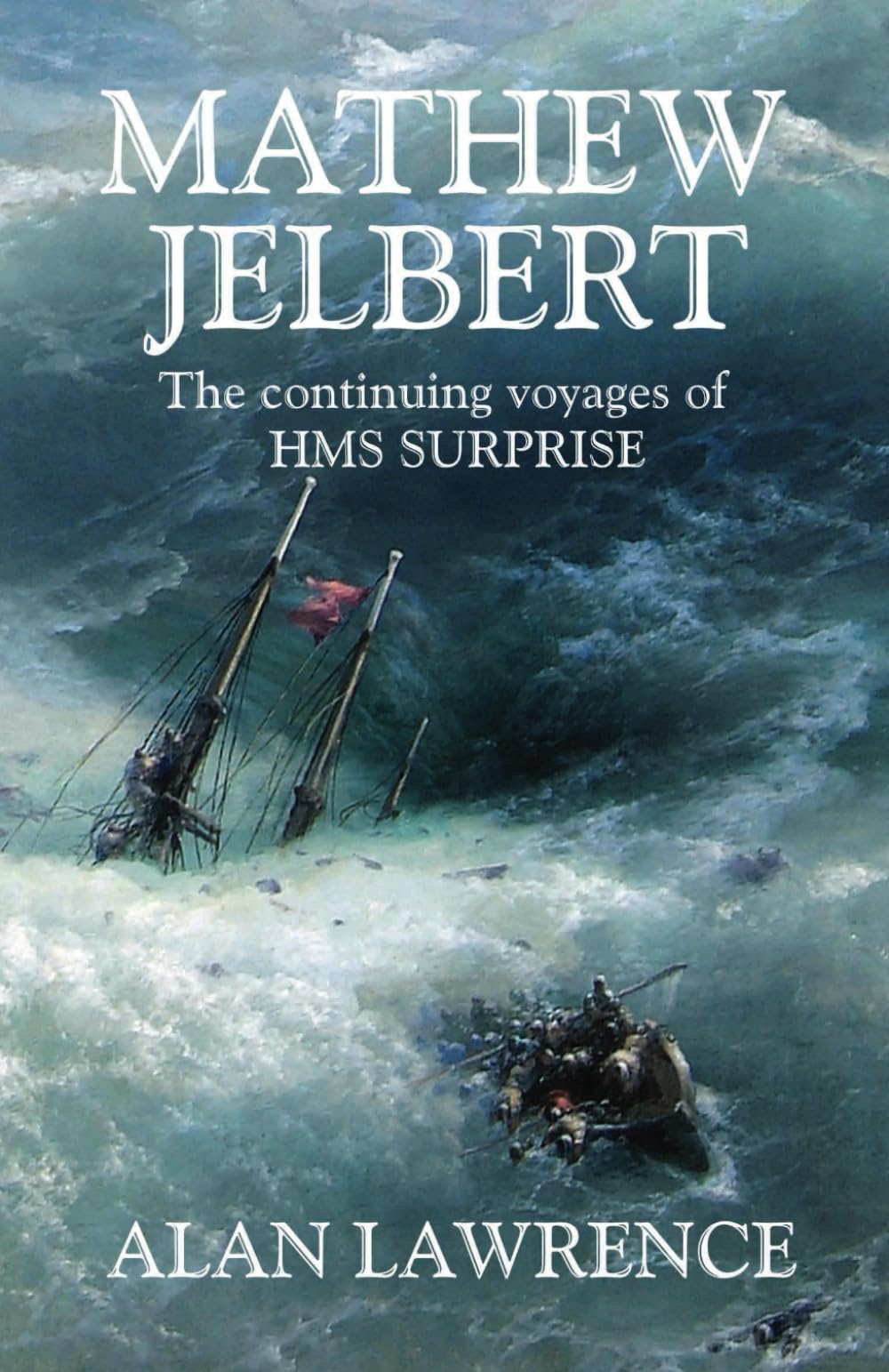



In this fifth book of my series I have continued the story of both actual historical events and the fictional adventures of my characters directly following on from the end of my prior book. That one concluded with the escape of HMS Surprise from the Bay of Navarino when the combined Turk and Egyptian fleets invaded the island of Sphacteria, it being the key to possession of the great bay. The Greek loss of both island and bay was fundamentally instrumental to the subsequent fall of their fortress of New Navarin (modern day Pylos) to the besieging Egyptian forces of Ibrahim Pasha. However, although this is a series and each book generally follows on from its predecessor, all of them may be enjoyed as standalone tales.HMS SURPRISE fights to aid the fledgling Greek navy in their struggle against Ottoman overlords. After delivering her secret cargo of the Tsar's gold, she is unable to outrun a closing Turk fleet, her capture or destruction seemingly inevitable. A miraculous escape through shallow, uncharted waters and she runs for home. Yet catastrophe follows when, in the dense fog off Cape St. Vincent, her tender Eleanor is rund down by an Indiaman, all the crew thrown into the water, the schooner swiftly sinking. Home in Falmouth at last, the men of the barky are much troubled by the non-arrival of their shipmates, all being longstanding friends and comrades-in-arms. Captain Patrick O'Connor contemplates a bleak future of destitution in the great financial crash of 1825 as many provincial banks begin to fail.There is an inevitable and insidious effect on men at war, usually termed ‘combat fatigue’. Generally unknown before the First World War, prior to which battles were fought in one or two days with the soldier able to recuperate for a relatively lengthy spell afterwards, the prolonged exposure to danger in the trenches of the Western Front inflicted traumatic changes on the infantryman. Robert Graves, who fought at Ypres, reported: "At six months the infantry officer was more or less all right; by nine to ten months he became a drag on the other officers; after a year or fifteen months he was often worse than useless." In the Second World War, Brigadier G.W.B. James, a regimental medical officer and holder of the Military Cross and bar, reported: "Prolonged exposure to killing and the threat of being killed wore men down such that by late 1942 (in the Western Desert campaign, starting September 1940) there was complete and utter exhaustion... while brief periods of rest did little to restore the cumulative effects of constant mental strain." One widely-recognised study of such effects is by Swank and Marchand on US infantry in north-west Europe, written in November 1944: "The first symptom of combat exhaustion made its appearance at D-Day plus 25 to 30 in most soldiers. It could not be relieved by 48 hours of rest. The soldier lost confidence in himself and sleeplessness became evident despite his exhaustion. By D-Day plus 40 to 45, emotional exhaustion appeared as a slowing of mental processes, memory defects became extreme and there was also a lack of concentration. In some men they suffered physical symptoms such as paralysis of an arm or visual defects. For 98% of men, after 60 days, they were tense, sleepless and irritable. Some were emotionally unstable to the point that they became angry or cried at the slightest provocation or became irritated towards their friends for trivial reasons. Some became anxious, hyperactive and restless." The more complex detail of these effects on soldiers is beyond a book of fiction such as this; however, these issues rarely, if ever, make an appearance in fiction, and that hardly does justice to the story or delivers authenticity for the reader. In my own books I have striven to write with a degree of attention to these cruel realities.