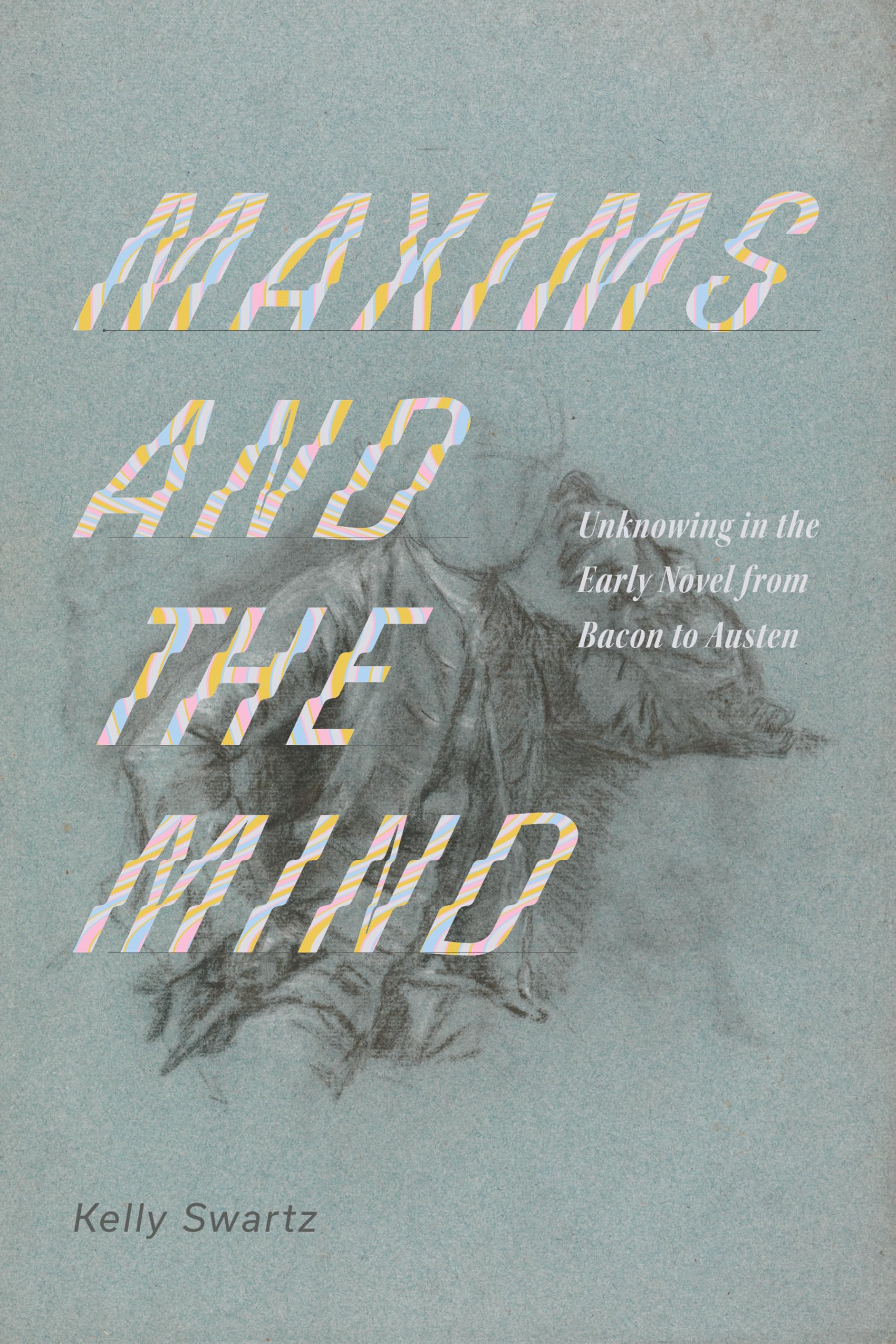
Maxims and the Mind: Unknowing in the Early Novel from Bacon to Austen
$28.63
by Kelly Swartz



Correcting the misunderstood role of maxims at the intersection of early science and literature Eighteenth-century novels are full of maxims—pithy statements of received wisdom such as “necessity is the mother of invention” or “neither a borrower nor a lender be.” Maxims are ancient rhetorical forms, celebrated by no less an influential figure than Aristotle as powerful tools of persuasion. Critics have generally explained away their ubiquitous presence in eighteenth-century novels as a vestige of a premodern form. As Kelly Swartz explains, however, their presence illustrates an important yet often overlooked aspect of the novel’s relationship with the early empirical sciences. Applying insights from Francis Bacon’s account of aphorizing as a method of scientific writing to works by Aphra Behn, Jonathan Swift, Samuel Richardson, and Jane Austen, Swartz shows how maxims functioned in a critical role that she calls “unknowing.” Such expressions, she argues, represented the not yet known as a way to inspire in readers a desire for ongoing, collective inquiry. Maxims also allowed these authors to invent unknowing fictional minds, at once attractive and vexing, ranging from the incoherent and banal to the unintelligibly rich. Maxims and the Mind thus offers new insight into the nature of the relationship between science and the early novel, emphasizing their shared interest in the representation of knowledge still awaiting discovery. A compelling new intervention in eighteenth-century studies. Swartz's prose is consistently lucid, engaging, and fluent; her mode of argumentation is precise and subtle. This account of the maxim's role in eighteenth-century literature renders our understanding of this form and its effects variegated and precise.? Sarah Tindal Kareem, UCLA, author of Eighteenth-Century Fiction and the Reinvention of Wonder A compelling new intervention in eighteenth-century studies. Swartz’s prose is consistently lucid, engaging, and fluent; her mode of argumentation is precise and subtle. This account of the maxim’s role in eighteenth-century literature renders our understanding of this form and its effects variegated and precise.― Sarah Tindal Kareem, UCLA, author of Eighteenth-Century Fiction and the Reinvention of Wonder Kelly Swartz is Associate Professor of English at Adelphi University.