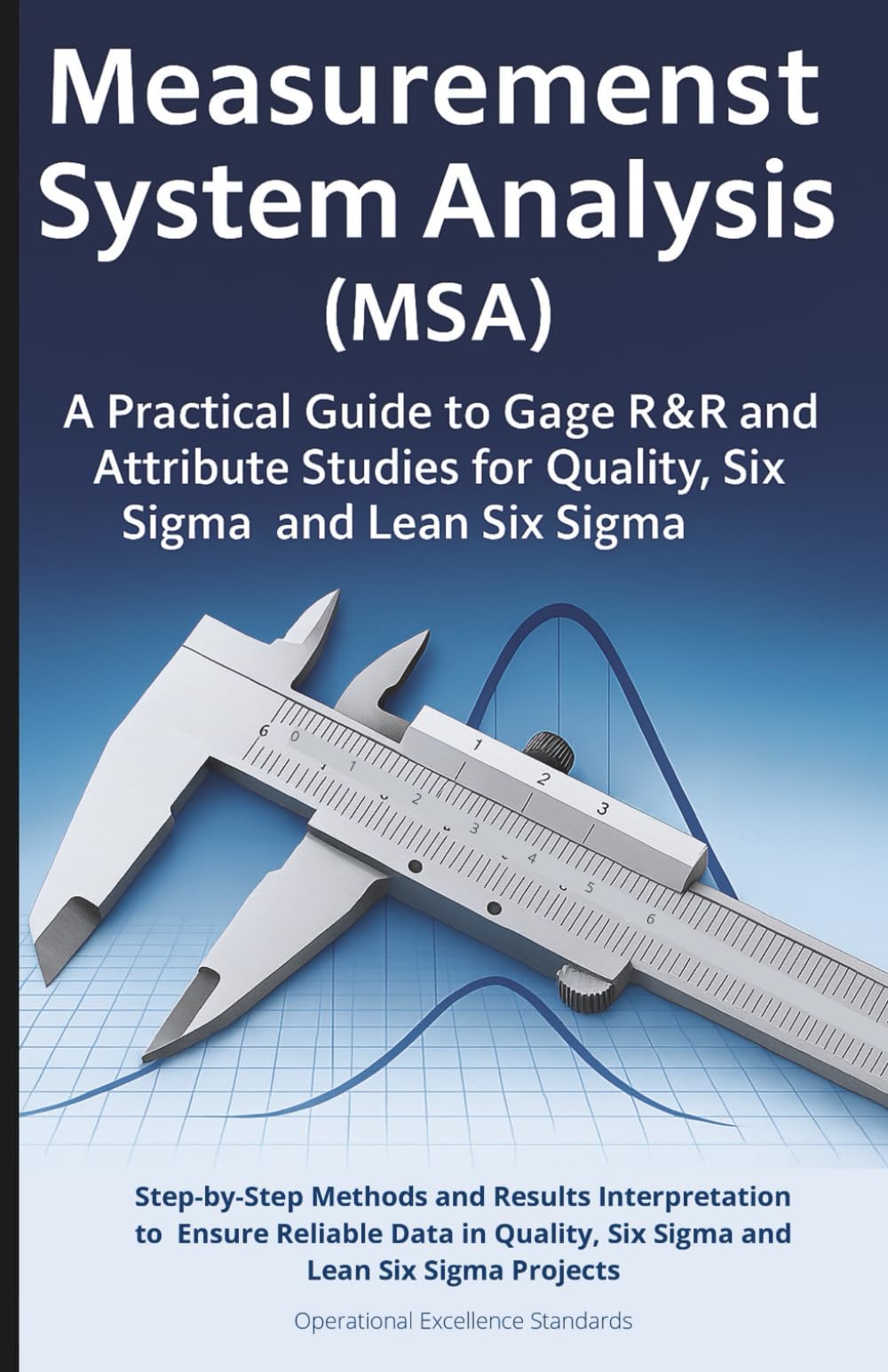
Measurement System Analysis (MSA): A Practical Guide to Gage R&R and Attribute Studies for Quality, Six Sigma and Lean Six Sigma: Step-by-Step Methods
$24.95
by Operational Excellence Standards



Build Reliable Data Foundations for Quality and Six Sigma Projects In every improvement initiative, reliable measurement is the key to success. Without a trustworthy measurement system, even the best Six Sigma or Lean Six Sigma project will fail to deliver lasting results. Measurement System Analysis (MSA): A Practical Guide to Gage R&R and Attribute Studies for Quality, Six Sigma, and Lean Six Sigma provides a step-by-step approach to understanding and applying MSA concepts. Designed for quality engineers, Lean Six Sigma practitioners, and students of quality management , this book turns complex topics into clear, actionable methods you can apply right away. Inside, you’ll discover how to: ✅ Understand what makes up a measurement system and why its evaluation is crucial - ✅ Understand the key MSA concepts: bias, linearity, stability, repeatability, and reproducibility - ✅ Perform and interpret Crossed R&R study - ✅ Perform and interpret Attribute Agreement Analysis - ✅ Perform and interpret Attribute Gage Study - ✅ Connect MSA directly to DMAIC projects and continuous improvement efforts Why this book? Clear, practical explanations that cut through technical jargon - Step-by-step methods aligned with industry best practices - Essential reference for Six Sigma Green Belts, Black Belts, and Lean professionals - Helps avoid costly errors caused by unreliable data - Useful for both classroom learning and on-the-job application Whether you’re preparing for Six Sigma certification, leading a Lean Six Sigma project, or strengthening your organization’s quality processes, this guide gives you the tools to evaluate, improve, and trust your measurement systems. 👉 Take the guesswork out of your data — and give your projects the solid foundation they deserve with Measurement System Analysis (MSA).