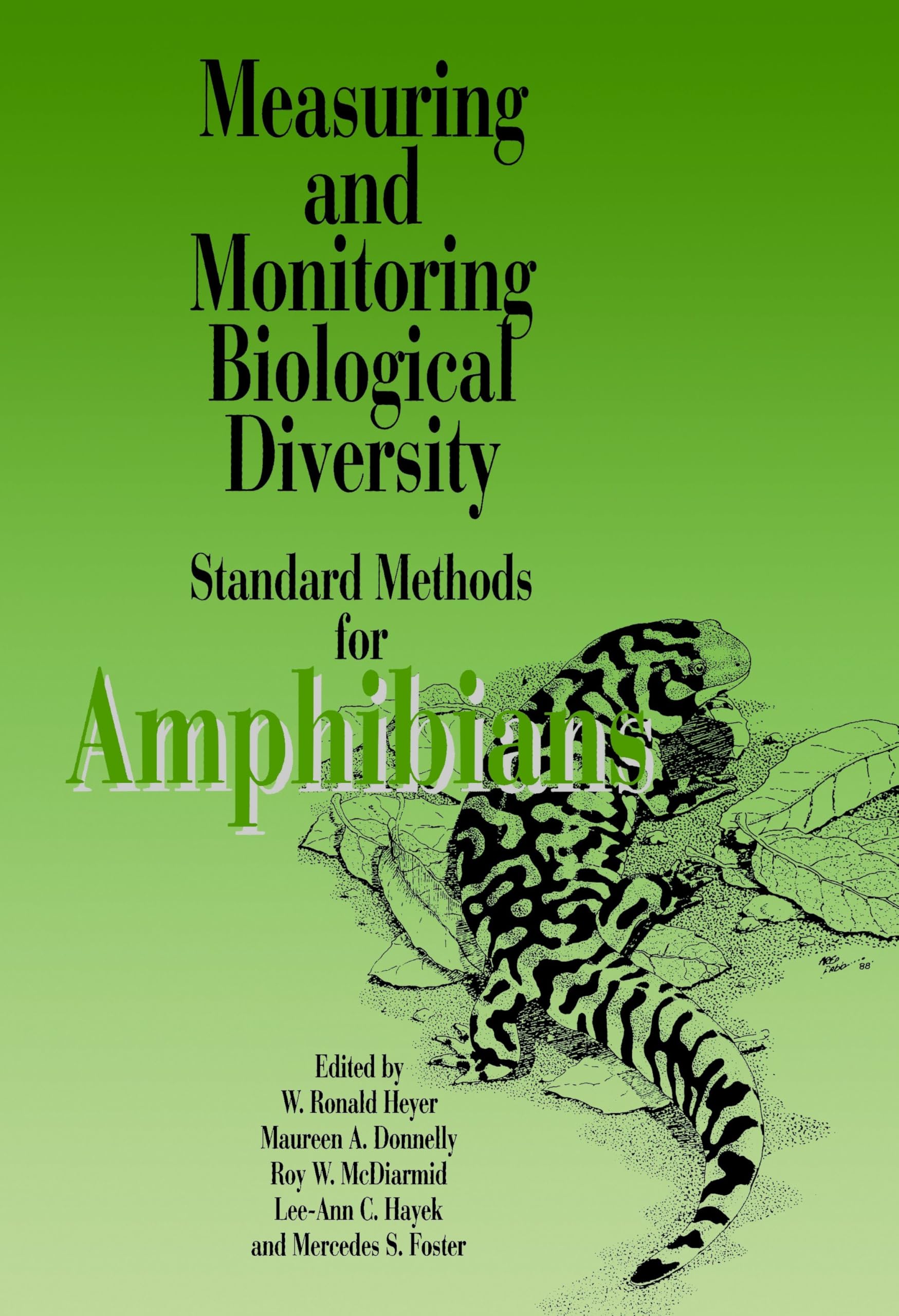
Measuring and Monitoring Biological Diversity. Standard Methods for Amphibians (Biological Diversity Handbook)
$35.09
by W. Ronald Heyer



Measuring and Monitoring Biological Diversity is the first book to provide comprehensive coverage of standard methods for biodiversity sampling of amphibians, with information on analyzing and using data that will interest biologists in general. In this manual, nearly fifty herpetologists recommend ten standard sampling procedures for measuring and monitoring amphibian and many other populations. The contributors discuss each procedure, along with the circumstances for its appropriate use. In addition, they provide a detailed protocol for each procedure's implementation, a list of necessary equipment and personnel, and suggestions for analyzing the data. The data obtained using these standard methods are comparable across sites and through time and, as a result, are extremely useful for making decisions about habitat protection, sustained use, and restoration—decisions that are particularly relevant for threatened amphibian populations. “Comprehensive.”— Conservation Biology As the Earth's number of species decreases, biologists have been concerned particularly with general decline in amphibian populations, viewing them as particularly sensitive indicators of the health of the environment. Yet one of the most difficult problems in conservation biology is the lack of baseline data against which to measure population changes. Measuring and Monitoring Biological Diversity is the first book to provide comprehensive coverage of standard methods for biodiversity sampling of amphibians, with information on analyzing and using data that will interest biologists in general. In this manual, nearly fifty herpetologists recommend ten standard sampling procedures for measuring and monitoring amphibian and many other populations. The contributors discuss each procedure, along with the circumstances for its appropriate use. In addition, they provide a detailed protocol for each procedure's implementation, a list of necessary equipment and personnel, and suggestions for analyzing the data. The data obtained using these standard methods are comparable across sites and through time and, as a result, are extremely useful for making decisions about habitat protection, sustained use, and restoration - decisions that are particularly relevant for threatened amphibian populations. W. Ronald Heyer is a research zoologist for the National Museum of Natural History at the Smithsonian Institution. Maureen A. Donnelly is a research associate at the American Museum of Natural History. Roy W. McDiarmid is a research zoologist and curator of amphibians and reptiles for the US Fish and Wildlife Service at the National Museum of Natural History. Lee-Ann C. Hayek is the chief mathematical statistician at the National Museum of Natural History. Mercedes S. Foster is a research zoologist and curator of birds for the US Fish and Wildlife Service at the National Museum of Natural History. Used Book in Good Condition