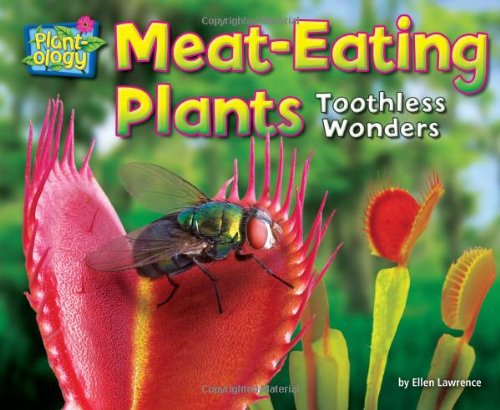



An unsuspecting fly buzzes around a clump of colorful plants in a swamp. Unaware of any danger, it lands on one of the plants. Snap! The plant's trap snaps shut in less than a second, and the fly is now the meal of a Venus flytrap! This title explores the world of carnivorous plants that obtain nutrients by "eating" animals. From plants that act like sticky flypaper to trap their prey, to other plants that lure their victims into deep pitchers of liquid from which the animals will never escape, children will learn about a variety of plants that employ interesting techniques to capture food. From beautiful photographs of these unusual plants to high-interest, high-gross-factor facts, Meat-Eating Plants: Toothless Wonders makes learning about carnivorous plants a lively, engaging experience. The fun topic ensures that young readers will enjoy engaging in science while developing their powers of observation and critical thinking. Meat-Eating Plants: Toothless Wonders is part of Bearport's Plant-ology series. Gr 1-3-Whether dealing with photosynthesis or introducing unusual examples of meat-eating species, these volumes are strong introductions for early elementary learners. Clearly labeled photos reinforce information presented in adjacent text. Related questions encourage readers to make predictions or offer opinions about matters such as what type of weather might help scatter seeds. Small inset maps identify areas where many of the unusual plants (e.g., rafflesia plants with their giant flowers) can be found. Each book includes instructions for simple activities or experiments, including comparing growth in different types of soil and making a model of a cactus. Report writers will appreciate this series. α(c) Copyright 2011. Library Journals LLC, a wholly owned subsidiary of Media Source, Inc. No redistribution permitted. “The insect doesn’t know it, but it has just made a big mistake.” Yep, that fly just got suckered by the oldest trick in the book, the Venus flytrap’s nectar. This entry in the Plant-ology series uses every inch of its wide trim to show the brilliantly colored, sticky-edged surfaces of these infamous freaks of nature. Details provided by the text and side boxes are reiterated within the glossy photos, as Lawrence works her way through the flytrap, sundew, butterwort, and pitcher plants, the last of which drowns its prey in a leafy cup. (Warning: includes terrifying picture of a rat caught in said cup.) Maps tell us where each plant can be found, and a short experiment concludes. Readers might just want one of these cool, quiet killers for themselves. Grades 1-3. --Daniel Kraus Used Book in Good Condition