Med Surg Nursing I&II Made Easy: Medical Surgical Nursing Study Guide Essential Review for Nurses & Healthcare Providers: NCLEX-RN/PN • ATI/HESI •
$34.99
by Made Easy Academy



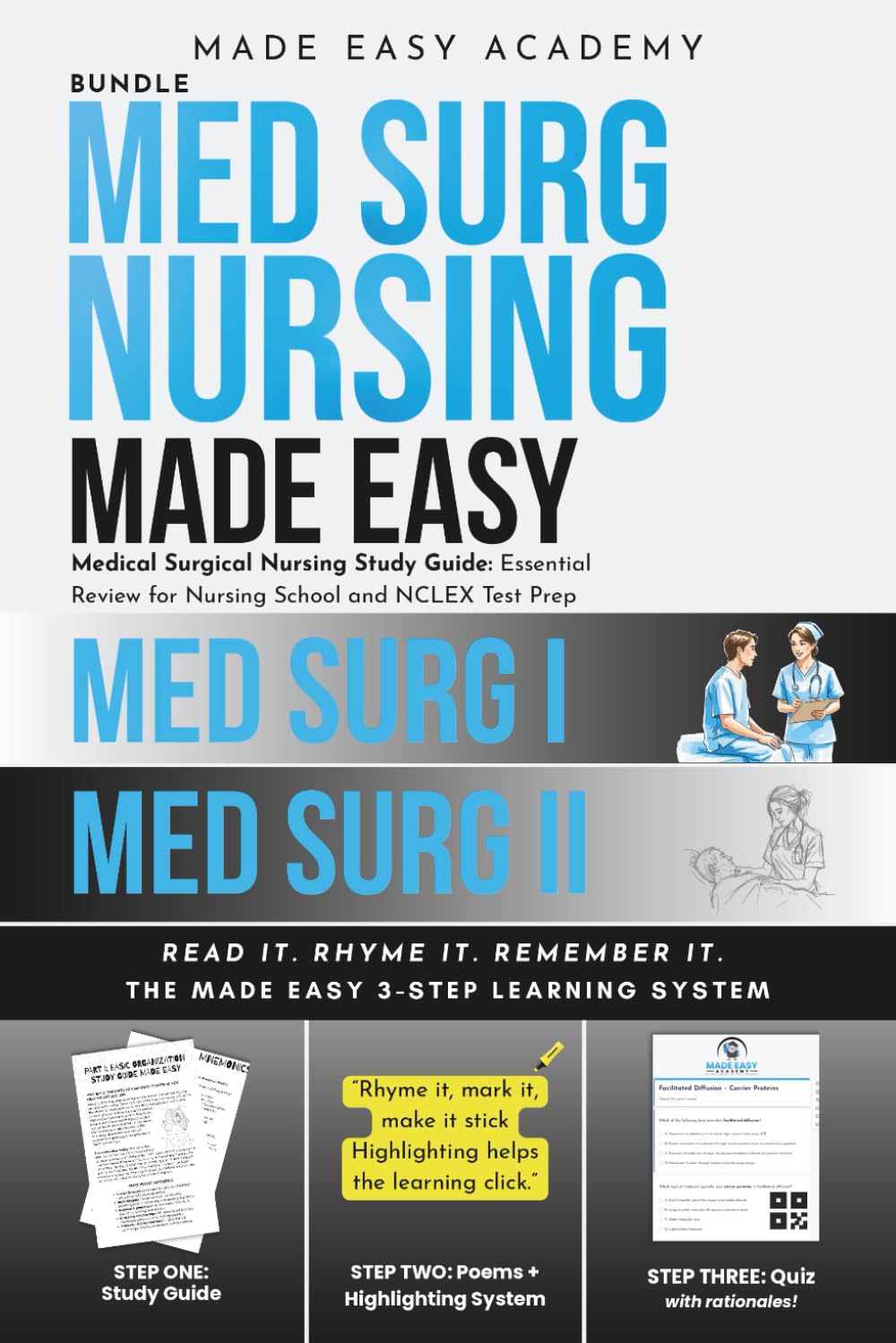
Standing at the bedside with a patient in heart failure, diabetic crisis, respiratory distress, or septic shock—and your mind scrambles trying to remember which protocol goes with which condition. You've studied eleven body systems. Hundreds of diseases. Thousands of interventions. And your brain is supposed to keep it all straight during exams and clinical rotations. Sound familiar? Mixing up heart failure types? Confusing asthma and COPD management? Forgetting stroke protocols when seconds matter? Blanking on GI bleed interventions? Staring at glucose levels wondering if this is DKA or HHS? Freezing during post-op assessment? Mixing up SIADH and DI? Second-guessing every electrolyte imbalance? Traditional textbooks expect you to memorize everything through repetition. Your brain isn't wired that way—and you don't have time for methods that don't work. This Complete Two-Book Bundle Covers All 11 Body Systems: Medical-Surgical Nursing I covers cardiovascular, respiratory, gastrointestinal, neurological, and hematology. Medical-Surgical Nursing II covers endocrine, musculoskeletal, renal, immune, integumentary, and perioperative care. Both books use the same proven methodology so your brain builds one unified framework instead of juggling different study approaches. The Proven Made Easy Three-Step System Built on Brain Science: Step 1: Build Your Framework Study guides in both books organize all eleven systems into comparison tables, decision trees, and clinical pathways. Master cardiac conditions, respiratory disorders, GI emergencies, neurological assessments, blood disorders, endocrine crises, musculoskeletal complications, renal failure, immune disorders, wound management, and surgical protocols. Every complex concept gets a structured framework your brain can actually file and find again. Step 2: Lock It In With Rhythm Color-coded rhyming poems in both books transform protocols into memorable clinical stories. The 5-color highlighting system connects related information across all systems. Heart failure progression, respiratory assessment, stroke protocols, diabetes care, kidney failure signs, post-op complications, anaphylaxis response, and wound healing become rhythmic patterns instead of scattered facts. Step 3: Practice Like You'll Be Tested QR codes in both books link to quiz folders covering all eleven systems with NCLEX-style questions and detailed rationales. Every answer explains not just what's correct, but why other options are wrong. You're building clinical reasoning that transfers across every body system and emergency you'll encounter. What if I'm overwhelmed by how much Med Surg content there is? That's exactly why this system works. The comparison tables show how concepts connect across systems. The rhythmic encoding helps your brain hold onto information even when studying your tenth body system. What if rhyming poems feel too simple for this much complex content? The simplicity is the strength. Your brain during exams and at the bedside isn't analyzing—it's retrieving. Rhythm, color, and structure create fast retrieval pathways for everything from cardiac output to compartment syndrome. Stop fighting your brain's natural learning architecture. Start building clinical knowledge that transfers from study guide to test room to patient bedside. Get the Complete Medical-Surgical Nursing Bundle—two books, eleven body systems, one proven methodology—and master organized, memorable, clinically-focused knowledge you can trust under pressure.