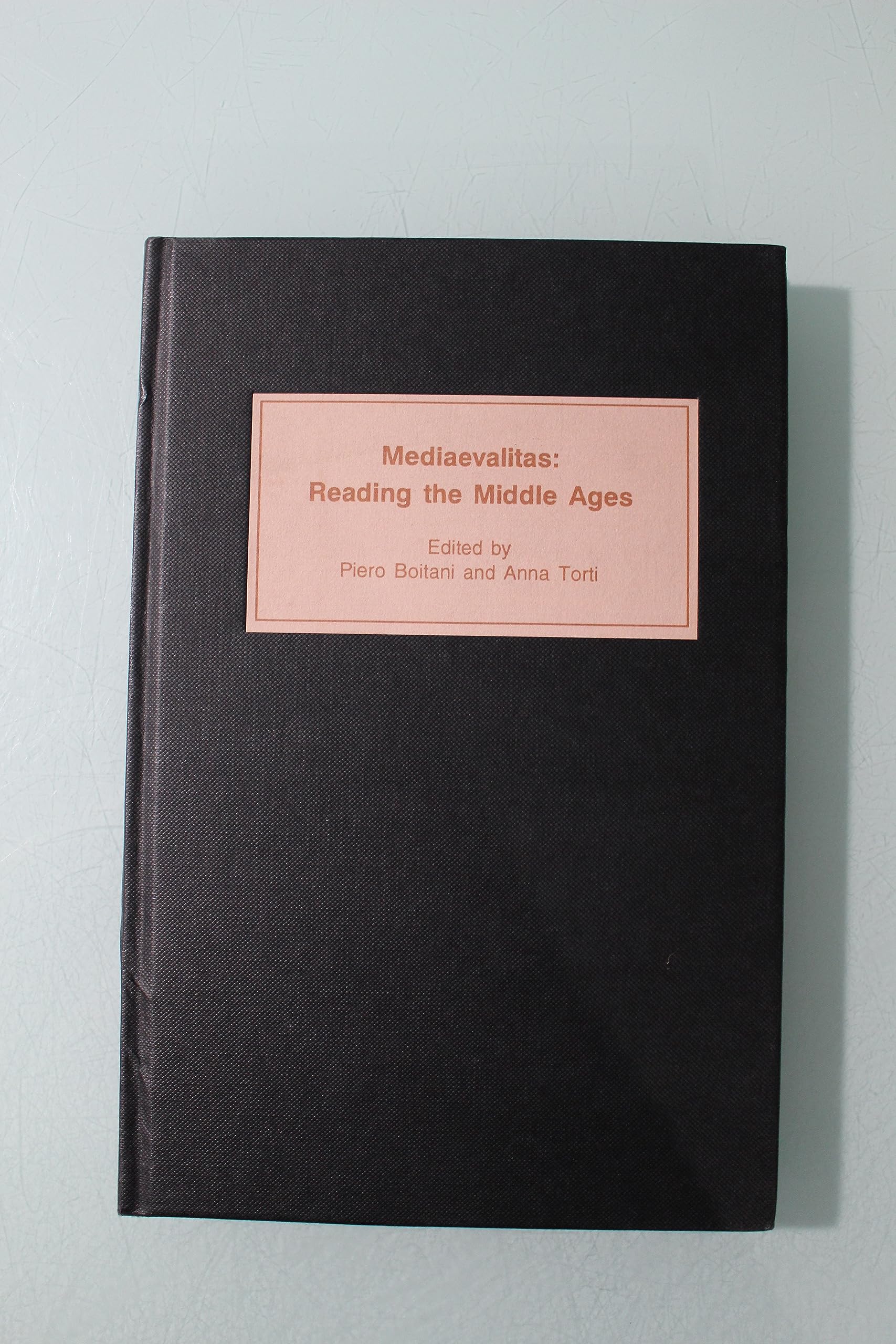
Mediaevalitas: Reading the Middle Ages: The J.A.W. Bennett Memorial Lectures, Ninth Series Perugia, 1995
$120.00
by Piero Boitani



The essays collected in this volume centre on the idea of `mediaevalitas', exploring it through three major themes: medieval authors reading other medieval authors; modern authors who rewrite medieval works; and modern critics discussing medieval texts in relation to new critical projects such as `New Historicism' and gender analysis. Topics addressed include medieval representations of Nature in the light of modern environmental ethics; readings of Chaucer's works by his contemporaries Charles of Orleans and Bokenham; the case of Alice Chaucer, seen as emblematic both of the issue of women's access to books and of the question of how to read now the cultural role of women in the late middle ages; and a section which illustrates the idea of medievalism in Spenser, Blake, and Browning by showing their different responses to tradition and authority. The volume ends with two articles devoted to modern reworkings of medieval texts: Soseki's Arthurian novella, Kairo-ko, and the story of Arthur and his court in contemporary German drama. Contributors: LISA J. KISER, ROBERT R. EDWARDS, JULIA BOFFEY, SHEILA DELANY, CAROL M. MEALE, THOMAS P. ROCHE, STEFANIA D'AGATA D'OTTAVI, ANGELO RIGHETTI, TOSHIYUKI TAKAMIYA, JOERG O. FICHTE. Table of Contents `Alain de Lille, Jean de Meun, and Chaucer: Ecofeminism and Some Medieval Lady Natures'. - Lisa J Kiser `The End of Utopia - The Treatment of Arthur and His Court in Contemporary German Drama'. - Robert R. Edwards `Charles of Orleans Reading Chaucer's Dream Visions'. - Julia Boffey `The Friar as Critic: Bokenham Reads Chaucer'. - Sheila Delany `Reading Women's Culture in Fifteenth-Century England: The Case of Alice Chaucer'. - Wendy Bracewell `Spenser's Virtue of Justice and the Four Daughters of God'. - Thomas P Roche `Blake's Chaucer: Scholasticism post litteram'. - Stefania D'Agata D'Ottavi `Browning's Medievalism'. - Angelo Righetti `Love and Transgression in Soseki's Story of the Maid of Ascolat'. - Toshiyuki Takamiya `The End of Utopia - The Treatment of Arthur and His Court in Contemporary German Drama'. - Joerg O Fichte