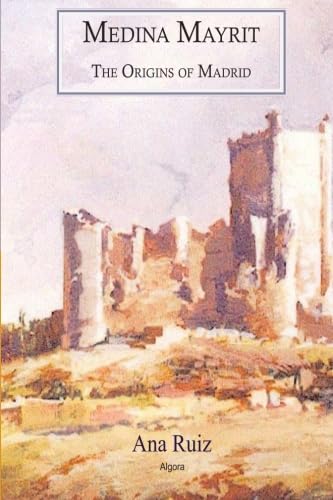



Medina Mayrit: The Origins of Madrid by Ana Ruiz offers an extensive and immersive exploration into the early history of Madrid, tracing its origins from a small military outpost to a significant cultural and technological center up to the late 11th-century Christian conquest. This beautifully researched book delves into the profound transformation of Madrid, shedding light on its Moorish beginnings and the various influences that shaped its development. Ana Ruiz reviews the stories of Madrid’s early days, beginning with its establishment as a strategic fortress designed to protect Toledo during the 9th and 10th centuries. After a modest start, Madrid evolved into an influential hub of culture and innovation within the context of al-Andalus, or Moorish Spain. Ruiz highlights the city’s contributions to pottery, agriculture, and hydraulic engineering, emphasizing how these advancements positioned Madrid as a significant player in the broader Islamic world. The book offers a detailed narrative of Madrid’s evolution, weaving together elements from Celtiberian, Roman, and Visigoth influences. Ruiz’s detailed descriptions of architectural sites, monuments, and archaeological findings provide readers with a virtual tour of early Madrid, allowing them to experience the city’s historical layers firsthand. Through vivid illustrations and expert analysis, the book brings to life the intricate history and development of this iconic city. A notable feature of Ruiz’s work is its focus on the etymological theories related to Madrid’s place-names and terminology. This adds depth to the historical and geographical context, helping readers understand the origins of Madrid's name and its significance within the broader narrative of Spanish and Moorish history. The richly detailed illustrations and comprehensive accounts in Medina Mayrit are an essential resource for anyone interested in the early history of Madrid. The book captures the essence of the city’s transformation from a strategic military post to a vital cultural and technological center. It provides valuable insights into Madrid’s role in the broader context of Spanish and Moorish history, offering a nuanced perspective on its development through various historical phases. In addition to its historical and cultural insights, the book explores the impact of early Madrid’s advancements in technology and agriculture on its rise as a major cultural hub. Ruiz’s examination of pottery techniques, agricultural practices, and hydraulic innovations highlights the city’s contributions to these fields, offering a detailed understanding of its significance in the Islamic world. Medina Mayrit also shows how Madrid’s early inhabitants adapted to and influenced the diverse cultural and religious environment of Moorish Spain. The book examines the interactions between different communities and how these relationships shaped the city’s growth and identity. Ruiz’s thorough research and engaging writing style make this book a definitive resource for understanding the complex layers that shaped Madrid’s development. This book is a welcome guide for historians, scholars, and enthusiasts interested in the intricate history of Madrid. Ana Ruiz’s thorough research and engaging writing style make it a definitive resource for understanding the complex layers that shaped the city’s development. The comprehensive exploration of early Madrid’s monuments, architecture, and historical evolution ensures that readers gain a deep and well-rounded understanding of this pivotal period in Madrid’s history. Ana Ruiz was born in Madrid and has extensively travelled in her native land to research its history and origins. She is the author of several books with Algora Publishing including Vibrant Andalusia (2007) and The Spirit of Ancient Egyptbr>strong> (2001). She has worked as a freelance travel writer as well as a columnist for several newspapers and magazines in Canada, the USA, and Great Britain. Ruiz also teaches Spanish as well as Flamenco and Oriental Dance in Montreal, Canada.