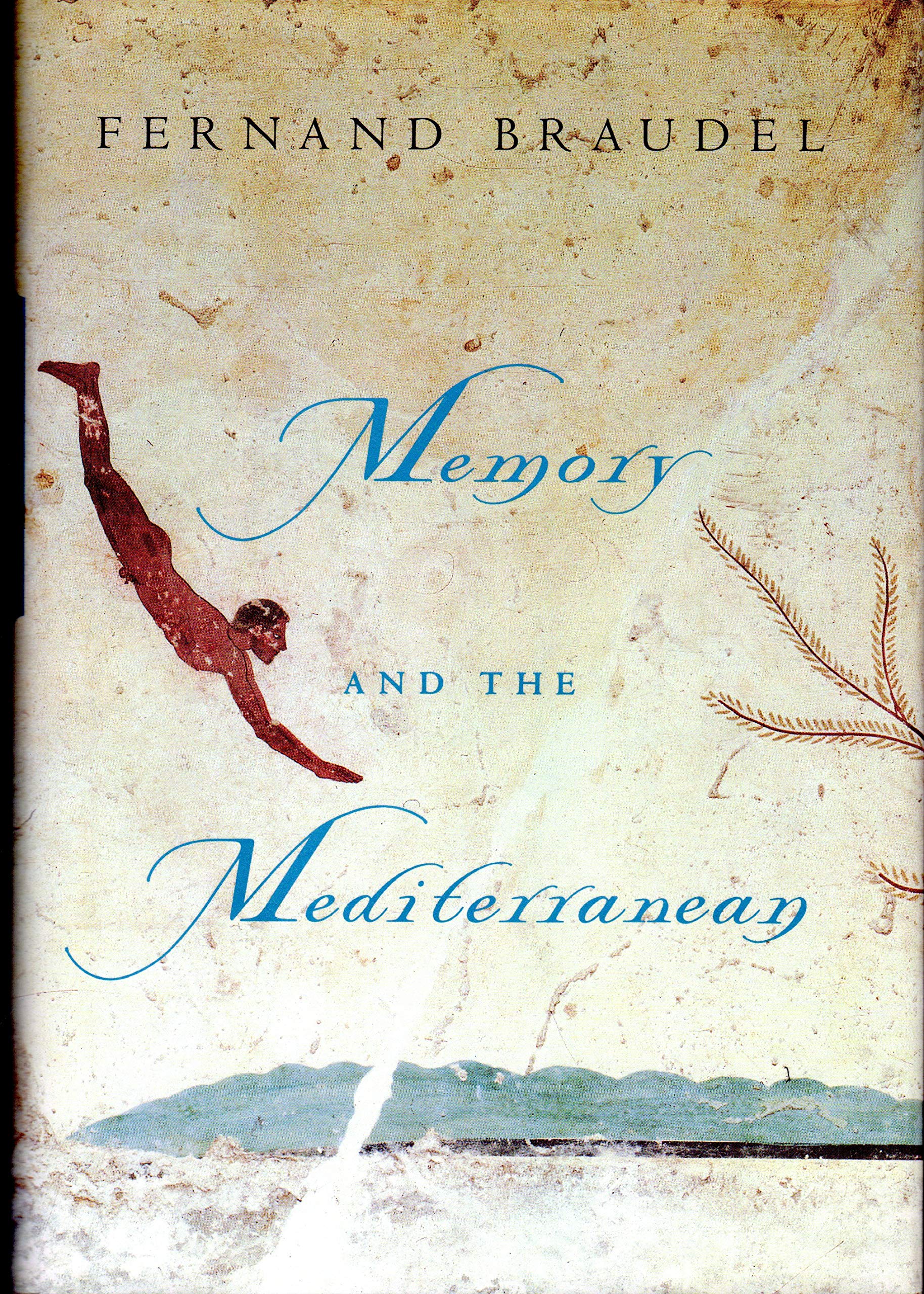



A previously unpublished work by one of the greatest historians of the twentieth century: the story of the Mediterranean in ancient times, from its geological beginnings to the great civilizations that flourished along its shores. Written in the late 1960s—the decade during which Fernand Braudel was also atwork on his monumental Civilization and Capitalism —the manuscript was set aside on the death of the author’s longtime friend and editor, Albert Skira. The magnificent text begins with the history of the Mediterranean seabed itself—the layers of clay, sand, and limestone from which the Egyptians carved their ancient tombs and with which the megalithic temples in Malta were built. What follows is the epic story of how the Phoenicians, the Etruscans, the Greeks and Romans, and the great river civilizations of Mesopotamia and Egypt struggled and thrived in this demanding but gloriously beautiful world bordered and shaped by the Mediterranean. With its extraordinary depth and range of knowledge, Braudel’s superb history—expertly annotated to reflect recent archaeological discoveries—brings to life as never before the beginnings of Western culture. Fernand Braudel's Memory and the Mediterranean is a panoramic and singular history, a comprehensive synthesis, of that region from pre-historic times to the beginning of the Byzantine Empire. Braudel's concerns are not the usual turning points such as battles and political upheaval. Instead, he focuses on regional and sub-regional vicissitudes (climate, topography, geologic cataclysms, the very currents of the sea itself) and their legacies, especially commerce, to trace the reasons behind the risings and falls of the greater Mediterranean's scores of ancient cultures. What, for example, were the ramifications of Egypt's lack of forests? How did the discovery of bitumen and the development of concrete affect, respectively, the Phoenicians and the Romans? Memory and the Mediterranean is complex and demanding but in the end, rewarding. Its point of view is at once Olympian, humble, and richly commonsensical. --H. O'Billovitch Not enough can be said about this most recently published work from Braudel (A History of Civilizations), a general history of the Mediterranean region from its geologic beginnings to Rome's takeover of the entire area. Braudel, who dominated France's Annales School following World War II and died in 1985, wrote this work in the late 1960s for a series that was never published. Subsequently, current scholars have used footnotes to correct the factual errors that resulted mostly from incomplete archaeological evidence regarding the earliest human history, leaving the author's text otherwise intact. The modern reader will appreciate this work's brevity compared with the author's previous works. Since the history of Phoenicia and its colonies is so closely tied to the geography of the Mediterranean, Braudel's emphasis on geography is particularly salient here. His approach to the Mediterranean will fascinate modern students of ancient history who have doubtless envied the 15th and 16th centuries for receiving so much attention from historians. Recommended for all academic and large public libraries. Clay Williams, Hunter Coll., New York Copyright 2001 Reed Business Information, Inc. *Starred Review* A neglected treasure, this masterful study of the ancient Mediterranean world lay unpublished for 30 years. Now felicitously translated, this panoramic chronicle reminds us why Braudel (who died in 1985) commanded global respect as a historian and a scholar. With the poise born of long research, Braudel strides gracefully through the millennia--peering over the shoulders of Paleolithic artists drawing primitive murals on the cave walls of Belbasi, marveling at the ingenuity of scribes experimenting with a proto-alphabet in the turquoise mines of Sinai, marching beside the Roman legions advancing against the Helvetti at Bibracte. True, the editors have had to append a few notes detailing recent archaeological discoveries that compel revision of some of Braudel's judgments. But Braudel's errors detract little from his luminous accomplishment in weaving together so many narrative strands in one seamless and compelling story. Whether explaining how the island of Thira disappeared in volcanic fury or why the Emperor Trajan failed in his foray beyond the Euphrates, Braudel engages the imagination of his readers, drawing us into a drama taut with human passions and conflict. Sure to delight Braudel's longtime admirers--and to win over new ones. Bryce Christensen Copyright © American Library Association. All rights reserved “A splendid book. . . . Passionate, magisterial, and provocative.” – The New Republic “A major event. . . . Arresting and exciting. . . . Braudel tackles the ancient world in an unexpected and impressive display of his range.” – Literary Review “A neglected treasure . . . . This panoramic chronicle reminds us why Braudel comman