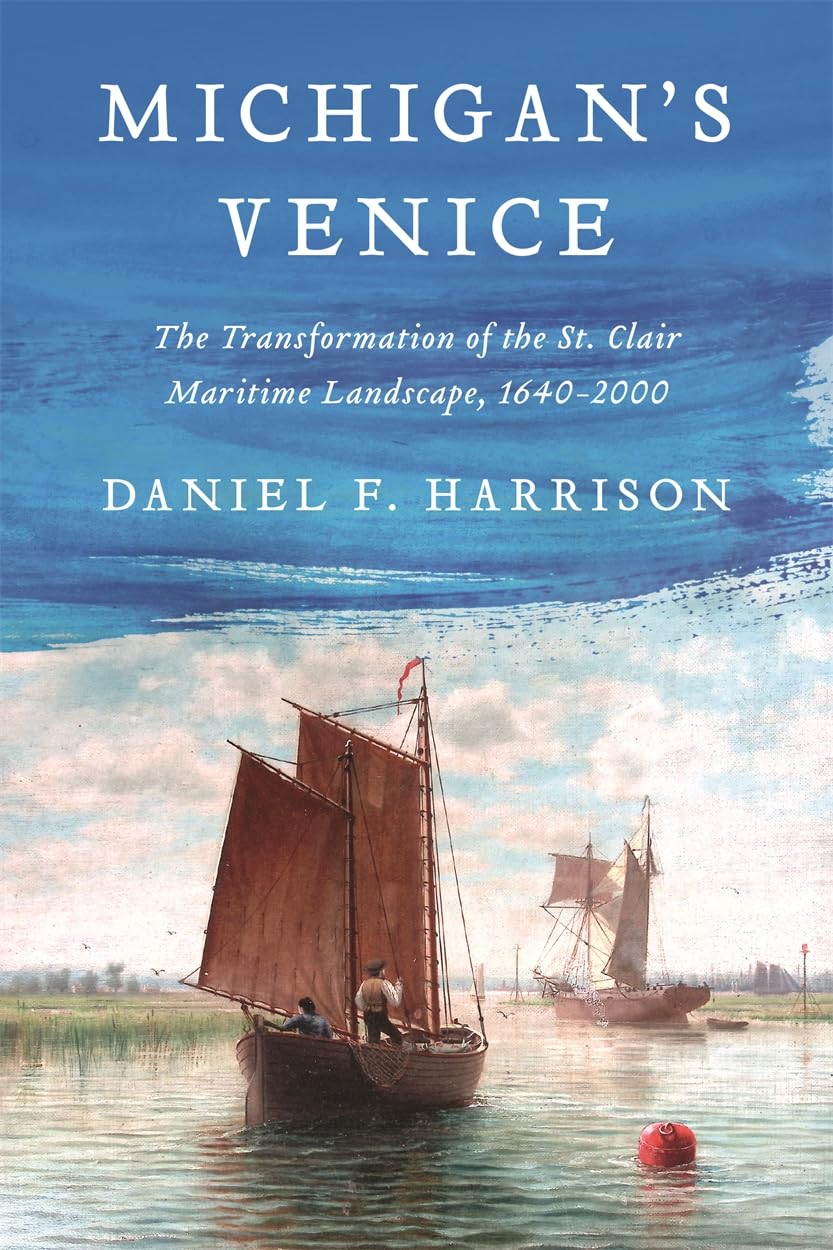
Michigan's Venice: The Transformation of the St. Clair Maritime Landscape, 1640–2000 (Great Lakes Books)
$39.99
by Daniel F. Harrison



Winner , Richard J. Wright Publication Award, presented by the Association for Great Lakes Maritime History! Few maritime landscapes in the Great Lakes remain so deeply and clearly inscribed by successive cultures as the St. Clair system―a river, delta, and lake found between Lake Huron and the Detroit River. The St. Clair River and its environs are an age-old transportation nexus of land and water routes, a strategic point of access to maritime resources, and, in many ways, a natural impediment to the navigation of the Great Lakes. From Indigenous peoples and European colonizers to the modern nations of Canada and the United States, this work traces the region's transformation through culturally driven practices and artifacts of shipbuilding, navigation, place naming, and mapmaking. In this novel approach to maritime landscape archaeology, author Daniel F. Harrison unifies historiography, linguistics, ethnohistory, geography, and literature through the analysis of primary sources, material culture, and ecological and geographic data in a technique he calls "evidence-based storytelling." Viewed over time, the region forms a microcosm of the interplay of environment, culture, and technology that characterized the gradual shift from nature to an industrial society and a built environment optimized for global waterborne transport. "Daniel Harrison's work is so much more than a history of the St. Clair Flats―one of North America's most unique maritime landscapes. It is an explanation of how that landscape developed over centuries and the many ways to consider its shared Indigenous/American/Canadian cultural heritage. The narrative is cleverly constructed, thoroughly researched, and highly readable, packed with gems about the people behind the stories. Michigan's Venice is an outstanding contribution."―Joel Stone, curator emeritus, Detroit Historical Society "In his groundbreaking book, Daniel Harrison uses archival and archaeological records to explore the transformation of the maritime cultural landscape of the St. Clair Flats, from a period predating European arrival through the twentieth century and the region's demarcation as an international border between the United States and Canada. Within this historical arch, Bkejwanong, an Indigenous reserve located in the heart of the Flats, prevails as a counterweight to Euro-American nation-based efforts to exploit the area's resources and as local Indigenous communities steer an alternative course of development and industrialization."―Karen Marrero, author of Detroit's Hidden Channels: The Power of French-Indigenous Families in the Eighteenth Century "Michigan's Venice is an excellent contribution to Great Lakes maritime history and the study of maritime cultural landscapes. By combining the archaeological and historical records with firsthand observations of the St. Clair Flats environment, Daniel Harrison has constructed a rich narrative about human–nature relationships in this landscape."―Ben Ford, author of The Shore Is a Bridge: The Maritime Cultural Landscape of Lake Ontario A chronicle of a unique waterscape and how its inhabitants navigated, claimed, and reshaped the region. Daniel F. Harrison, PhD, is a maritime archaeologist, sailor, and diver specializing in the Great Lakes region. Recently retired from a forty-year career as an academic librarian, he has had his research in maritime archaeology published in peer-reviewed journals including Historical Archaeology , Ethnohistory , and Michigan Historical Review . Harrison's research and theoretical motivations are focused on community-centered preservation and interpretation of maritime heritage and submerged cultural resources.