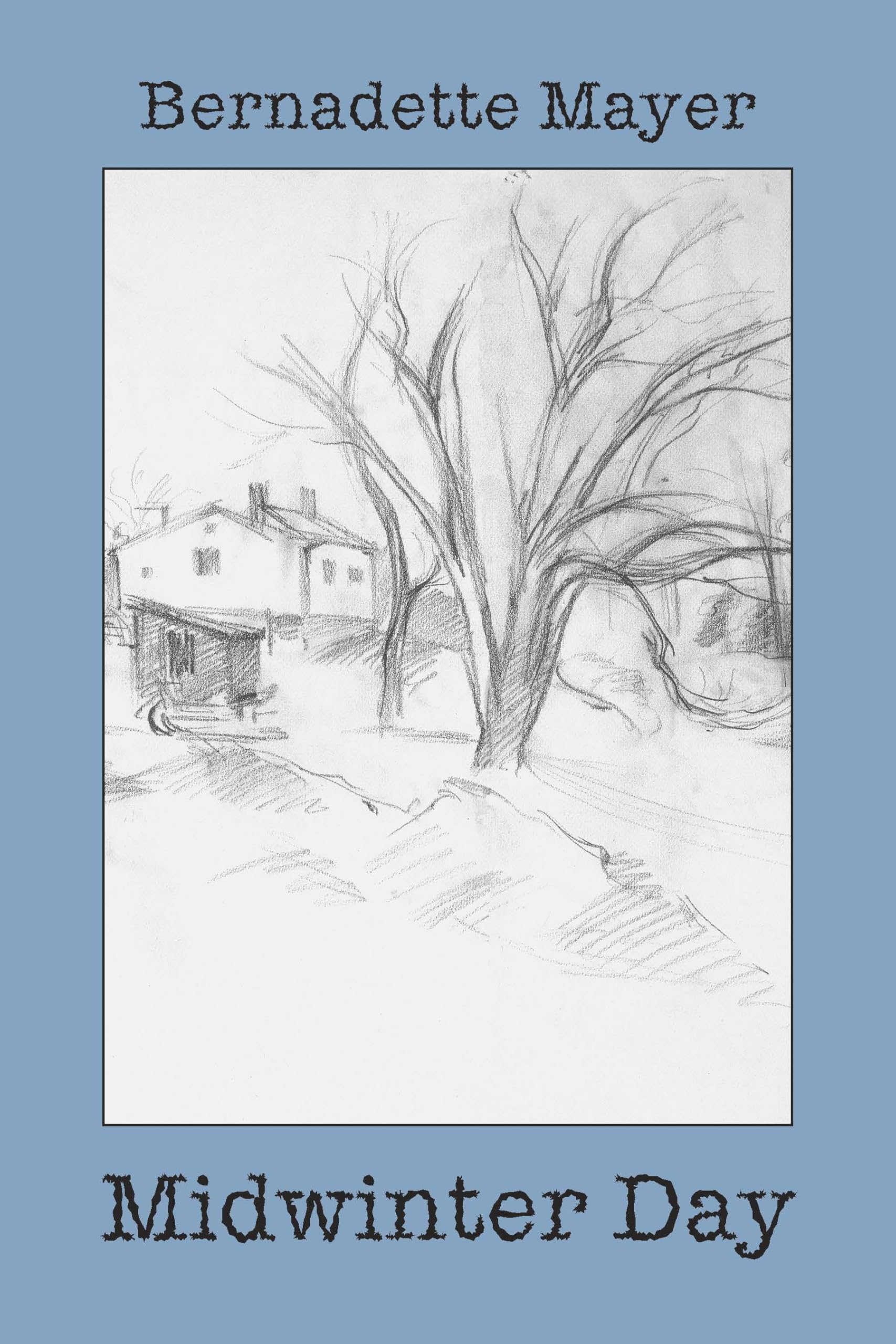



Perhaps Bernadette Mayer's greatest work, Midwinter Day was written on December 22, 1978, at 100 Main Street, Lenox, Massachusetts. " Midwinter Day ," as Alice Notley noted, "is an epic poem about a daily routine." A poem in six parts, Midwinter Day takes us from awakening and emerging from dreams through the whole day-morning, afternoon, evening, night-to dreams again: ". . . a plain introduction to modes of love and reason/Then to end I guess with love, a method to this winter season/Now I've said this love it's all I can remember/Of Midwinter Day the twenty-second of December//Welcome sun, at last with thy softer light/That takes the bite from winter weather/And weaves the random cloth of life together/And drives away the long black night!" Written in one day (December 22, 1978), Mayer's single, long, experimental prose poem is divided into six sections that essentially follow the day from beginning to end. Copyright 1999 Reed Business Information, Inc. A new edition of Mayers six-part poem (originally published in Berkeley in 1982), describing the passage of a single dayDecember 22, 1978in Lenox, Massachusetts. Mannered without formalism, Mayer manages to be at once colloquial and introspective, and her depiction of a single days passage has a relaxed intimacy that never falls into the abyss of self-absorption. Divided into six parts (each with a distinctive voice), the poem starts out wrapped in a hangover of dreams from the preceding night (I was alone in the dreams dressing room trying on / Different styles of tough gang-wear or raingear / In the dream my daughters Sophia and Marie / Are always with me) and proceeds through the ordinary routines of dressing, cooking, eating, shopping, and visiting neighbors. Although much of the work is written in a kind of flat literalism (I need to go to the health food store / To get a bottle of milk and a piece of Laughing Grasshopper tofu) typical of the New York School (for many years Mayer directed St. Marks Poetry Project in the East Village), more of it is interior (Every morning I think / Ive become the new weather / Like embroidering something after, trying to remember / The half-lies of dreams) or analogous (I have an image of a beautiful man or woman who walks in the door like Christ and earnestly spends some time with us like the UPS man does) than objective. Precious and somewhat rarefied, Mayers narrative is moving in its simple intensity. -- Copyright ©1999, Kirkus Associates, LP. All rights reserved. "Love and the seasons and the exigencies and opportunities of daily survival are the inevitable occasions of a body of work that is as radical as it is Horatian, able as little else is both to delight and instruct." ― Edwin Frank, Boston Review "One of the most interesting, exciting, and open of late-20th-century experimental poets." ― Tom Clark, San Francisco Chronicle "Bernadette Mayer is one of the most original writers of her generation… All her work is full of brilliant observation, humorous and sometimes astounding conclusions, and amazing juxtapositions inspired by linguistic associations, patterns of movement, chance, mathematics, whim, and imagination." ― Michael Lally, The Washington Post "The richness of life and time as they happen to us in tiny explosions all the time are grasped and held up for us to view in this magnificent work of prose and poetry that teaches us at the end why 'no one knows why / Nothing happens.'"" ― John Ashbery Perhaps Bernadette Mayer's greatest work, Midwinter Day was written on December 22, 1978, at 100 Main Street, in Lenox, Massachusetts. "Midwinter Day", as Alice Notley notes, "is an epic poem about a daily routine". In six parts, Midwinter Day takes us from awakening and emerging from dreams through the whole day -- morning, afternoon, evening, night -- to dreams again: "a plain introduction to modes of love and reason, / Then to end I guess with love, a method to this winter season / Now I've said this love it's all I can remember / Of Midwinter Day the twenty-second of December". Called “a consummate poet” by Robert Creeley, Bernadette Mayer was born in Brooklyn, New York, in 1945. A most prolific poet, her first book was published at the age of twenty-three. Many texts later she continues to write progressive poetry from her home in East Nassau, New York. For many years Mayer lived and worked on the Lower East Side of Manhattan where she was the Director of St. Mark’s Poetry Project from 1980-1984. Bernadette Mayer has received grants and awards from PEN American Center, The Foundation for Contemporary Performance Art, the NEA, The Academy of American Poets, and The American Academy of Arts and Letters. Bernadette Mayer is one of the most original writers of her generation . . . All her work is full of brilliant observation, humorous and sometimes astounding conclusions, and amazing juxtapositions inspired by linguistic associations, patterns of movement, chance, mathematics, whim, a