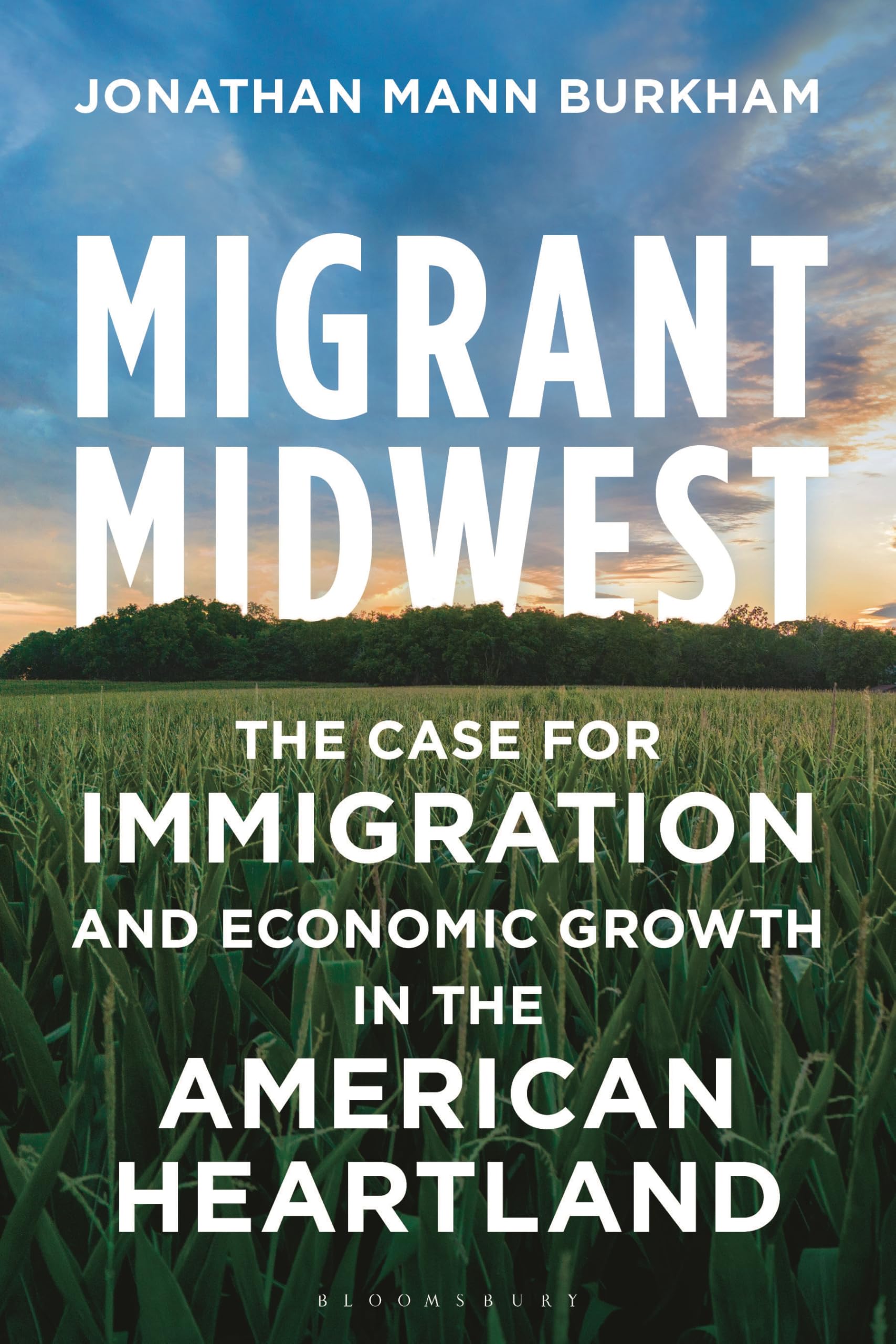
Migrant Midwest: The Case for Immigration and Economic Growth in the American Heartland
$32.00
by Dr. Jonathan Mann Burkham



The American heartland is poised for a demographic decline with very real consequences. Migrant Midwest tracks the history of population growth and its projected decline in the Midwest to highlight the need for increased international migration to the region. Burkham first illustrates how the forces of fertility and migration drove the development of the region's agricultural and industrial economies, and how the region has more recently struggled with deindustrialization, outmigration, and declining fertility, a global trend. The Midwest is now the slowest-growing region in the country and has the lowest share of immigrants, contributing to stagnation at the national level. Burkham goes on to evaluate the impact of demographic decline on the regional labor market and its fiscal implications for cities, states, and the nation. His thoughtful analysis highlights global trends in fertility decline and raises doubts about the prospect of significantly boosting fertility in modern society. This timely book proposes a bipartisan model of immigration reform designed to replenish the region's workforce and population, stabilizing communities and fueling a manufacturing renaissance. It takes seriously concerns that increases in immigration may be harmful to some Americans by presenting a nuanced view of how immigrants are integrated into local labor markets and society more generally. Ultimately, Burkham makes an argument for assimilation through residential integration. He concludes by suggesting that the coming “demographic winter” is a choice between managed decline and a more forward-looking vision of abundance that is consistent with the country's character as a nation of immigrants. “A sweeping, well-researched argument for 'choosing a nation of immigrants.'” ― Kirkus Reviews ““Jonathan Burkham is an American, not an American't, a thinker interested in solving problems instead of just complaining about them. One of the biggest problems facing the country is the decline of the Midwest. Burkham shows that there is an easy fix: place-based immigration visas to restore healthy economic and population growth. And he sells this common-sense fix as well as anyone could. Anyone who cares about the future of the Heartland should read this book.”” ― Bryan D. Caplan, Professor of Economics, George Mason University, USA Jonathan Mann Burkham , a Midwesterner by birth and disposition, is associate professor of human geography at University of Wisconsin–Whitewater. His research, which has taken him to live and work in Mexico and Peru, explores the intersection of economic development and migration with a focus on how labor markets are affected by demographic trends. While he likes to imagine himself a world traveler and mountain man, Burkham more often spends his time running the hills and greenways near his home on Lake Michigan. He lives in Milwaukee with his wife and two daughters.