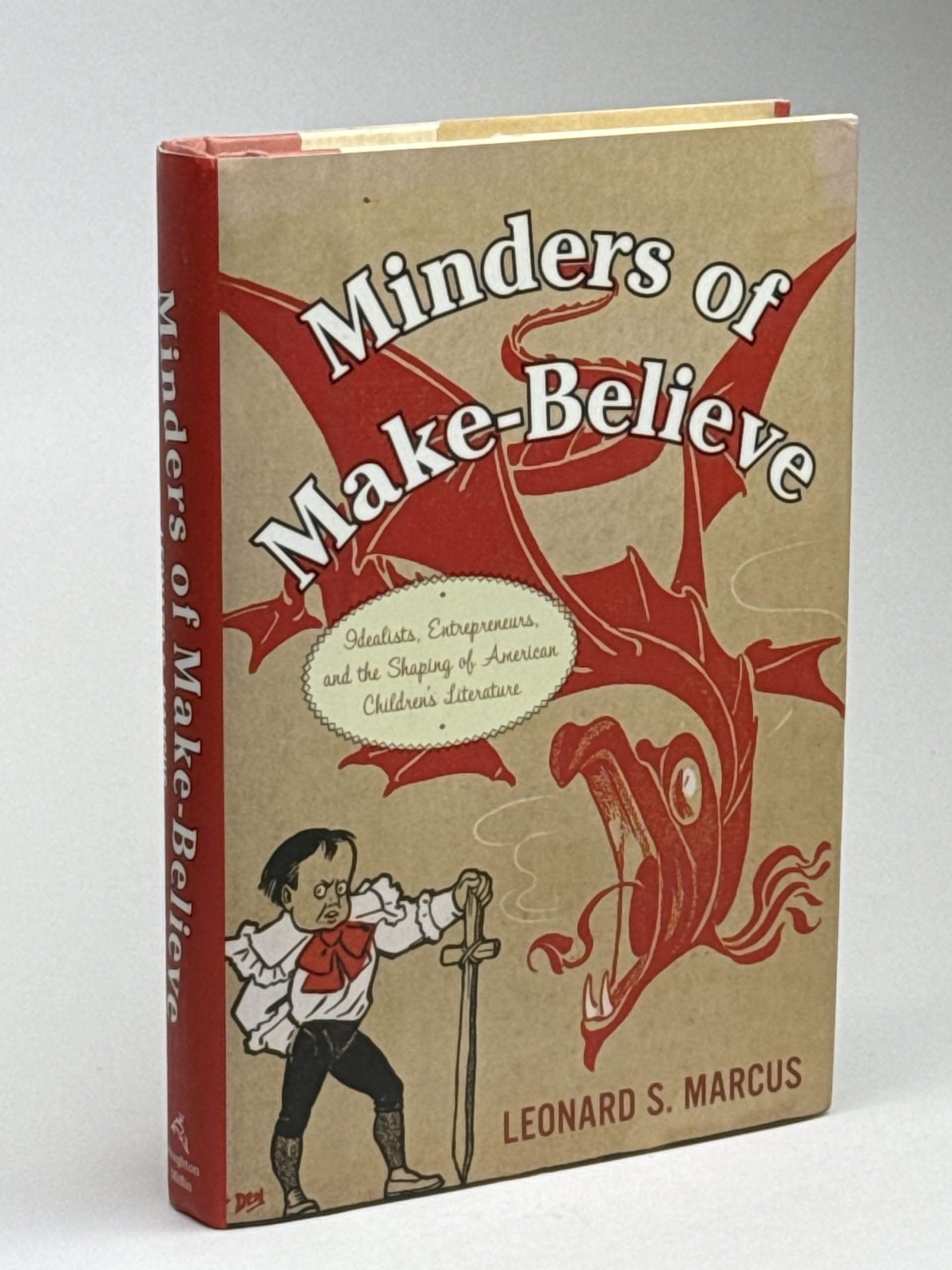
Minders of Make-Believe: Idealists, Entrepreneurs, and the Shaping of American Children's Literature
$25.02
by Leonard C. Marcus



An animated first-time history of the visionaries--editors, authors, librarians, booksellers, and others--whose passion for books has transformed American childhood and American culture What should children read? As the preeminent childrens literature authority, Leonard S. Marcus, shows incisively, thats the three-hundred-year-old question that sparked the creation of a rambunctious childrens book publishing scene in Colonial times. And its the urgent issue that went on to fuel the transformation of twentieth-century childrens book publishing from a genteel backwater to big business. Marcus delivers a provocative look at the fierce turf wars fought among pioneering editors, progressive educators, and librarians--most of them women--throughout the twentieth century. His story of the emergence and growth of the major publishing houses--and of the distinctive literature for the young they shaped--gains extraordinary depth (and occasional dish) through the authors path-finding research and in-depth interviews with dozens of editors, artists, and other key publishing figures whose careers go back to the 1930s, including Maurice Sendak, Ursula Nordstrom, Margaret K. McElderry, and Margret Rey. From The New England Primer to The Cat in the Hat to Cormiers The Chocolate War, Marcus offers a richly informed, witty appraisal of the pivotal books that transformed childrens book publishing, and brings alive the revealing synergy between books like these and the national mood of their times. Chock-full of interesting facts such as when the first printing press was established in America (1639) and how the first children's book followed 50 years later, this intriguing book grabs readers from the start. Learning about the origins of the publishing houses and the legends that populated them is fascinating. Lovers of children's books will delight in this rich history as Marcus looks at such varied aspects as the impact of television on children's books, the beginnings of famous series such as the Landmark Books and the Hardy Boys, and how Maurice Sendak went from being a member of the display staff at F.A.O. Schwarz to getting his first contract with Ursula Nordstrom at Harper & Row. There is an overwhelming amount of information in this book but its inspired chronological organization saves the day. This readable and entertaining survey deserves a place on the bookshelves of all who work in the children's book field.— Joan Kindig, James Madison University, Harrisonburg, VA Copyright © Reed Business Information, a division of Reed Elsevier Inc. All rights reserved. *Starred Review* After14 years of work, literary historian and critic Marcus has finally published his examination of 300 years of children’s book publishing in America. The result is a tour de force of research (there are 47 pages of appended notes), insightful reportage, and critical evaluation of both large trends and significant individual titles. While there is much here that is familiar—in part because the author has drawn on some of the same research that has given rise to a number of his other books over the years—there is also much that is new, and Marcus’ approach and tone are always, and irresistibly, well informed, sensible, and intelligent. His minders are not only editors and publishers but also librarians, reviewers/critics, and booksellers. And it is fascinating to see how each group has contributed to the evolution of children’s books, from the didactic and moralistic (The New England Primer) to the children’s book as publishing phenomenon (think Harry Potter). It is also fascinating to watch children’s publishing evolve from a purely local, small-business effort to a gigantic international exercise in entrepreneurial commerce. Though his final chapters seem a bit rushed, it is hard to imagine any issue that he has overlooked, and the resulting book is, in a word, indispensable. --Michael Cart LEONARD S. MARCUS is the childrens book industrys most respected historian and critic. His many books include Margaret Wise Brown: Awakened by the Moon and Dear Genius: The Letters of Ursula Nordstrom. He is a frequent contributor to the New York Times Book Review, Washington Post Book World, Parenting magazine, the Horn Book, and Publishers Weekly.