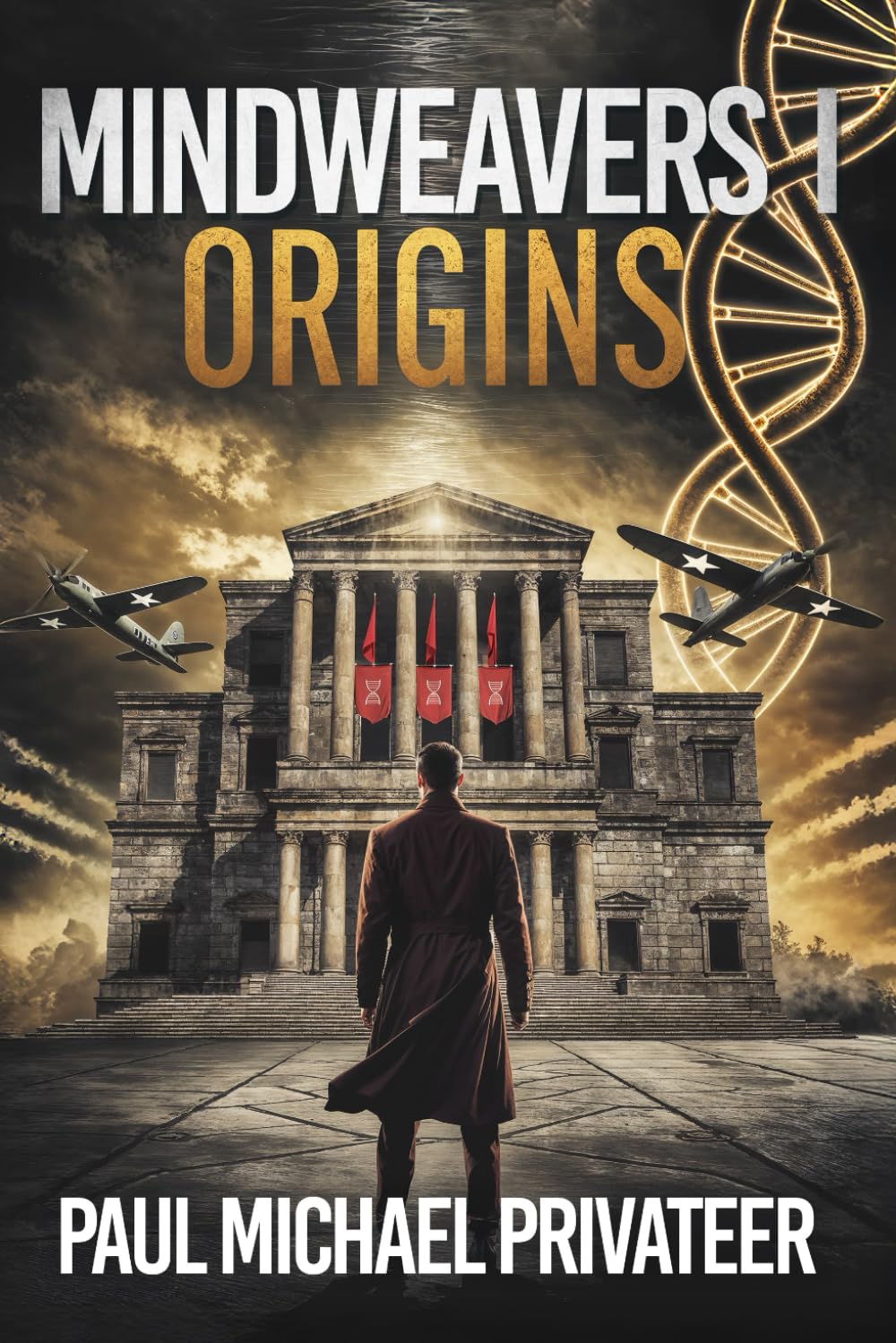



Mindweavers I: Origins isn’t just another ho-hum techno-thriller, it’s a rebellion against the very way science fiction has been reduced to spectacle. It's for readers tired of all the silliness, wanting to read hard core sci-fi. While Hollywood packages the apocalypse as bingeable comfort food, Mindweavers I dares to ask the questions blockbusters won’t: Who profits from collapse? And what if the real catastrophe isn’t the end of the world, but the end of thinking? The novel begins in 1941, when a shadow faction within the Nazi regime secretly develops the Mindweaver Virus, a bioweapon capable of erasing memory and puppeteering human behavior. Decades later, in a world dominated by quantum AI and algorithmic surveillance, Interpol agent Jack Kavanaugh follows a string of theatrical murders, bodies staged as clowns and Tin Men, each accompanied by manifestos warning of “infocosis,” the systematic collapse of human identity under information overload. What Jack uncovers is a conspiracy spanning generations, where memory itself becomes the ultimate battlefield. Mindweavers I doesn’t just deliver pulse-pounding suspense; it forces readers to confront an unsettling truth: the greatest threat isn’t a disaster we can watch safely from our couches but the quiet dismantling of our capacity to imagine anything beyond disaster. Like Inception crossed with The Manchurian Candidate and raised by the dystopian minds behind Black Mirror , Mindweavers I uses its techno-thriller surface to expose something deeper: how we have been trained to consume catastrophe as entertainment and stop imagining alternatives. This is speculative fiction that refuses to anesthetize. It dares to ask not just how the world ends, but who benefits when we stop questioning why. "A dark, chillingly plausible vision of near-future genetic warfare... Privateer crafts intense techno-thrillers that question the boundaries between human and machine intelligence." - Series Summary "[A] very interesting study... A bold deconstruction." - The Guardian "An outstanding and welcome addition... The argument unfolds nicely and with excellent coverage." - Sal Restivo, Rensselaer Polytechnic Institute "Dr. Privateer's commentary and expertise have been featured in The New York Times, on CNN, NPR, and the BBC." - Media Profile I spent years working with missile guidance systems and studying artificial intelligence in the highest towers of academia. But I found that fiction was the only way to truly explore the scary reality of where our technology is heading. I wrote Mindweavers not just to entertain you, but to ask: If we can edit our genes and hack our minds, are we still human? I hope you enjoy the ride. - Paul Michael Privateer