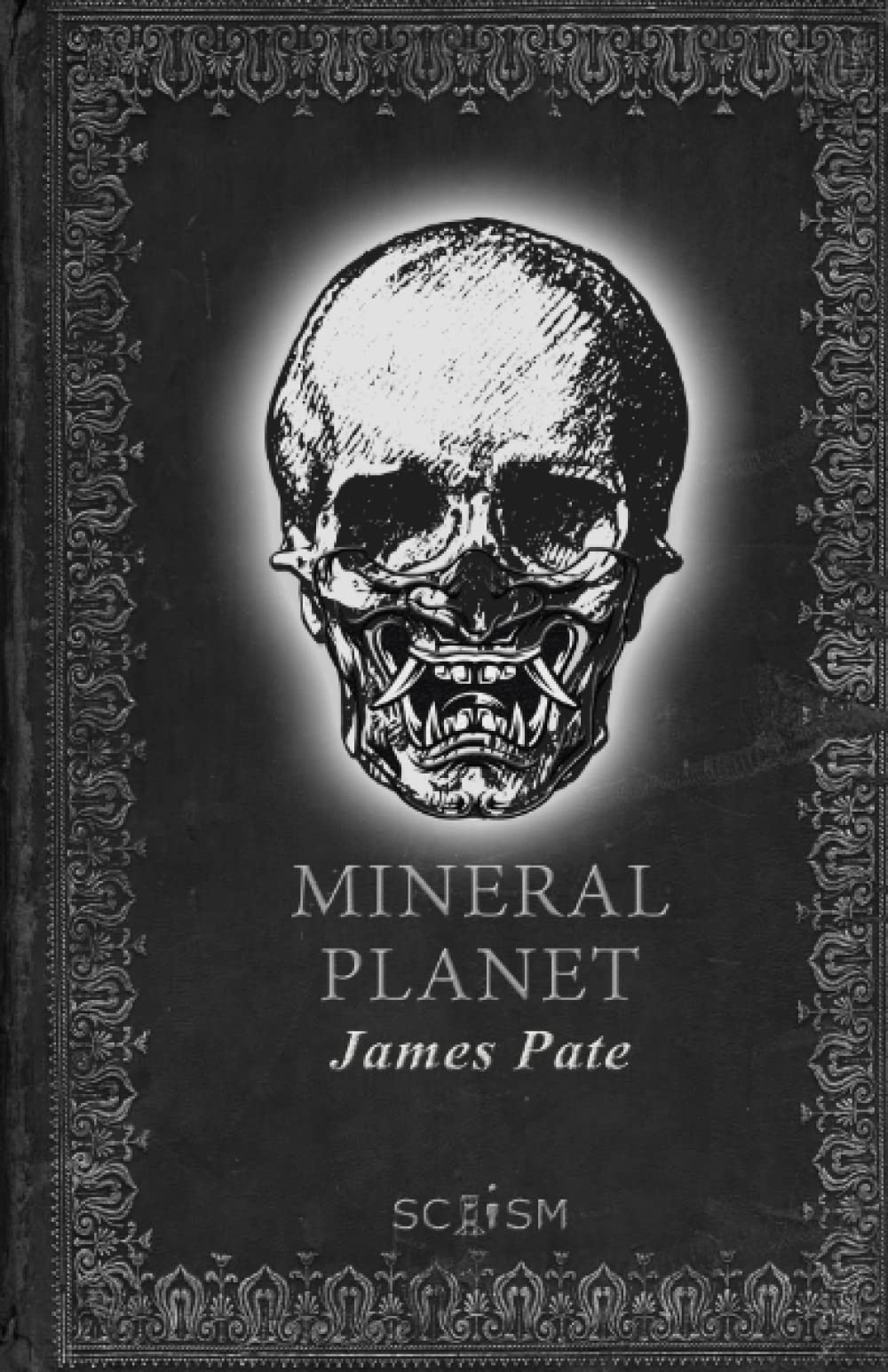



To write is to ascend downward, as Hélène Cixous says, and it's this downward ascension that James Pate writes in Mineral Planet where "roots spread upwards / through ribcage and skies." Reading, then, becomes a kind of digging that's not an excavation so much as an attendance to what's left behind: sequins, wet depths, wallpaper, barbed wire, sunlight in ice. Transcendence becomes an unrelenting participation in what's fleeting: "Several all at once, and then none, ever again." ~ Emmalea Russo, Author of Wave Archive and Confetti Costumes of feather and flesh, the hissing of angels - in this texture-drunk into the matter and mineral of life, James Pate perverts US literary culture's demand for narrativity, selfhood, order, with a poetry so gorgeously atmospheric even language itself becomes onyx. The saints of this baroque vision are artists - Iggy Pop, Fassbinder, St Teresa - because artists, especially artists who dare to go all the way, understand that gold is an ornament. It's worthless. ~ Johannes Göransson, Author of The Sugar Book and Summer Like plunging one's entire head into a black mirror, Mineral Planet offers glimpses of a desolate future in which our legacy as human beings is merely a persistent afterimage burned onto the surface of reality. Mineral Planet reads as a leaky, spliced film created by a wistful collector: reader-viewers only witness glimpses and fragments of human landscapes and ruin, but each vision is lovingly curated. Visually saturated and highly sensory, Pate offers disarming Gothic pleasure in utter annihilation. ~ M. Forajter, Author of Interrogating the Eye With its drifting, staccato decay, James Pate’s Mineral Planet presents us with a litany of impersonal affects, strewn with the flourishing desiderata of an already-dead planet, manic in its transcendental decline. ~ Eugene Thacker, Author of Infinite Resignation “Behind the nothing stirring stirred everything.” Much like “Sister Midnight”—the David Bowie/Iggy Pop song that slithers its way through James Pate’s brilliant Mineral Planet —these vibrant, meat-slick poems mask something teeming and unpolished. These are poems in infinite process, language fragments that reconcile the wind-swept remnants of fires, silicates, and keratins with raw human experience. From the smallest cells to the farthest, darkest stars, Mineral Planet is utterly alive and always becoming—a “planet of remembrance and abhorrence”—like so many dragonflies to sew you up. ~ David Peak, Author of Corpsepaint and The Spectacle of the Void James Pate’s Mineral Planet is so many haute pleasures all at once: it’s a consideration of “symbols without stories” (maybe even obliquely referencing a filmmaker’s work on a 2009 advertisement for investment company Allan Gray in which appears James Dean’s iconic face cleanly edited into a different reality, one in which he lives to be old); it’s a study in mashing together overt and covert allusions to create an absolutely succulent world–like as if Joe Gillis of Sunset Boulevard were floating dead and facedown in Norma Desmond’s pool but staring at an Iggy Pop poster at the bottom; it’s a call, via decadent but aloof partying and the cinematic gaze, for “kaleidoscopic Bosch-ian communism”; it’s about funeral-theater and miming and apocalyptic luxury and maybe the velvet, vampy David Lynch feeling of the 90s; it’s “gardens where the nothing happening happens” and “nightflood spillage,” possibly in service of embracing Plato’s indictment of poets in that the book really laps up of the “honey poison” of its own tastes. ~ Olivia Cronk, Author of Skin Horse and Womonster