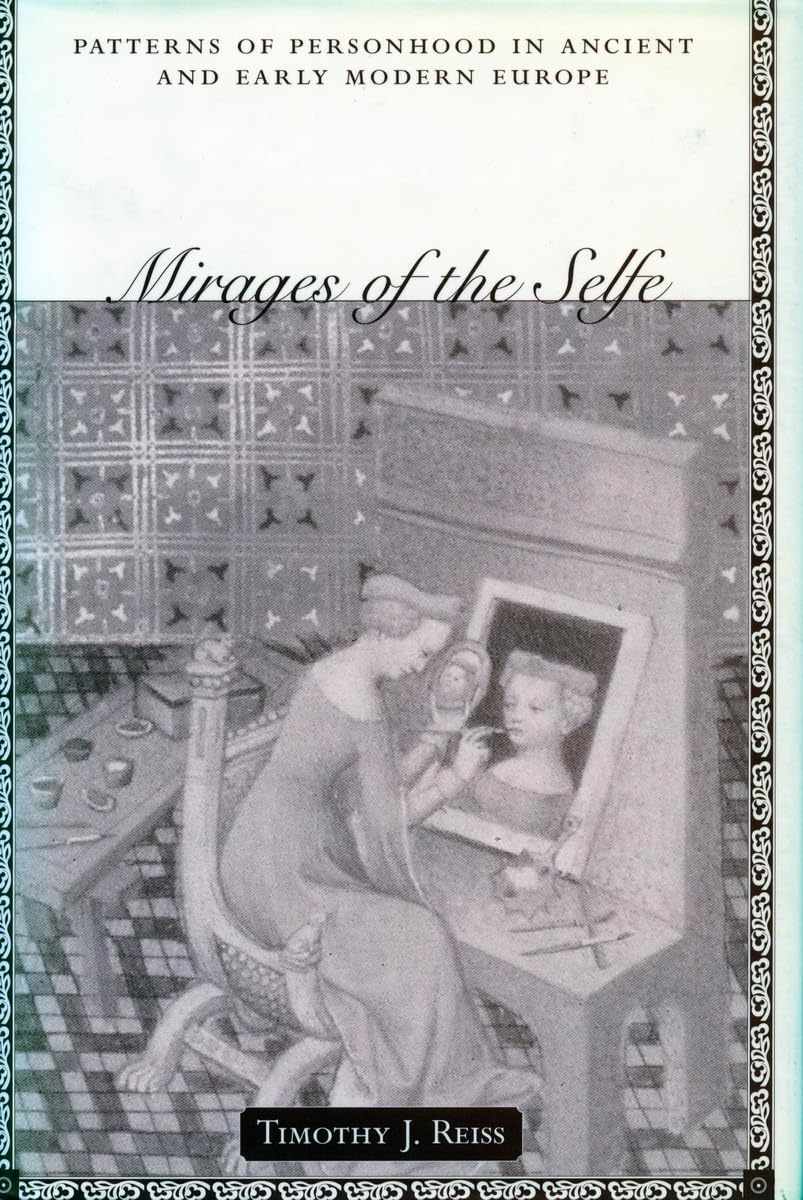
Mirages of the Selfe: Patterns of Personhood in Ancient and Early Modern Europe
$88.34
by Timothy J. Reiss



Through extensive readings in philosophical, legal, medical, and imaginative writing, this book explores notions and experiences of being a person from European antiquity to Descartes. It offers quite new interpretations of what it was to be a person―to experience who-ness―in other times and places, involving new understandings of knowing, willing, and acting, as well as of political and material life, the play of public and private, passions and emotions. The trajectory the author reveals reaches from the ancient sense of personhood as set in a totality of surroundings inseparable from the person, to an increasing sense of impermeability to the world, in which anger has replaced love in affirming a sense of self. The author develops his analysis through an impressive range of authors, languages, and texts: from Cicero, Seneca, and Galen; through Avicenna, Hildegard of Bingen, and Heloise and Abelard; to Petrarch, Montaigne, and Descartes. "Reiss has masterfully woven together various threads of personhood into a powerful work on the self . . . This is a work that readers will ponder long after they finish the final page." -- Comitatus Through extensive readings in philosophical, legal, medical, and imaginative writing, this book explores notions and experiences of being a person from European antiquity to Descartes. It offers quite new interpretations of what it was to be a person—to experience who-ness—in other times and places, involving new understandings of knowing, willing, and acting, as well as of political and material life, the play of public and private, passions and emotions. The trajectory the author reveals reaches from the ancient sense of personhood as set in a totality of surroundings inseparable from the person, to an increasing sense of impermeability to the world, in which anger has replaced love in affirming a sense of self. The author develops his analysis through an impressive range of authors, languages, and texts: from Cicero, Seneca, and Galen; through Avicenna, Hildegard of Bingen, and Heloise and Abelard; to Petrarch, Montaigne, and Descartes. “Reiss has masterfully woven together various threads of personhood into a powerful work on the self . . . This is a work that readers will ponder long after they finish the final page.”—Comitatus Timothy J. Reiss is Professor of Comparative Literature at New York University. The most recent of his many books is Against Autonomy: Global Dialectics of Cultural Exchange (Stanford, 2002). Mirages of the Selfe Patterns of Personhood in Ancient and Early Modern Europe By Timothy J. Reiss STANFORD UNIVERSITY PRESS Copyright © 2003 Board of Trustees of the Leland Stanford Junior University All right reserved. ISBN: 978-0-8047-4565-9 Contents Illustrations..............................................................................xiAcknowledgments............................................................................xiiiA Note on the Text.........................................................................xixIntroduction...............................................................................11. Essences of Glass, Histories of Humans..................................................262. A Cock for Asclepius: Plato, the Hippocratics and Aristotle.............................673. Excursus on Will and Passibility........................................................984. Cicero's Person, Passible Minds and Real Worlds.........................................1205. Senecan Surroundings....................................................................1396. How Were Slaves Persons?................................................................1627. How Was Personhood Gendered?............................................................1828. The Public Materiality of Being Human: Galen and Medical Traditions.....................2129. Two-Timed Ipseities and Speaking Their Mind: Augustine..................................24110. Measuring Tensions in the Medieval Microcosm...........................................26911. "Multum a me ipso differre compulsus sum"..............................................30312. "Sparsa anime fragmenta recolligam"....................................................33113. Surrounded Selves and Public Being: Sixteenth-Century Strains..........................35314. Persons, Passions, Pictures: Loyola with Alberti.......................................38115. Hlisenne's Story: Collective Love, Singular Anger.....................................40416. Public Subject, Personal Passion: Montaigne............................................44017. Descartes, Collective Tradition and Personal Agency....................................46918. Selfehood, Political Community and a "Cartesian" Future?...............................488Conclusion.................................................................................519Bibliography............................................................