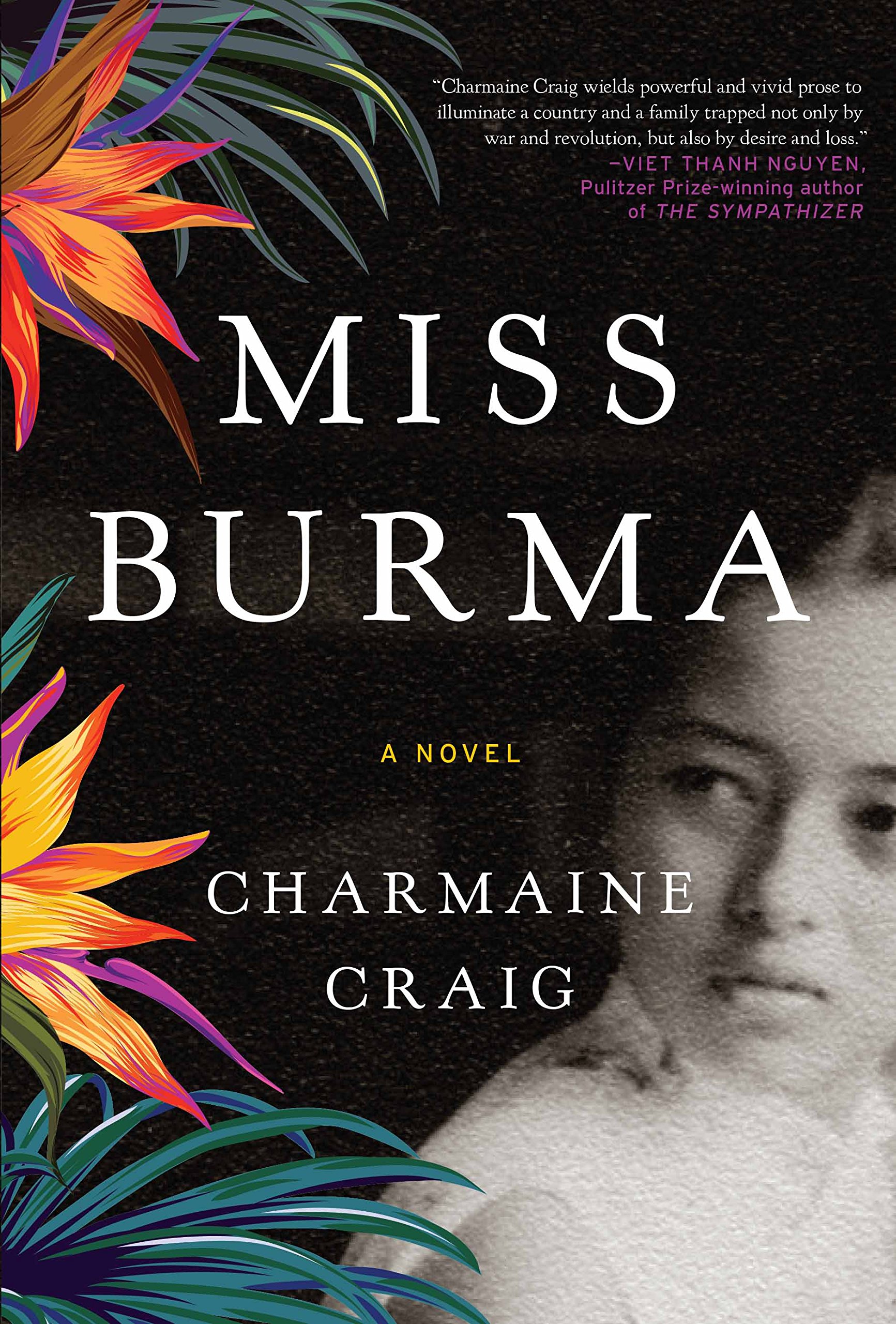



A beautiful and poignant story of one family during the most violent and turbulent years of world history, Miss Burma is a powerful novel of love and war, colonialism and ethnicity, and the ties of blood. Miss Burma tells the story of modern-day Burma through the eyes of Benny and Khin, husband and wife, and their daughter Louisa. After attending school in Calcutta, Benny settles in Rangoon, then part of the British Empire, and falls in love with Khin, a woman who is part of a long-persecuted ethnic minority group, the Karen. World War II comes to Southeast Asia, and Benny and Khin must go into hiding in the eastern part of the country during the Japanese Occupation, beginning a journey that will lead them to change the country’s history. After the war, the British authorities make a deal with the Burman nationalists, led by Aung San, whose party gains control of the country. When Aung San is assassinated, his successor ignores the pleas for self-government of the Karen people and other ethnic groups, and in doing so sets off what will become the longest-running civil war in recorded history. Benny and Khin's eldest child, Louisa, has a danger-filled, tempestuous childhood and reaches prominence as Burma’s first beauty queen soon before the country falls to dictatorship. As Louisa navigates her newfound fame, she is forced to reckon with her family’s past, the West’s ongoing covert dealings in her country, and her own loyalty to the cause of the Karen people. Based on the story of the author's mother and grandparents, Miss Burma is a captivating portrait of how modern Burma came to be and of the ordinary people swept up in the struggle for self-determination and freedom. Praise for Miss Burma : Longlisted for the 2017 National Book Award Longlisted for the 2018 Women’s Prize for Fiction A New York Times Book Review Editors’ Choice A New York Times Book Review Paperback Row Selection An Amazon Best Book of the Month (Literature & Fiction) KCRW Bookworm Best Books of 2017 An Indie Next Selection “ Miss Burma is a timely exposition of trust after trauma. [It] also serves as a much-needed recalibration of history, one that redresses the narrative imbalance by placing other ethnic, non-Burmese points of view at the center of its story . . . In reimagining the extraordinary lives of her mother and grandparents, Craig produces some passages of exquisitely precise description . . . and brings one of Burma’s many lost histories to vivid life.” ― New York Times Book Review “This multigenerational saga portrays the emergence of modern Burma―through British colonialism, wartime occupation by the Japanese, and the independence era . . . Craig ably controls the novel’s historic sweep, and is unsparing in providing details of meticulous torture and wartime horror. She also conveys a strong sense of family.” ― New Yorker (Briefly Noted) “[An] epic new novel . . . The sweeping, multi-generational story of a family belonging to the Karen ethnic minority, Miss Burma charts both a political history and a deeply personal one―and of those incendiary moments when private and public motivations overlap.” ― Los Angeles Times “An epic roman à clef . . . Craig . . . masterfully renders the human condition in matters micro and vast . . . Like many of the best books, Miss Burma feels rooted in its time and place, while also laying bare timeless questions of loyalty, infidelity, patriotism, and identity―not to mention the globally perpetuated unfair treatment of women.” ― Elle “[A] riveting account of the treacheries, fractures, and courageous acts of wartime.” ―Jane Ciabattari, BBC (Ten Books to Read in May) “Craig expects a good deal of her audience in terms of their appetite for Burmese history, and I hope that many will rise to the occasion, because the rewards are rich . . . Craig has called writing this novel ‘a political act’; it is also clearly a deeply personal one. She weaves those threads together for us, showing us the ordinary human failings behind what often seem like clear-cut cases of good and evil . . . While this novel cannot untangle ethnic identity from tribalism, it is a courageous attempt to broaden the way we see others and ourselves, both personally and politically, at home and abroad.” ―Rosalie Metro, Los Angeles Review of Books “A gorgeously-written novel that illuminates the universalities of fear and the desires for dignity and freedom.” ― Literary Hub (15 Books to Read This May) “A story of how modern-day Burma came to be, as well as the tale of one of the most violent and turbulent eras in world history played out. At once beautiful and heartbreaking . . . An incredible family saga.” ― Refinery29 (Favorite Books of 2017―So Far) “An ambitious novel . . . Miss Burma is powerful in showing the relentless effect of the political on the personal while covering an important swath of history―and all the while telling an awfully