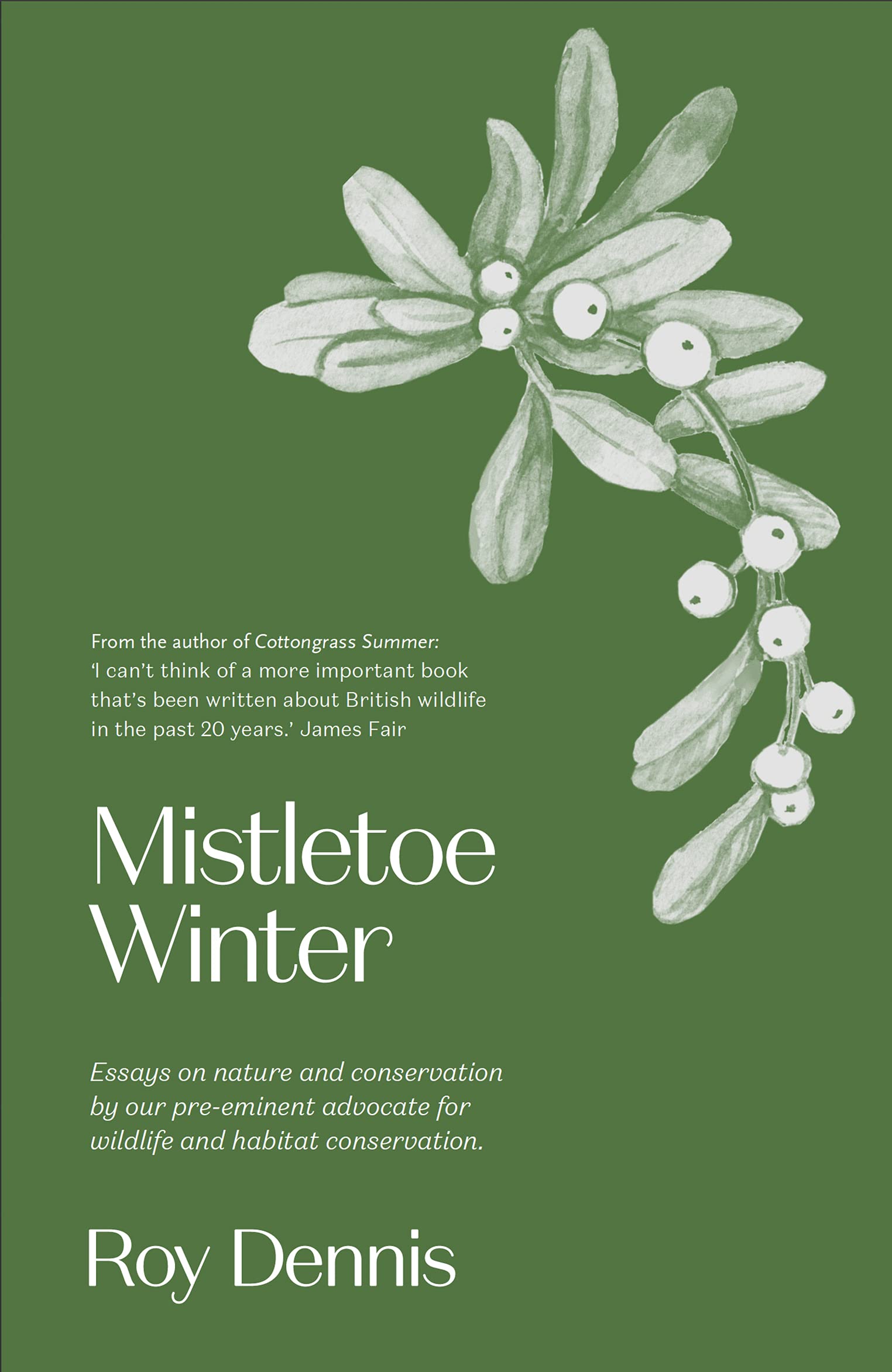



A stimulating collection of essays about our environment, nature, and wildlife by world-renowned naturalist and conservationist Roy Dennis. A new collection of vibrant essays to inform, stimulate and inspire every nature lover. Times of darkness offer opportunities to reflect. In Mistletoe Winter, Roy Dennis offers his reflections on the natural world from the past year―from the welcome signs of change to the ongoing problems we are posing for nature, and what humankind can and must do about them. As in his companion volume, Cottongrass Summer, Roy Dennis balances his alarm at the crisis confronting the natural world with his own sense of optimism that new generations can make crucial changes for the future. One of our most prominent advocates for our planet and its species, he writes with insight and originality. This volume will provide inspiration and ideas for everyone who cares about our planet and its species. "Practical, plain-speaking, and marked by bold proposals … a passionate call to arms to appreciate and fight for the species we have left." Foreword Reviews “A fascinating read.” Bird Watching magazine "A brilliant conservationist and a superb naturalist … These beautiful essays are also positive and pragmatic about the future." BBC Broadcaster and conservation author Chris Packham Roy Dennis is one of the UK's most prominent field naturalists. His approach to wildlife and conservation stems from years of experience working in the field, from climbing trees to ring osprey chicks to handling lynx kittens in Norway―and wanting to smuggle them back to Scotland. His Wildlife Foundation of 25 years' standing is internationally recognized for its work in conservation and wildlife protection. This volume of essays has sprung from the lovely feedback I received from readers of my first essay collection, Cottongrass Summer, published in the summer of 2020, at the height of the pandemic. Covid-19 made many of us reassess our lives, explore new ways of living and wonder where we were heading next, both personally and environmentally. For the first time in many decades, there were no, or very few, aircraft overhead and the blue skies were unmarked by vapor trails, with their (unseen) greenhouse gas emissions. It reminded some of us that there are costs to cheap travel and frequent holidays for the wealthy. There was, of course, much grief and loss for many families, to whom Covid-19 did not offer the luxury of choice. To others, though, a remarkable opportunity has been offered, should we choose to take it. Can we—for the sake of the planet—use the car less often, walk more, eat more healthily, find a better balance between our work life and our leisure time? The many avenues closed by lockdown may be more obvious, but it has opened up others, unless of course we revert to exactly how we were before Covid-19 and leave the planet on the same uncertain path. I wanted, in writing these essays about nature, to offer an interesting mix. Some celebrate wildlife, but others illustrate the problems and dilemmas we are posing for nature and wonder what humankind can do about that. The prognosis for the future of mankind is often bleak, because the human population keeps rising, consumes too much and is led by governments that feed us the myth of perpetual growth. There are, though, welcome signs of change to be seen, and we know how incredibly innovative humankind can be when boxed into a corner. Just imagine, for a moment, what the world could achieve in terms of ecological restoration with the amount that’s been spent on Covid-19. The former is more essential—taking the long view—than the latter. Britain has many pressing ecological problems to solve and it’s important to think about them with the benefit of historical knowledge, as well as foresight based on experience. I often think busy-ness is mistaken for brilliance. We need time to reflect and the determination to achieve change in our use of, and respect for, our land and seas. As Aldo Leopold, the wise American ecologist, wrote in 1949: “One of the penalties of an ecological education is that one lives alone in a world of wounds. Much of the damage inflicted on land is quite invisible to laymen. An ecologist must either harden his shell and make believe that the consequences of science are none of his business, or he must be the doctor who sees the marks of death in a community that believes itself well and does not want to be told otherwise.” I also firmly agree with another of his statements, made well over half a century ago in Round River (1972), about maintaining the entire ecological fabric of planet Earth: “If the biota, in the course of eons, has built something we like but do not understand, then who but a fool would discard seemingly useless parts? To keep every cog and wheel is the first precaution of intelligent tinkering.”