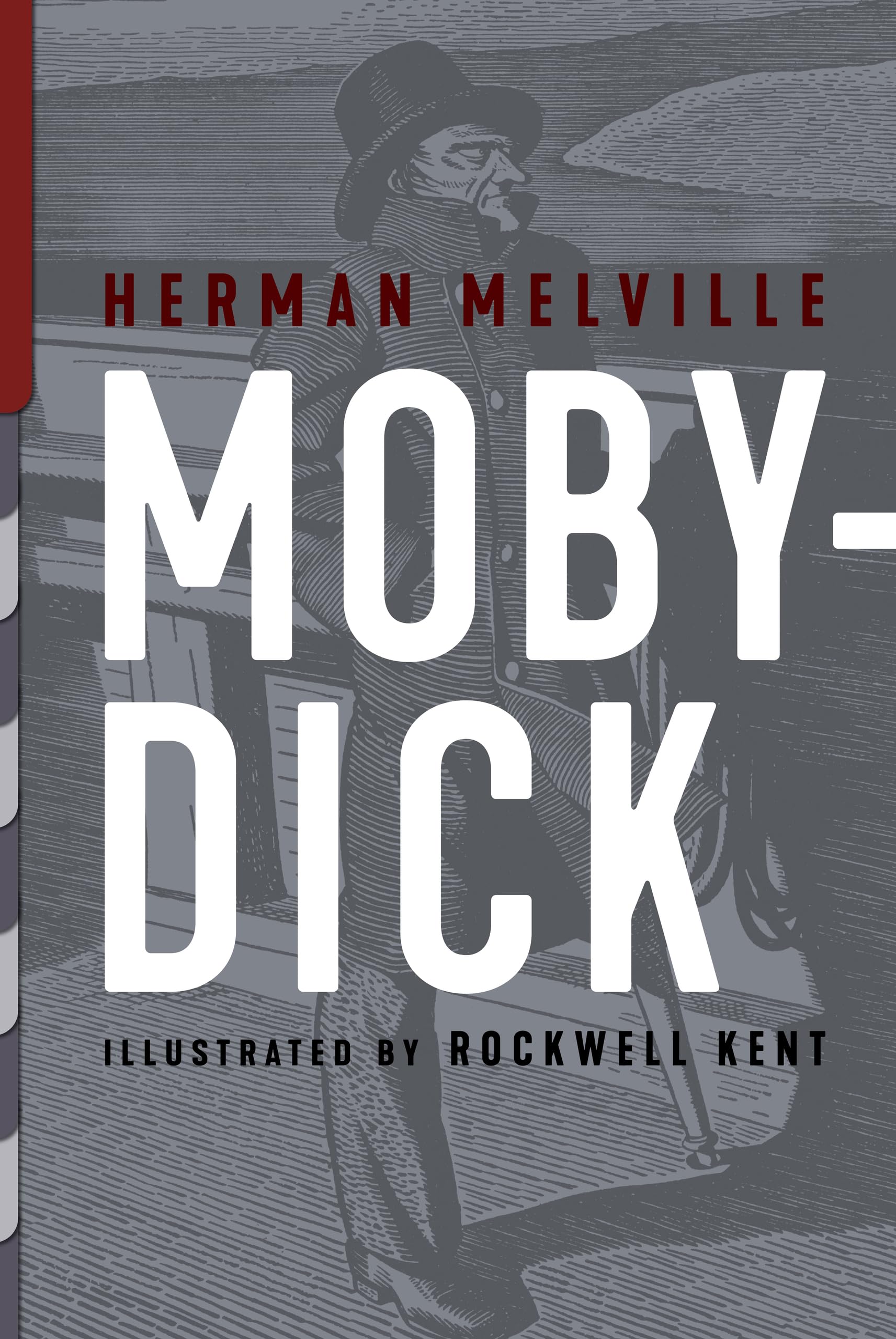



“One of the strangest and most wonderful books in the world.” —D.H. Lawrence An enigmatic tale of the sea, whaling, and obsession, Moby-Dick echoes themes from the Bible and the works of Shakespeare in a uniquely American story that continues to fascinate and enthrall today. Spurned by readers and critics alike upon its initial publication in 1851 and for the rest of the author’s life, Herman Melville’s epic novel underwent a dramatic rediscovery and reappraisal after his death. During the early years of the 20th century, it came to define the Great American Novel. This spurred and was, in turn, boosted by the 1930 Lakeside Press edition that featured Rockwell Kent’s stark pen-and-ink illustrations that captured the drama, beauty, and violence of Melville’s masterpiece. This Top Five Classics edition of Moby-Dick features all of the more than 270 illustrations by Rockwell Kent , the unabridged text, a glossary of terms, a detailed map of the voyage of the Pequod, and biographies of Herman Melville and Rockwell Kent. “[E]ven recent reprintings of the Kent ‘Moby-Dick’ can seem priced for collectors only. An affordable hardcover from the classics reprint series of Top Five Books remedies the issue. Here is Melville’s literary leviathan fantastically adorned with more than 270 of Kent’s black-and-white illustrations, many of them a full page in size.” ― The Wall Street Journal Herman Melville was born in 1819 in New York City, the grandson of two Revolutionary War heroes. He began his career as an author in 1845 with the publication of the novel Typee , which recounted and fictionalized some of his adventures over three and a half years at sea on whaling and naval ships in the South Pacific. The book's success enabled Melville to write four more novels, including Omoo (1847) before publishing his masterpiece, Moby-Dick , in 1851. Met with an indifferent response when it was published, the book and author fell into obscurity until decades after the author passed away in 1891. In the early part of the twentieth century, the author and his work would undergo a radical reappraisal, and Moby-Dick would be recognized as one of the truly Great American Novels ever written.