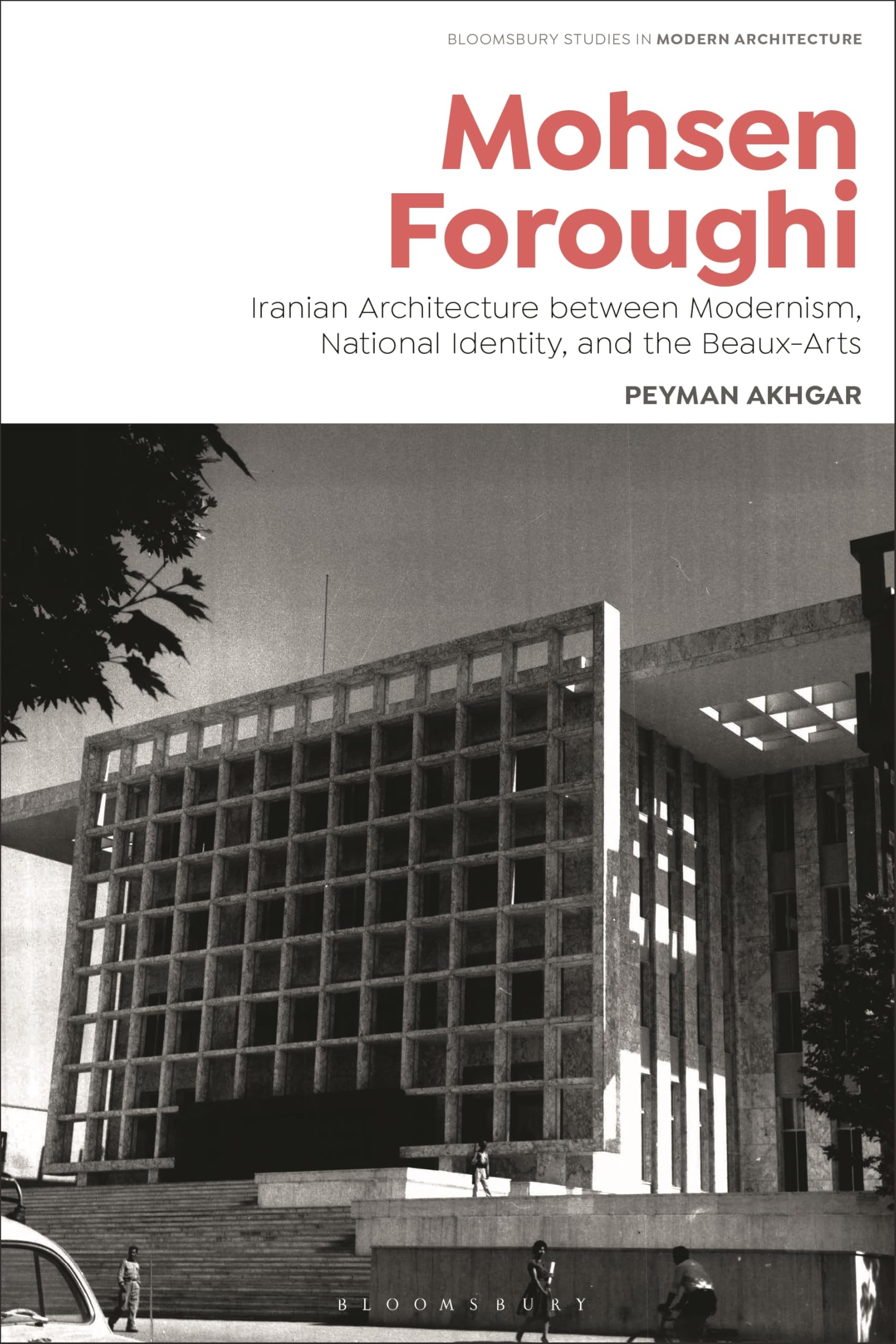
Mohsen Foroughi: Iranian Architecture between Modernism, National Identity, and the Beaux-Arts (Bloomsbury Studies in Modern Architecture)
$115.00
by Peyman Akhgar



Mohsen Foroughi (1907-1983) was one of the most important and influential Iranian architects of the modern era. Standing at the intersection between modernism, tradition, and the Beaux-Arts, Foroughi's work traces the major cultural developments of twentieth-century Iran and the Middle East – from the development of a new Iranian nationalism in the 1930s, to the emergence of a high modernist aesthetic of the mid-twentieth century, and finally to a more locally-expressive and formalist approach in the 1960s and 70s. Published as part of the Bloomsbury Studies in Modern Architecture series, which brings to light the work of significant yet overlooked modernist architects, this book reveals Foroughi's vital roles as a designer, educator, and politician in Iran's program of modernisation, and explores a selection of case-study buildings including Foroughi's branches for the Iranian National Bank, the Sa'di Mausoleum, his Senate House of Iran, and the Maison de l'Iran in Paris. This is the first English-language study of the career of an Iranian modernist architect, offering new and unique insights into the expansion of twentieth-century modern architecture into non-Euro-American global contexts. Professor Tom Avermaete is Chair of the History and Theory of Urban Design at ETH Zurich, Switzerland. His research focuses on the architecture of the city and the changing roles, approaches and tools of architects and urban designers from a cross-cultural perspective. Avermaete is editor of OASE. Journal of Architecture and member of the advisory board of the Architecture Theory Review and Docomomo Journal.