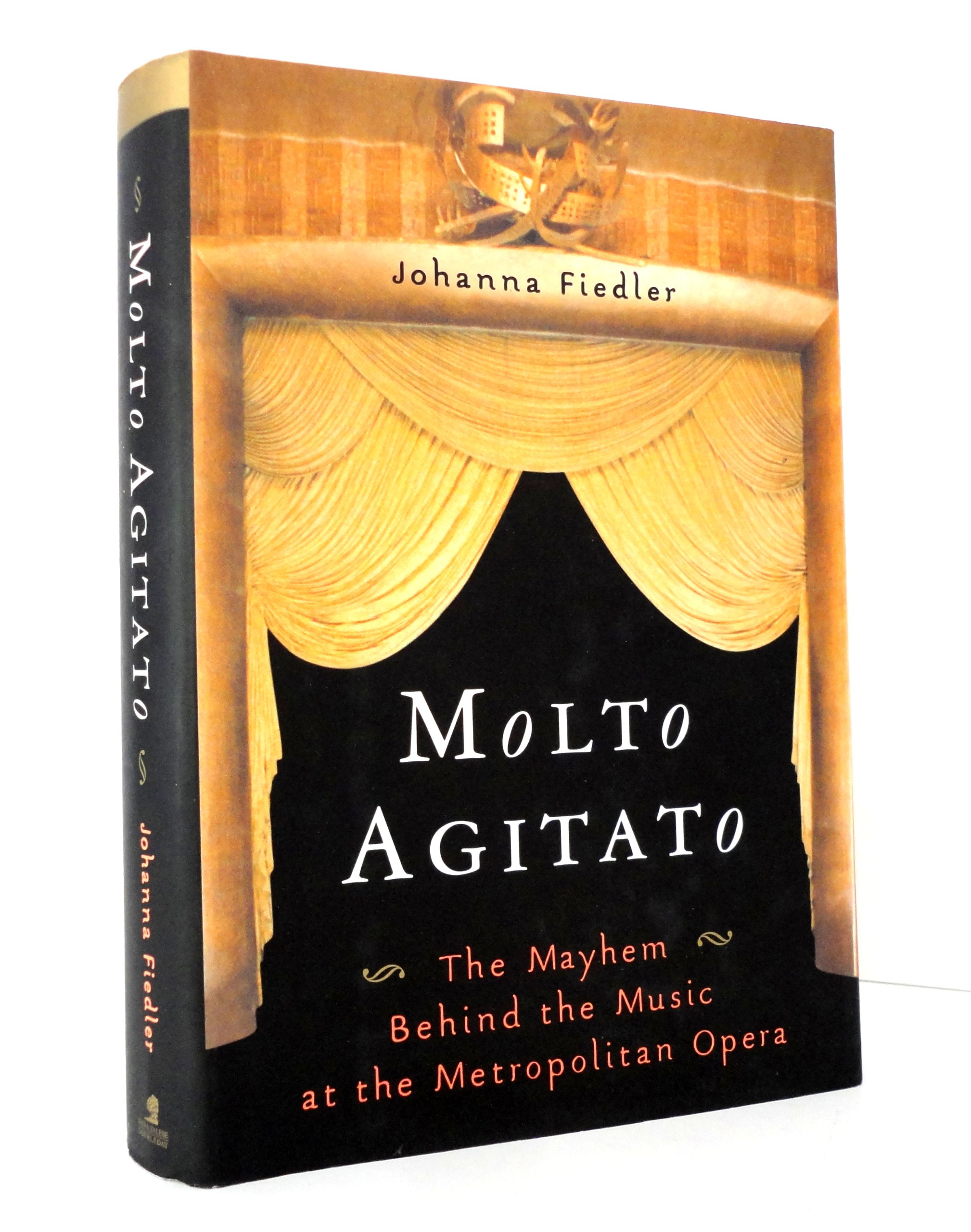
Molto Agitato: The Mayhem Behind the Music at the Metropolitan Opera
$10.50
by Johanna Fiedler



Behind the gold curtains of the Metropolitan Opera House, amidst the elaborate sets, bejeweled costumes, and labyrinth of administrative offices, the Met has traditionally operated in great secrecy. Until now. Johanna Fiedler, who was the Met’s general press representative for fifteen years, draws upon her insider’s knowledge and rivetingly reveals for the first time the company’s Byzantine inner workings and the personal, social, economic, and artistic struggles that have always characterized the Met. Molto Agitato is a tale with an appropriately operatic cast of characters_haughty blue bloods, ambitious social climbers, determined administrators, stubborn board members, temperamental artists_all maneuvering to use their power and influence to make the Met conform to their own agendas. Fiedler brings to life the early days of the Met, with the imperious Toscanini arriving from Italy and Caruso filling the house; the post-WW II years, when the unions gained strength and plagued the company with strikes; and the ever present passions of tenors and sopranos, clashing offstage as well as on. But most revelatory are Fiedler’s portrayals of James Levine and Joseph Volpe and their practically parallel ascendancies_Levine rising from prodigy to artistic director, Volpe advancing from stagehand to general manager_and their once strained relationship that was compounded by Volpe’s much publicized firing of the soprano Kathleen Battle. With its swift-flowing narrative, Molto Agitato is a wonderfully entertaining and thoroughly engaging account not only of one of the world’s most respected and richest music institutions but also of power, politics, ambition, and egos. For the uninitiated, molto agitato is Italian for "very agitated," and it's a fitting title. This is not a book about music or opera but the business of New York City's Metropolitan Opera and the personalities who have shaped it from its beginnings in the late 19th century to the present day. Daughter of famed Boston Pops conductor Arthur Fiedler, the author worked as the Met's general press representative for 15 years. Drawing from that gold mine of experience, she spins a fascinating account of strong egos, clashing personalities, power plays, and frequent major disasters. There are enough heroes, villains, and side plots to fill a dozen adventure novels. The reader is left to wonder how the Met has been able to survive this long, given the quantity of incompetence in its management over many decades. Fans of "insider" opera accounts may be reminded of Rudolph Bing's 5000 Nights at the Opera (1972. o.p.), which shares similar stories. For those interested in the dirt behind the golden curtain, this will be a feast. Suitable for public and academic libraries. Timothy J. McGee, Univ. of Toronto Copyright 2001 Reed Business Information, Inc. Ever since New York blue bloods started the Metropolitan Opera in 1883 to demonstrate their support for the arts, it has been run by a tripartite organization consisting of financial, artistic, and technical groups, each with its leader and each struggling for dominance. Hence the mayhem Fiedler so poignantly describes, as the strong personalities in the groups play a form of musical chairs in attempts to rule the whole company. Finances have figured strongly in determining the repertory and the roster of performers and technicians, and the famous singers, conductors, and directors who have graced the Met have boosted audience and donor support. The Met's story includes all the ingredients of melodrama--conflict, tantrums, backstabbing, and even murder. Along with the sordid details, Fiedler describes the Met's successes and foresees a bright immediate future for the company under the guidance of James Levine and Joseph Volpe. Providing great insight into the real workings of a $200 million cultural business, this is truly a tale worth telling--and attending. Alan Hirsch Copyright © American Library Association. All rights reserved “Weav[es] telling vignettes and interseting interpretations into a rich tapestry that vividly describes what goes on behind the great gold curtain. [Fiedler] deserves an ovation.” --The Dallas Morning News “Elegant. . . . It’s the opera book that tells you what you really want to know, not by gossiping, but by sensitive discussion of facts long-hidden behing [the Met’s] Kremlin-like façade.” —The Philadelphia Inquirer “High-toned dish. . . . [The Met is] creepy one minute, transcendentally beautiful the next, but never, ever boring.” -- St. Louis Post-Dispatch “Compelling. . . .Lively, in-depth. . . . Fiedler doesn’t stint in her tales about those temperamental artists who make the business of running an opera company unlike any other.” -- The Wall Street Journal “Provides a unique perspective not only on the opera scene, but on the changing landscape of American society since the Met’s opening in 1883. . . . It also serves up some pretty spicy dish.” — The Boston Glob