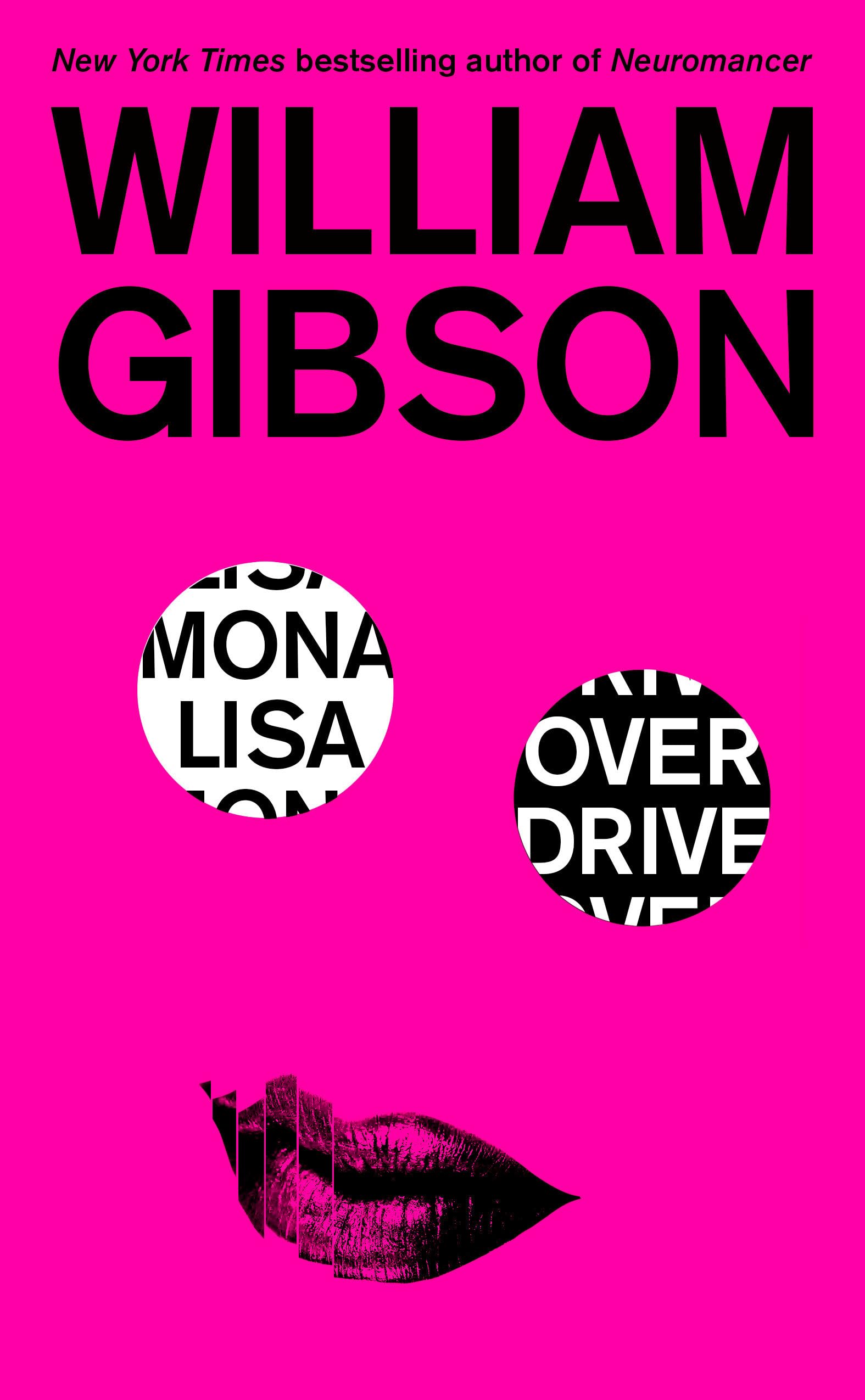



The thrilling conclusion to William Gibson’s classic Sprawl Trilogy, which began with the groundbreaking Neuromancer and “open[ed] up a new genre” ( San Francisco Chronicle ) “Brilliant, gritty, densely textured.”— Kirkus Reviews Enter the uniquely prescient world of the Sprawl—lyric and mechanical, sensual and violent, sobering and exciting—where multinational corporations and high-tech outlaws vie for power, traveling into the computer-generated universe known as cyberspace. Into this world comes Mona, a young girl with a murky past and an uncertain future whose life is on a collision course with internationally famous virtual reality star Angie Mitchell. Since childhood, Angie has been able to tap into cyberspace without a computer. Now, from inside cyberspace, a kidnapping plot is masterminded by a phantom entity who has plans for Mona, Angie, and all humanity, plans that cannot be controlled . . . or even known. And behind the intrigue lurks the shadowy Yakuza, the powerful Japanese criminal syndicate, whose leaders ruthlessly manipulate people and events to suit their own purposes. But even the Yakuza is no match for the machinations of an opaque artificial intelligence, whose goals no human can hope to comprehend. Don't miss any of the Sprawl Trilogy NEUROMANCER • COUNT ZERO • MONA LISA OVERDRIVE William Gibson, author of the extraordinary multiaward-winning novel "Neuromancer, has written his most brilliant and thrilling work to date . . ."The Mona Lisa Overdrive. Enter Gibson's unique world--lyric and mechanical, erotic and violent, sobering and exciting--where multinational corporations and high tech outlaws vie for power, traveling into the computer-generated universe known as cyberspace. Into this world comes Mona, a young girl with a murky past and an uncertain future whose life is on a collision course with internationally famous Sense/Net star Angie Mitchell. Since childhood, Angie has been able to tap into cyberspace "without a computer. Now, from inside cyberspace, a kidnapping plot is masterminded by a phantom entity who has plans for Mona, Angie, and all humanity, plans that cannot be controlled . . . or even known. And behind the intrigue lurks the shadowy Yazuka, the powerful Japanese underworld, whose leaders ruthlessly manipulate people and events to suit their own purposes . . . or so they think. William Gibson’s first novel, Neuromancer , won the Hugo Award, the Nebula Award, and the Philip K. Dick Award. He is the New York Times bestselling author of Count Zero , Burning Chrome , Mona Lisa Overdrive , Virtual Light , Idoru , All Tomorrow’s Parties , Pattern Recognition , Spook Country , Zero History , Distrust That Particular Flavor , and The Peripheral . He lives in Vancouver, British Columbia, with his wife. 1 THE SMOKE The ghost was her father’s parting gift, presented by a black-clad secretary in a departure lounge at Narita. For the first two hours of the flight to London it lay forgotten in her purse, a smooth dark oblong, one side impressed with the ubiquitous Maas-Neotek logo, the other gently curved to fit the user’s palm. She sat up very straight in her seat in the first-class cabin, her features composed in a small cold mask modeled after her dead mother’s most characteristic expression. The surrounding seats were empty; her father had purchased the space. She refused the meal the nervous steward offered. The vacant seats frightened him, evidence of her father’s wealth and power. The man hesitated, then bowed and withdrew. Very briefly, she allowed the mask her mother’s smile. Ghosts, she thought later, somewhere over Germany, staring at the upholstery of the seat beside her. How well her father treated his ghosts. There were ghosts beyond the window, too, ghosts in the stratosphere of Europe’s winter, partial images that began to form if she let her eyes drift out of focus. Her mother in Ueno Park, face fragile in September sunlight. “The cranes, Kumi! Look at the cranes!” And Kumiko looked across Shinobazu Pond and saw nothing, no cranes at all, only a few hopping black dots that surely were crows. The water was smooth as silk, the color of lead, and pale holograms flickered indistinctly above a distant line of archery stalls. But Kumiko would see the cranes later, many times, in dreams; they were origami, angular things folded from sheets of neon, bright stiff birds sailing the moonscape of her mother’s madness. . . . Remembering her father, the black robe open across a tattooed storm of dragons, slumped behind the vast ebony field of his desk, his eyes flat and bright, like the eyes of a painted doll. “Your mother is dead. Do you understand?” And all around her the planes of shadow in his study, the angular darkness. His hand coming forward, into the lamp’s circle of light, unsteadily, to point at her, the robe’s cuff sliding back to reveal a golden Rolex and more dragons, their manes swirling into waves, pricked out strong