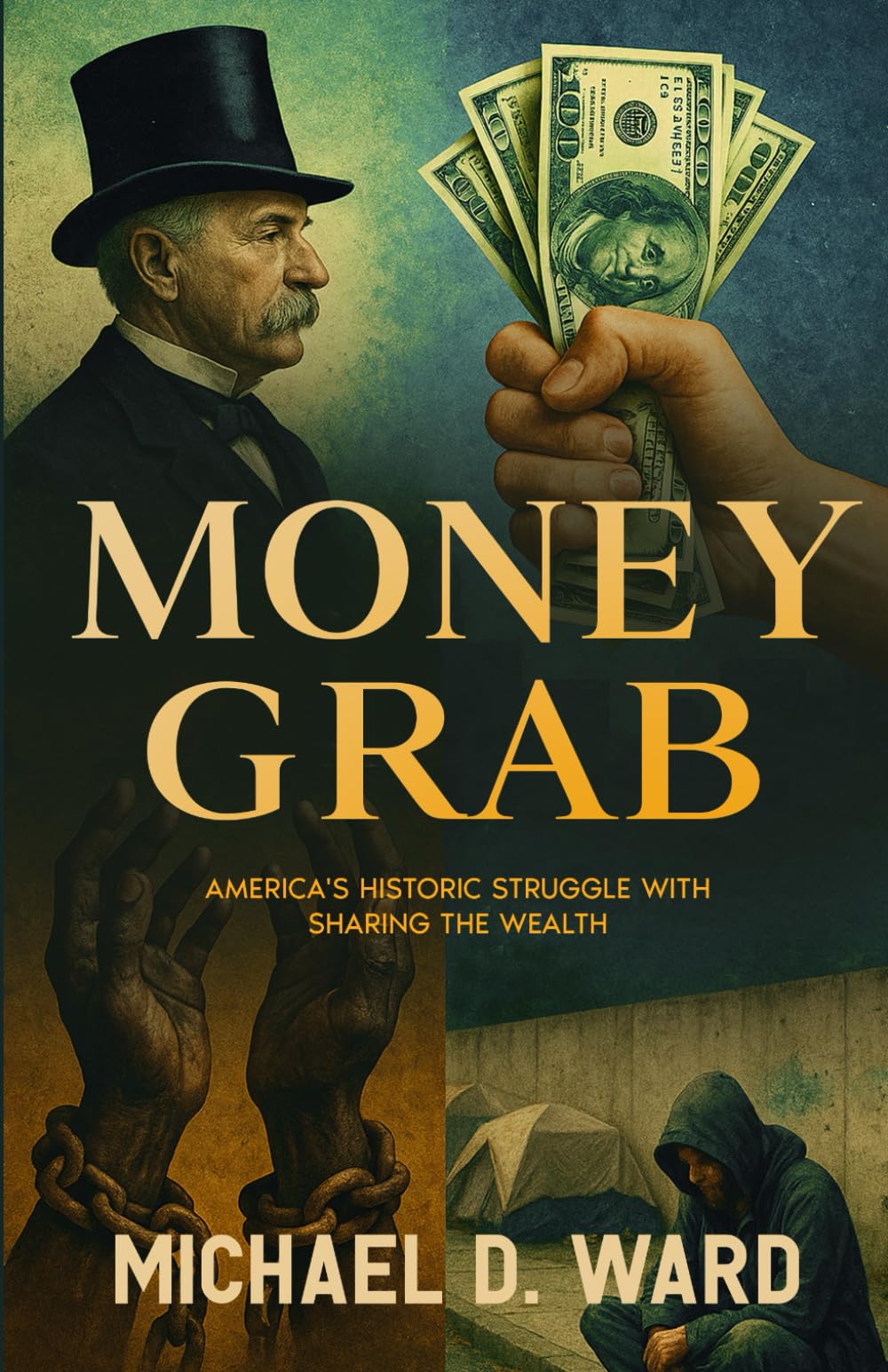



The United States is the wealthiest nation on earth; however, its wealth is disproportionately held by an elite ownership class and, to a lesser degree, the middle class. Meanwhile, real wages for the working class have not kept up with inflation or the cost of living, particularly housing. As our government grapples with taxation and the cost of social programs, it is helpful to understand the patterns in our history that have brought us to this point. Money Grab starts by providing readers with an overview of the history that shaped American culture, from its colonial roots through westward expansion and the Civil War. Our struggle with sharing the wealth as a country has deep roots in the period of reconstruction followed by the advent of Jim Crow laws and government-imposed discrimination in housing and employment that continued for an additional 100 years. Building on the historical foundation, Money Grab describes the income and wealth disparity in the U.S. and reviews research on the persistence of poverty and the generational gift of wealth. The U.S. tax system was designed initially to shift the burden of the cost of government to those most able to afford it and who gain the greatest economic benefits by our system of government. The author takes readers through the genesis and evolution of the tax code, identifying when the significant shifts have occurred and how a new approach to taxation has evolved over the past four decades. The Industrial Revolution changed the relationship between workers and owners with mass production. Money Grab describes how government policy with respect to labor initially helped and has more recently hindered the ability of the working class to secure an economic foothold. The author then discusses the origins and evolution of corporations and how they have been taxed. Courts have also granted corporations certain individual rights from the Constitution, giving those who control them a disproportionate voice in government and society, including the ability to unduly influence legislation and tax policy that benefits the ownership class. Finding and implementing solutions requires strong democratic participation. Money Grab describes the history of democracies and the share of the population involved in governance over centuries. The current form of democracy is just a few hundred years old, and even in the U.S. the right to vote has only been broadly guaranteed for decades. The U.S. has lower voter participation than other developed countries, leaving the direction of government to those who participate and have shaped the system to their benefit. Poverty and health are closely correlated. Money Grab also discusses how the right to health and healthcare that was articulated in the U.N.'s Universal Declaration of Human Rights has been acknowledged and enshrined in many other developed countries but not the U.S. Despite spending more of its GDP on healthcare than any developed country, the U.S. has worse health outcomes, in large part because of the persistence of poverty and its impact on health. Taken together, the forces described in the book serve to perpetuate disparity, but an economically polarized society is not sustainable. Money Grab closes with recommendations on tax and other policy choices that could help overcome the income and wealth disparity in the U.S. today. Buy Money Grab: America's Historic Struggle with Sharing the Wealth today! Gain a deeper understanding of our history and policy choices to better position the U.S. for a sustainable future.