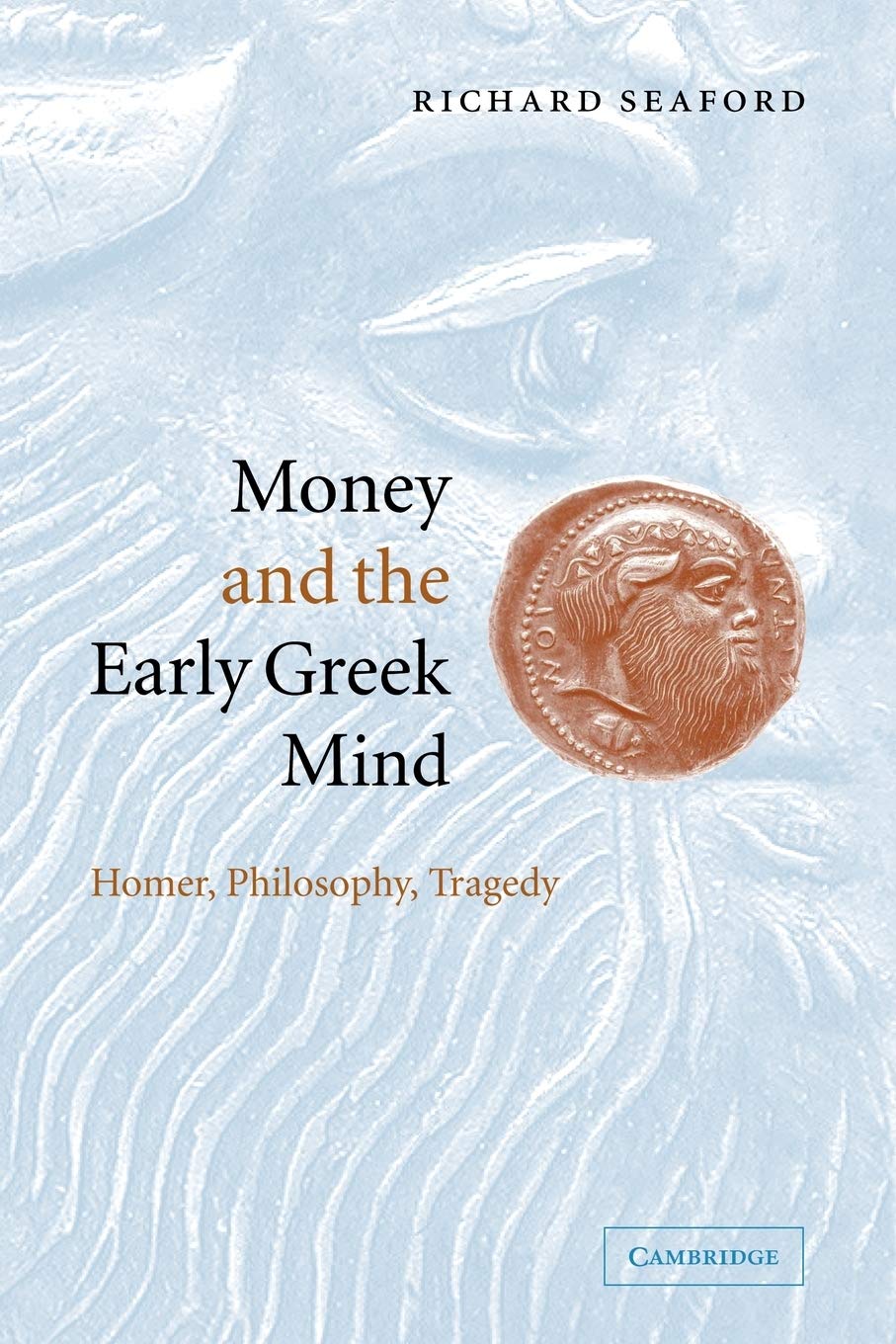



How were the Greeks of the sixth century BC able to invent philosophy and tragedy? Richard Seaford argues that a large part of the answer can be found in another momentous development, the invention and rapid spread of coinage. By transforming social relations, monetization contributed to the concepts of the universe as an impersonal system (fundamental to Presocratic philosophy) and of the individual alienated from his own kin and from the gods, as found in tragedy. "A powerful and valuable set of observtion on the impact of the introduction of coinage on the early Greek world." EH.net An original theory that connects the development of coinage to the origins of rational philosophy in ancient Greece. Richard Seaford is Professor of Greek Literature at the University of Exeter. He is the author of commentaries on Euripides' 'Cyclops' (1984) and 'Bacchae' (1996) and of 'Reciprocity and Ritual: Homer and Tragedy in the Developing City-State' (1994). Used Book in Good Condition