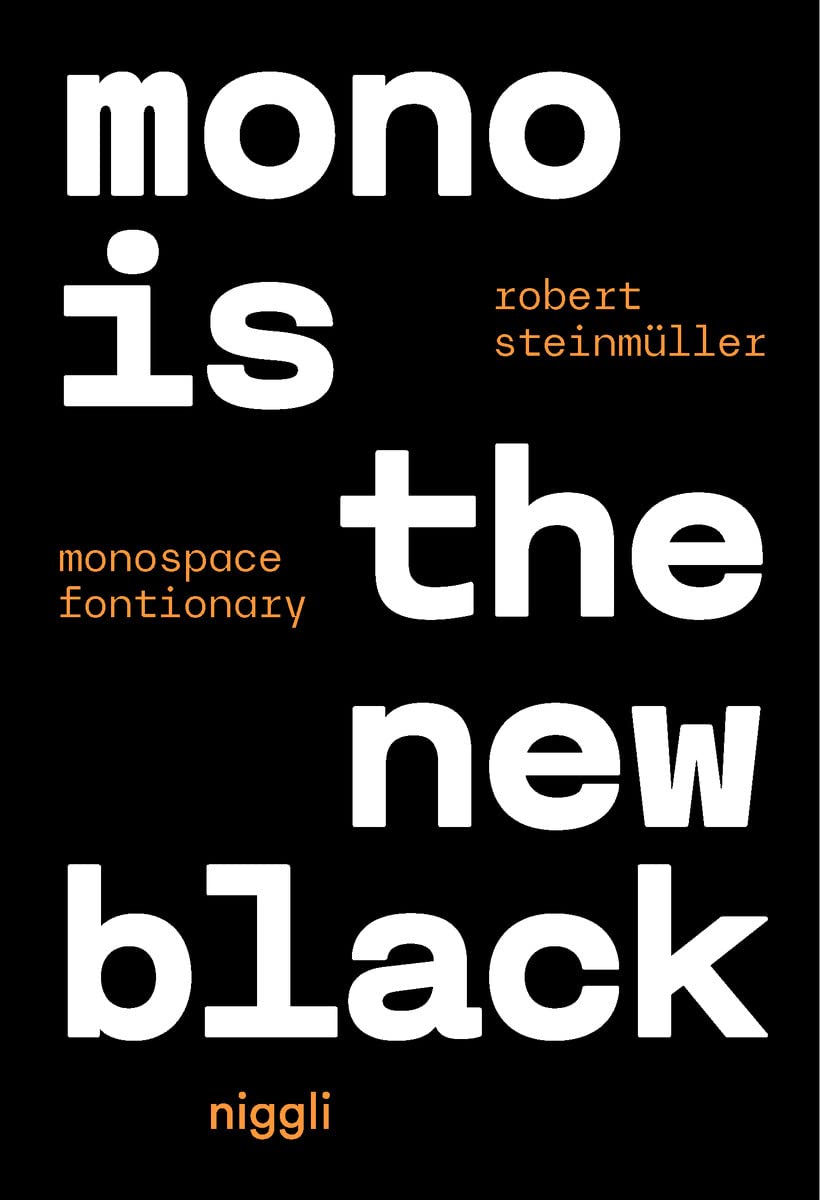



An indispensable handbook about monospaced typefaces with the relevant cultural-historical background, a variety of convincing applications and extensive typeface collection accompanied by all needed facts and information. Monospaced fonts originate from the typewriter and are characterized by the peculiarity that all letters, digits and characters have the same width. Mono is the new Black discusses the function and aesthetics of this unique kind of typeface and deals with its cult status in the (mainly young) design scene. The aim of the handbook is to inform and inspire typographers, typeface developers, designers, as well as readers interested in culture in general with facts, analyses, expert positions, practical examples, and a comprehensive font collection. In a cultural-historical outline, the author first presents the historical aspects of this typeface and shows how closely intertwined type, technical progress, and social development are. In the middle section, he presents a selection of examples of the work of globally active designers and agencies with a focus on the many possible applications. The final section is a script compendium that provides a clear overview of 175 monospaced fonts and shows the changes that these distinctive monospaced fonts have undergone, from machine type to entirely digitally developed coding fonts. Les caractères monospacés remontent à la machine à écrire et se caractérisent par la particularité de la largeur égale de toutes les lettres, chiffres et signes. Mono is the new Black aborde la fonction et l'esthétique de ce type de police unique et s'intéresse à son statut culte dans le milieu du design (surtout chez les jeunes). L'objectif du manuel est d'informer et d'inspirer les typographes, les développeurs de polices, les designers et les personnes intéressées par la culture avec des faits, des analyses, des positions d'experts et des exemples pratiques ainsi qu'une collection complète de polices. En commençant par un résumé historique et culturel, l'auteur traite les aspects de l'histoire de l'écriture et montre clairement à quel point l'écriture, le progrès technique et le développement social sont étroitement liés. Des exemples de travail sélectionnés, des designers et des agences du monde entier constituent la partie centrale, avec un accent sur les multiples possibilités d'application. La partie finale est constituée d'un compendium de polices qui rassemble 175 polices monospace et montre clairement les changements auxquels cette police de caractères particulière a été soumise, de l'écriture automatique aux polices de codage entièrement numériques. En collaboration avec le Musée du livre et de l'Écriture de la Bibliothèque Nationale Allemande. Robert Steinmüller is a German designer whose design work systematically pursues the aesthetics of the physical in the digital age. His typographic work derives its vibrancy and resonance from this retrospective and friction of aesthetic perception. He studied design in Potsdam and Leipzig, has already worked for publishing houses in Germany and abroad, and has won various prizes for his book designs.