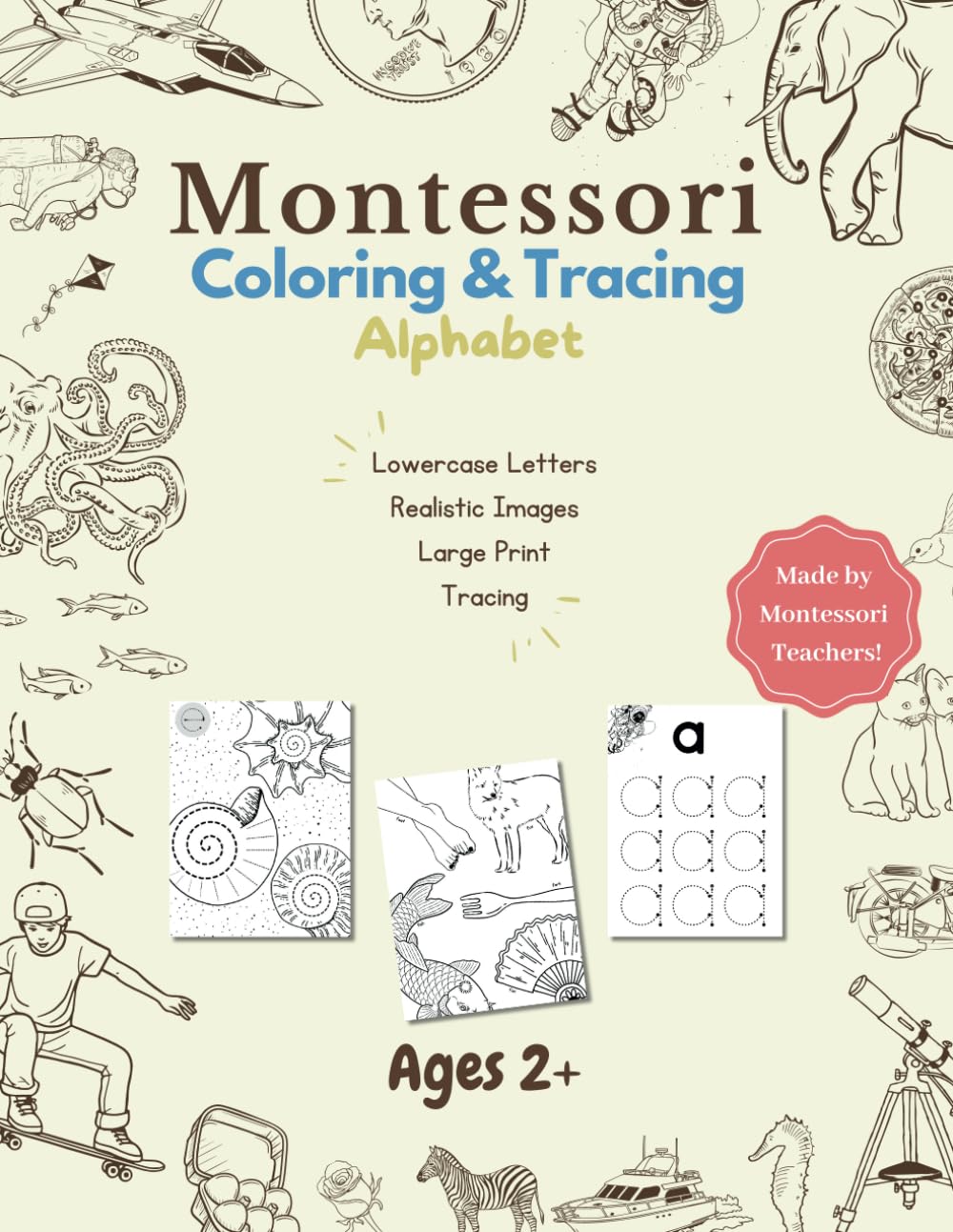
Montessori Alphabet Coloring & Tracing Workbook: A fun way to practice beginning letter sounds with realistic images & lowercase letters
$11.99
by River Education



A Coloring and Tracing Book to Enhance Children's Letter - Sound Correspondence. Make letter sound practice more enjoyable for kids with this interactive book, which features engaging coloring pages, tracing shapes and letters. What makes this workbook Montessori? Realistic Images - Correct Phonetic Sounds - Lowercase and easy to read font The Importance of Realistic Materials in Learning Dr. Montessori emphasized the use of realistic materials in the classroom. The closer educational experiences are to real life, the easier it is for children to make connections to new concepts such as letters and numbers. While it is natural for children to be drawn to fantasy, Dr. Montessori believed that imagination is already the natural inclination of the child and that it is most stimulated by exposure to realistic materials and images. Introducing Vowels to Children: A Systematic Approach English is a complex language with many rules. It is important to introduce these rules to children in a structured manner. When we teach letter sounds, we beginning with short vowels and then transition to long vowels. It's important to note that the /a/ in "apple" produces a very different sound than the /a/ in "alien," which can be confusing for a child who is working on learning all 26 letter-to-sound combinations. Introducing Letter Symbols: Best Practices When introducing letters, it's important to use an inviting, easy-to-read font in a readable format. This will help your child become familiar with the letters as they'll encounter them in books. For instance, in most books, "the cat ran fast" would not be written in all uppercase letters such as "THE CAT RAN FAST." Words in books will also not be presented with eyes or in bubble letters. While uppercase letters are also important, they can be introduced once the child has mastered most of the letters in lowercase form.