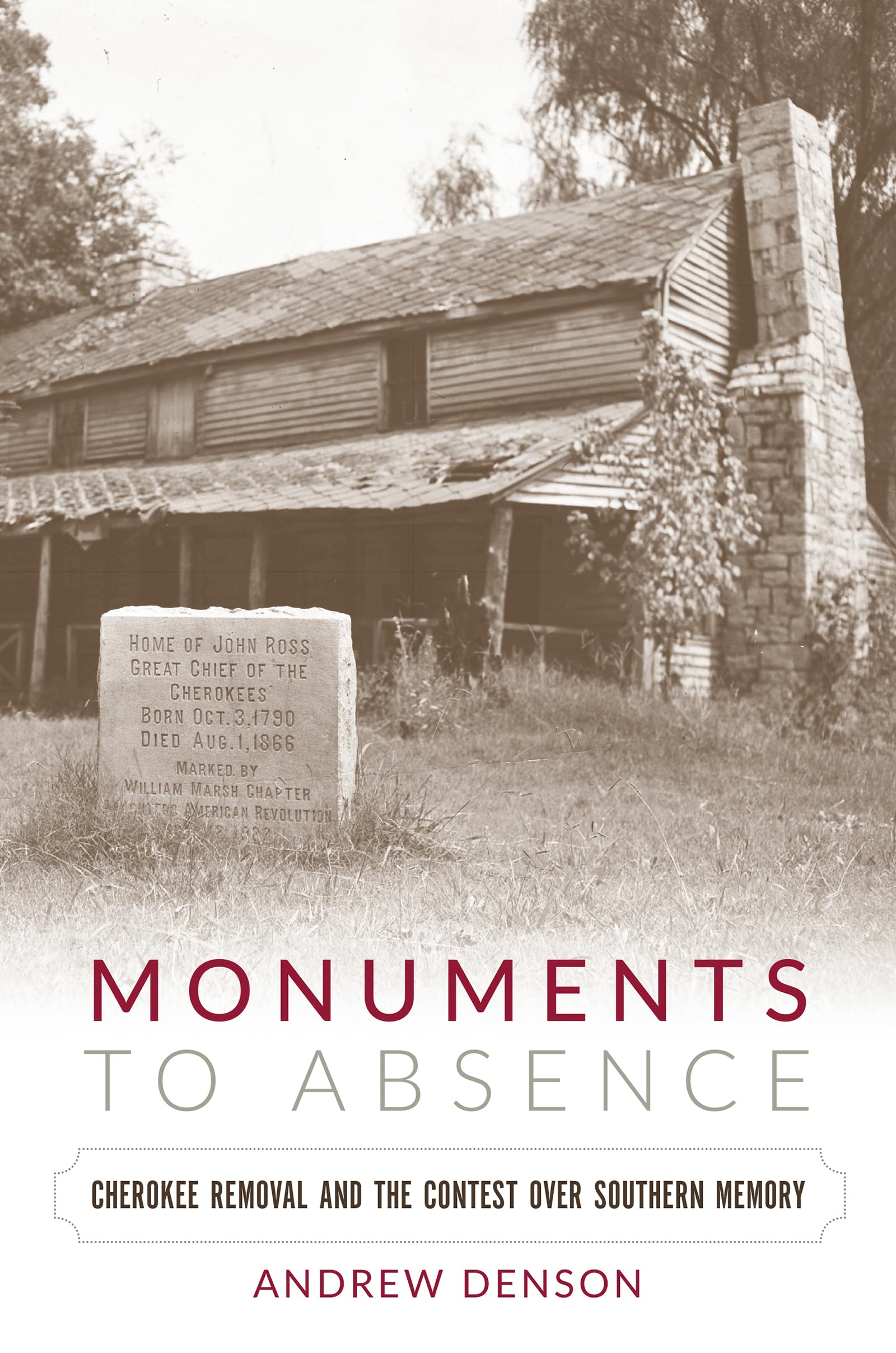
Monuments to Absence: Cherokee Removal and the Contest over Southern Memory
$32.99
by Andrew Denson



The 1830s forced removal of Cherokees from their southeastern homeland became the most famous event in the Indian history of the American South, an episode taken to exemplify a broader experience of injustice suffered by Native peoples. In this book, Andrew Denson explores the public memory of Cherokee removal through an examination of memorials, historic sites, and tourist attractions dating from the early twentieth century to the present. White southerners, Denson argues, embraced the Trail of Tears as a story of Indian disappearance. Commemorating Cherokee removal affirmed white possession of southern places, while granting them the moral satisfaction of acknowledging past wrongs. During segregation and the struggle over black civil rights, removal memorials reinforced whites' authority to define the South’s past and present. Cherokees, however, proved capable of repossessing the removal memory, using it for their own purposes during a time of crucial transformation in tribal politics and U.S. Indian policy. In considering these representations of removal, Denson brings commemoration of the Indian past into the broader discussion of race and memory in the South. “Bridges studies of memory and southern culture. . . . This lively book deserves a place in college libraries. Highly recommended.”— CHOICE “Denson’s work is thoroughly researched and merges elements of public, cultural, political, and Native histories to produce an impressively cogent and cohesive whole.”— H-Net Reviews “Highlights the contrasting, competing, and changing stories of removal that non-Indians and Cherokees have told in different places and times.”— North Carolina Historical Review “A significant and timely contribution to a growing body of scholarship on the Native South.”— The Journal of Southern History “An engaging examination of the politics of place-making in the twentieth century that contributes to studies of public history, the South, Native peoples, and memory.”— Chronicles of Oklahoma “Groundbreaking . . . effectively presents how Native people crafted narratives alongside white narratives.”— West Virginia History “Enhances our understanding of memory, southern history, and Native America . . . presents cutting-edge research in Native studies . . . and explores the entanglement of removal commemoration, Civil War memory, and New South ideology.”— The Journal of the Civil War Era “Offers compelling insights into how the intersecting forces of tourism, commerce and performance, civil rights and the Cold War, and historical erasure and tribal resurgence gradually produced a redemptive narrative.”— Southwestern Historical Quarterly “Denson works to demonstrate cultural interpretations of removal through the eyes of both Cherokee and white southerners, but much of this discussion in the early chapters is devoted to narrating the history of removal.”— Journal of North Carolina Association of Historians “Poses rich questions about the ways public memory holds sway over social life in the US South, providing critical frameworks for examining how Cherokee history became useable in the tourism industry.”— NAIS An enlightening and powerful study of Cherokee memory and removal, Monuments to Absence tells the complex racial and political story of how we remember the Trail of Tears."—Malinda Lowery, author of Lumbee Indians in the Jim Crow South The Trail of Tears and its forgotten people Andrew Denson teaches history at Western Carolina University.