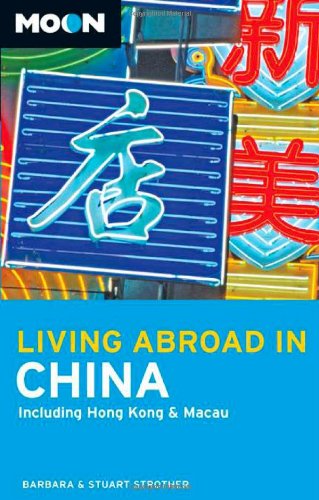



If you have always dreamed of living in China and are ready to take that step, Moon Living Abroad in China delivers what you need to know about your movein a smart and organized manner. Husband-and-wife author team Stuart and Barbara Strother have extensive experience working, traveling, and living in China. With their expertise, you'll receive the information you need, including essential information on setting up your daily life, applying for visas, tackling finances, and looking for employment. You'll get practical advice on education, health care, and how to rent or buy a home that fits your needs. The book also includes color and black and white photos, illustrations, and maps to help you find your bearings. With insight into navigating the language and culture of China, Moon Living Abroad in China is a helpful resource for tourists, business people, adventurers, students, teachers, professionals, families, couples, and retirees looking to relocate. Moon Living Abroad in China authors Barbara and Stuart Strother share some of their best tips for making the move to China. To read the entire Q&A, please visit Moon. Are there any local customs that a newcomer to China should be aware of? A few key customs that come to mind include receiving a business card with two hands and treating it as a valuable item, being aware of the fact that there is a particular protocol on where to sit at group dinners (wait until the host shows you the chair you should take), and not leaving your chopsticks pointing straight up in your food, which resembles incense sticks and is therefore associated with funerals and therefore death. There are really too many customs to mention, but the good news is that the Chinese are very forgiving when it comes to ignorant foreigners. They don't expect you to know all their traditions, but they'll be honored and impressed if you do. Making local friends is a great way to assimilate to living in a new country. What's the best way to meet new people in China? It's quite easy to strike up conversations with people in China. The Chinese are often very curious about foreigners, so a foreigner who wants to chat is quite welcomed. I've made friends with taxi drivers who were simply curious about my life. Of course this is easier to do if you speak some Chinese; even if your language skills are rudimentary, they'll celebrate your attempt. So the simple answer is to just be friendly and talkative. But the best advice is to learn Chinese, practicing it everywhere you go. When it comes to establishing deeper friendships with acquaintances and coworkers in China, the Chinese culture revolves around food. Friendships are built around shared meals and drinks. Inviting a few co-workers to join you for an evening at a hotpot restaurant is a great way to show you're interested in building friendships. Just don't forget that whoever does the inviting also does the ordering and the paying. --Moon.com Did you ever think of just picking up and moving to another country? The travel book publisher Moon has expanded its "Living Abroad" series. New volumes describe living in Panama, South Korea, Guatemala, China and Spain. More than 5.25 million nongovernmental U.S. citizens live abroad, according to the Association of Americans Resident Overseas. While meant for expats, the books also come in handy for tourists who might be spending a few weeks or months in a country as part of study abroad or extended tour. You never know when you'll be back. --Detroit Free Press, February 28, 2010 The book opens with an introductory chapter about China's history, government, economy, people and culture, religion and the arts. This chapter also covers the logistics of a fact-finding trip and includes a suggested itinerary. The authors recommend that "if you are considering a move to China and haven't been there yet, put this [book] down and book your flight immediately. Reading about China...cannot paint a true picture of the real thing." The section on "Daily Life" covers important practical aspects of living in China, such as visas and residence permits, housing considerations, language and education, health, employment, finance, communications, and transportation. The section on "Prime Living Locations" introduces readers to the various islands and the best locations for expatriates, depending upon their interests, lifestyle, and career choices. This chapter is especially useful if you are in the planning stages of your move to China and are not yet committed to a specific destination. The authors focus on the most popular destinations for expatriates, such as China's larger cities (Beijing, Shanghai, Hong Kong), but also cover other attractive regions and smaller cities. The book concludes with a "Resources" section that includes useful information about government offices and embassies, media, communications, language and education, employment, health, transportation, financial matters, etc. There is also in