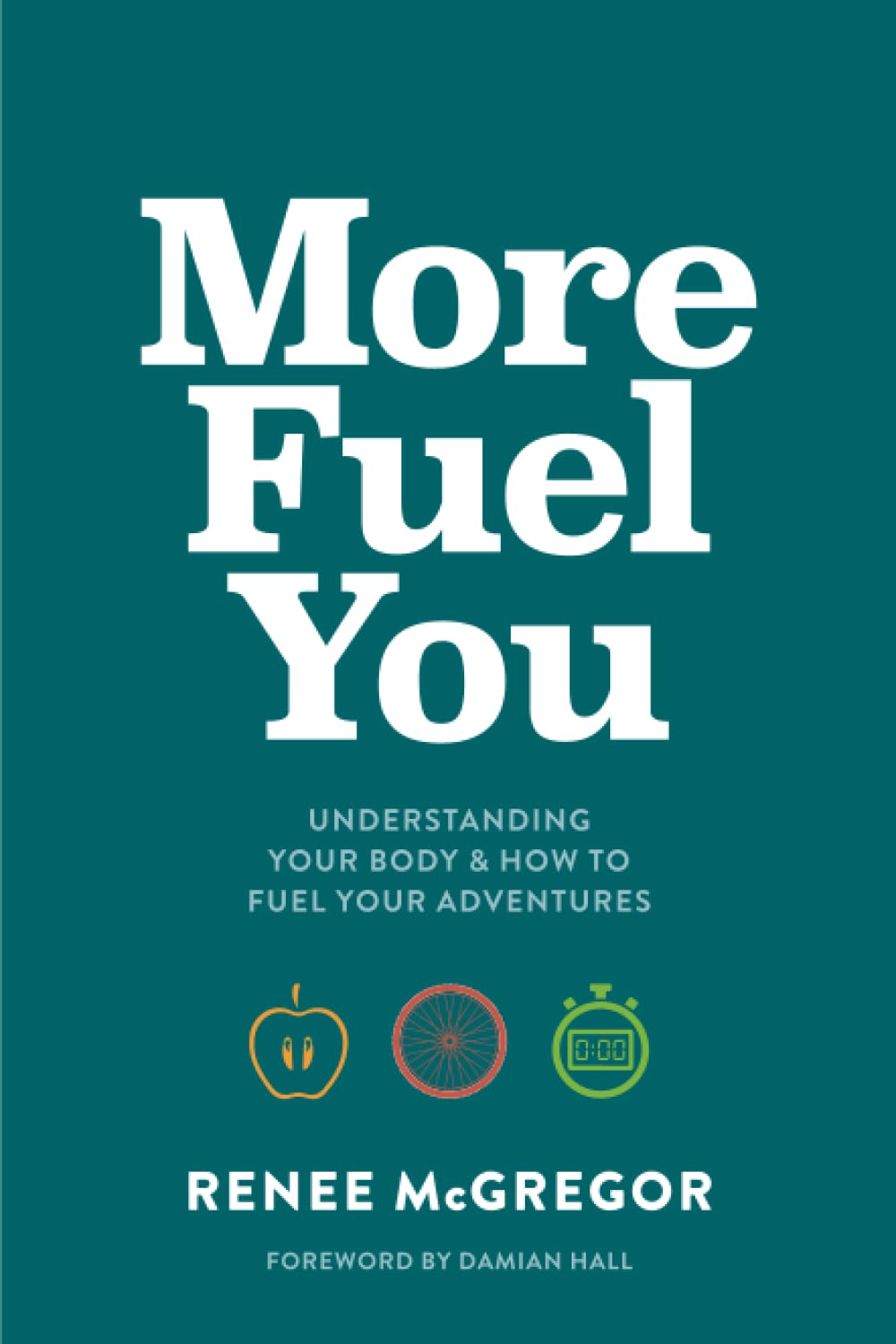
More Fuel You: Understanding your body & how to fuel your adventures
$19.95
by Renee McGregor



What we eat has a huge impact on our physical and mental health, and on our performance in our chosen sport, whether we’re elite-level athletes or enthusiastic amateurs. But, with so much information out there, how do we choose a way of eating that is right for us? More Fuel You is a clear and authoritative guide to making the most of your nutrition. Leading sports dietitian Renee McGregor looks at fuelling needs for sporting participation, training and competition, and analyses some popular diet options, including low-carbohydrate, vegan and intermittent fasting. But this is not just another sports nutrition book. Renee recommends a holistic view: by understanding the human body and being self-aware, you can find the ideal nutritional approach for you personally. Significantly, Renee also discusses areas of sports nutrition in populations that are often overlooked, including women’s health and the menopause, healthy ageing, and the inclusion of individuals who don’t necessarily conform to the stereotype of an athlete, such as people living with chronic health conditions. Whatever your race, genetics, gender, age, socio-economic status, body type or ability, it’s important to be your own athlete, fuel appropriately for your body and enjoy what you do. Whether you’re a world-class or real-world athlete, if you’re serious about sport and nutrition, you can’t afford not to read this book. Table of Contents FOREWORD by Damian Hall A WORD FROM THE AUTHOR INTRODUCTION Fuelling for Training and Competition CHAPTER 1: Food as Fuel CHAPTER 2: Athlete Diets CHAPTER 3: Low-Carbohydrate Diets CHAPTER 4: Vegan and Plant-Based Diets CHAPTER 5: Intermittent Fasting CHAPTER 6: Calorie-Controlled Diets Fuelling for Specific Populations CHAPTER 7: The Female Athlete CHAPTER 8: The Masters Athlete CHAPTER 9: The Individual Athlete CHAPTER 10: Over to You ACKNOWLEDGEMENTS NOTES BIBLIOGRAPHY AND REFERENCES Renee McGregor is a leading sports and eating disorder specialist dietitian with twenty years’ experience working in clinical and performance nutrition. She has worked with athletes across the globe, including supporting Olympic (London 2012), Paralympic (Rio 2016) and Commonwealth (Queensland 2018) teams. Renee also works closely with English and Scottish National Ballet, leading on their diet advisory and supporting dancers of all ages and abilities. She is regularly asked to work directly with high-performing and professional athletes who have developed a dysfunctional relationship with food that is impacting their performance, health and career. Renee is also the founder of Team Renee McGregor, managing a team of practitioners specialising in supporting individuals and athletes of all levels and ages, coaches and sports science teams to provide nutritional strategies to enhance sports performance and manage eating disorders. This is reflected in her work on social media too, where she prides herself on proving an educational hub for both the professional and the everyday athlete. Renee is also a bestselling author of four books, including Training Food and Orthorexia: When Healthy Eating Goes Bad. When not inspiring others with her incredible work, Renee can be found running the mountains and chasing the trails, most likely training for a crazy ultramarathon. Damian Hall is a parent, accidental activist and record-breaking ultrarunner who has represented Great Britain and competed in some of the world’s toughest races. His attempt to break into the top ten at the 105-mile Ultra-Trail du Mont Blanc was made into an award-winning film, Underdog; and the documentary Totally FKT followed him and John Kelly as they raced to break the Pennine Way record in 2020. Damian has also set records on the Paddy Buckley Round, the South West Coast Path, the Cape Wrath Trail, and Wainwright’s Coast to Coast. He is a UK Athletics running coach and a widely published journalist who contributed regularly to Runner’s World, Women’s Running and Trail Running. His previous books include In It for the Long Run, A Year on the Run and the official National Trail guide to the Pennine Way. He is a big fan of midlife-crisis haircuts and tea. INTRODUCTION The idea that nutrition and performance are inextricably linked is not new, but knowledge around the topic is growing and evolving all the time. The first scientific studies on carbohydrate and fat metabolism in athletes were conducted in Sweden in the 1930s, igniting an interest in diet as a performance aid. Since then, sports nutrition has become a standalone science, with many diverse branches and specialisms emerging over the years. While well-conducted scientific research is essential for understanding and advancing the field of sports nutrition, interpreting its findings isn’t always straightforward. Studies are often hard to access in full, inaccurately reported by the mass media, or they use a very specific group of parti-cipants, making them less relevant to the wider population.