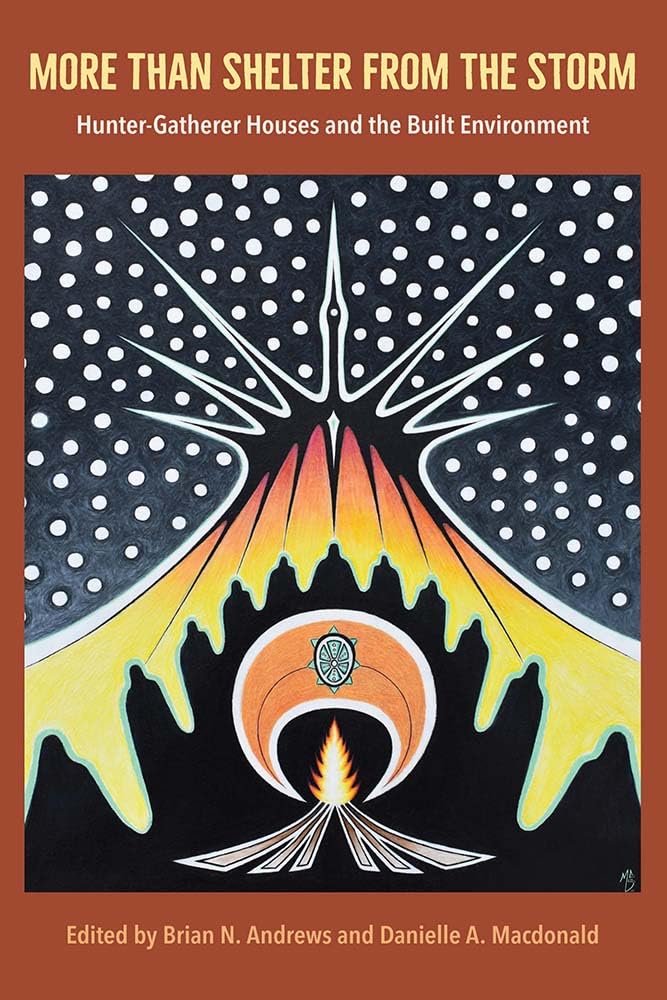
More Than Shelter from the Storm: Hunter-Gatherer Houses and the Built Environment
$75.85
by Brian N. Andrews



The role of place-making and architecture in mobile cultures The relationship of hunter-gatherer societies to the built environment is often overlooked or characterized as strictly utilitarian in archaeological research. Taking on deeper questions of cultural significance and social inheritance, this volume offers a more robust examination of houses as not only places of shelter but also of memory, history, and social cohesion within these communities. Bringing together case studies from Europe, Asia, and North and South America, More Than Shelter from the Storm utilizes a diverse array of methodologies including radiocarbon dating, geoarchaeology, refitting studies, and material culture studies to reframe the conversation around hunter-gatherer houses. Discussing examples of built structures from the Pleistocene through Late Holocene periods, contributors investigate how these societies created a sense of home through symbolic decoration, ritual, and transformative interaction with the landscape. Demonstrating that meaningful relationships with architecture are not limited to sedentary societies that construct permanent houses, the essays in this volume highlight the complexity of mobile cultures and demonstrate the role of place-making and the built environment in structuring their worldviews. Contributors: Brian Andrews
Amy E. Clark
Margaret W. Conkey
Kelly Eldridge
Randy Haas
Knut A. Helskog
Bryan C. Hood
Sebastien Lacombe
Danielle Macdonald
Lisa Maher
Brooke Morgan
Christopher Morgan
Gustavo Neme
Lauren Norman
Matthew O’Brien
Spencer Pelton
Sarah Ranlett
Vladimir Shumkin
Kathleen Sterling
Todd Surovell
Christopher B. Wolff “Challenges the notion that the built environment of hunter-gatherers was purely functional, to keep them warm and dry. Through a series of case studies spanning more than 40,000 years, the authors provide convincing evidence that hunter-gatherer houses were more than just shelter from the storm.”—Gary Coupland, coeditor of Emerging from the Mist: Studies in Northwest Coast Culture History “Challenges the notion that the built environment of hunter-gatherers was purely functional, to keep them warm and dry. Through a series of case studies spanning more than 40,000 years, the authors provide convincing evidence that hunter-gatherer houses were more than just shelter from the storm.”—Gary Coupland, coeditor of Emerging from the Mist: Studies in Northwest Coast Culture History Brian N. Andrews is associate professor and head of the Department of Psychology and Sociology at Rogers State University and coauthor of The Mountaineer Site: A Folsom Winter Camp in the Rockies . Danielle A. Macdonald is associate professor in the Department of Anthropology at the University of Tulsa.
Amy E. Clark
Margaret W. Conkey
Kelly Eldridge
Randy Haas
Knut A. Helskog
Bryan C. Hood
Sebastien Lacombe
Danielle Macdonald
Lisa Maher
Brooke Morgan
Christopher Morgan
Gustavo Neme
Lauren Norman
Matthew O’Brien
Spencer Pelton
Sarah Ranlett
Vladimir Shumkin
Kathleen Sterling
Todd Surovell
Christopher B. Wolff “Challenges the notion that the built environment of hunter-gatherers was purely functional, to keep them warm and dry. Through a series of case studies spanning more than 40,000 years, the authors provide convincing evidence that hunter-gatherer houses were more than just shelter from the storm.”—Gary Coupland, coeditor of Emerging from the Mist: Studies in Northwest Coast Culture History “Challenges the notion that the built environment of hunter-gatherers was purely functional, to keep them warm and dry. Through a series of case studies spanning more than 40,000 years, the authors provide convincing evidence that hunter-gatherer houses were more than just shelter from the storm.”—Gary Coupland, coeditor of Emerging from the Mist: Studies in Northwest Coast Culture History Brian N. Andrews is associate professor and head of the Department of Psychology and Sociology at Rogers State University and coauthor of The Mountaineer Site: A Folsom Winter Camp in the Rockies . Danielle A. Macdonald is associate professor in the Department of Anthropology at the University of Tulsa.