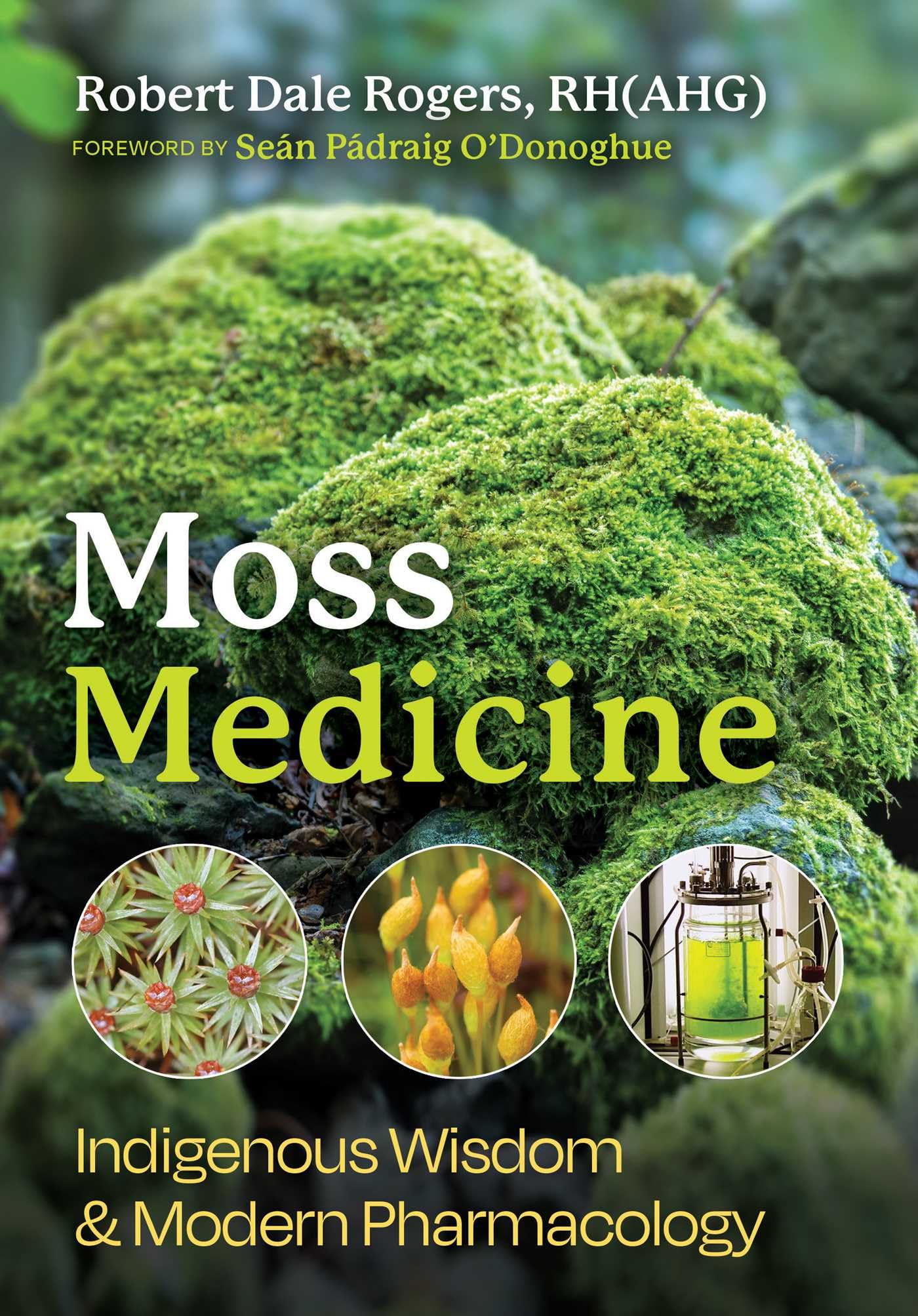



A comprehensive illustrated guide to bryophytes • Explores more than 600 species of the bryophyte family of plants—mosses, liverworts, and hornworts—in text and full-color photos • Shows the ways that indigenous peoples around the world have traditionally used mosses and other bryophytes for food preservation, clothing, and medicine • Details scientific research on the potency of bryophyte compounds and terpenoids as well as their antiviral, antimicrobial, antifungal, and anti-cancer properties In this comprehensive book, master herbalist Robert Dale Rogers reveals the unique healing benefits of bryophytes—the family of plants that includes mosses, liverworts, and hornworts. These plants are some of the oldest on our planet, and recently they have been recognized by science for their antiviral, antimicrobial, and anti-cancer properties. Bryophytes have no vascular tissue and no roots. Found on all continents in a wide range of climates, they survive—and thrive—by extracting moisture and nutrients directly from the air. Using full-color photographic examples, Rogers presents more than 600 species of bryophytes through the lenses of ethnobotany, folklore, chemistry, and pharmacology, and he shares their healing applications in homeopathy and aromatherapy. Rogers explains how Indigenous people all over the world have used bryophytes for millennia for food preservation, clothing, insulation, and medicine. He then compares the three types of bryophytes with scientific research on the medicinal effects of their chemical compounds, showing that mosses, liverworts, and hornworts can be used in herbal preparations, homeopathic remedies, and essential oils for common ailments. He also explains that bryophytes have environmental benefits, such as in the sequestration of carbon and the phyto-remediation of our increasingly polluted planet, revealing how these ancient plants have supported humanity for eons—and, fortunately for us, continue to do so. “I have known Robert Rogers for more than 30 years. During the early years, he took on the project of researching the medicinal properties of the plants of the boreal forest. The books that have come from this project have included trees, herbaceous plants, fungi, and now bryophytes. In this book, you will find information on practical uses and contraindications, along with scientific and medically useful information. The genetic pathways involved may hold the key to survival in the fields of medicine, agriculture, biodiversity, and space exploration.” ― Robert Pearman, ND, a specialist in Herbology “This richly informed and deeply researched book opened my eyes to clinical possibilities from a source I wasn’t previously aware of. Reading it inspired recognition of the huge number of moss species, which offer hope for novel medical treatments. This book discusses the research supporting new solutions for medical conditions, with particularly strong support for potential in dealing with both cancer and infectious diseases. I really enjoyed the fascinating chemical, medical, historical, and cultural insights that underlie the different uses of moss. I cannot recommend this book highly enough for those interested in nature-based therapeutics or traditional medicines and looking for inspiration.” ― Peter Silverstone, MD, FRCPC, professor of psychiatry, University of Alberta “I am both inspired by and grateful for Robert’s focus on medicinal mosses. As a practicing herbalist, I am deeply intrigued by their history, medicinal potential, and the immense role they play in the sacred web of life on our planet.” ― Chad Cornell, integrative herbalist and founder of The Hollow Reed School of Healing Arts & Herbals “As a medical doctor and ecology enthusiast, I loved this book, especially the wonderful introductory chapter that offers a wise perspective. I appreciate a book written by a holistic systems thinker that compiles an exhaustive reference that appeals to those concerned with a planetary, or one-health, approach to living.” ― Raquel Feroe, MD, Alberta Medical Association Robert Dale Rogers, RH (AHG), an herbalist with more than 50 years of experience, is the author of more than 60 books, a professional member of the American Herbalists Guild, and on the editorial board of the International Journal of Medicinal Mushrooms . A former clinical professor in family medicine, he lives in Camrose, Alberta, Canada. INTRODUCTION Evolving from the Ancients This is the forest primeval. The murmuring pines and the hemlocks, Bearded with moss, and in garments green. Henry Wadsworth Longfellow Bryophytes, which include mosses, liverworts, and hornworts, are the second largest group of land plants after angiosperms, and among the oldest. Worldwide, there are some 14,000 species of leaf mosses (Bryophyta), more than 6,000 species of liverworts or liver mosses (Marchantiophyta), and 300 species of hornworts or foliage mosses (Anthocerotophyta) (Chandra et al. 2017