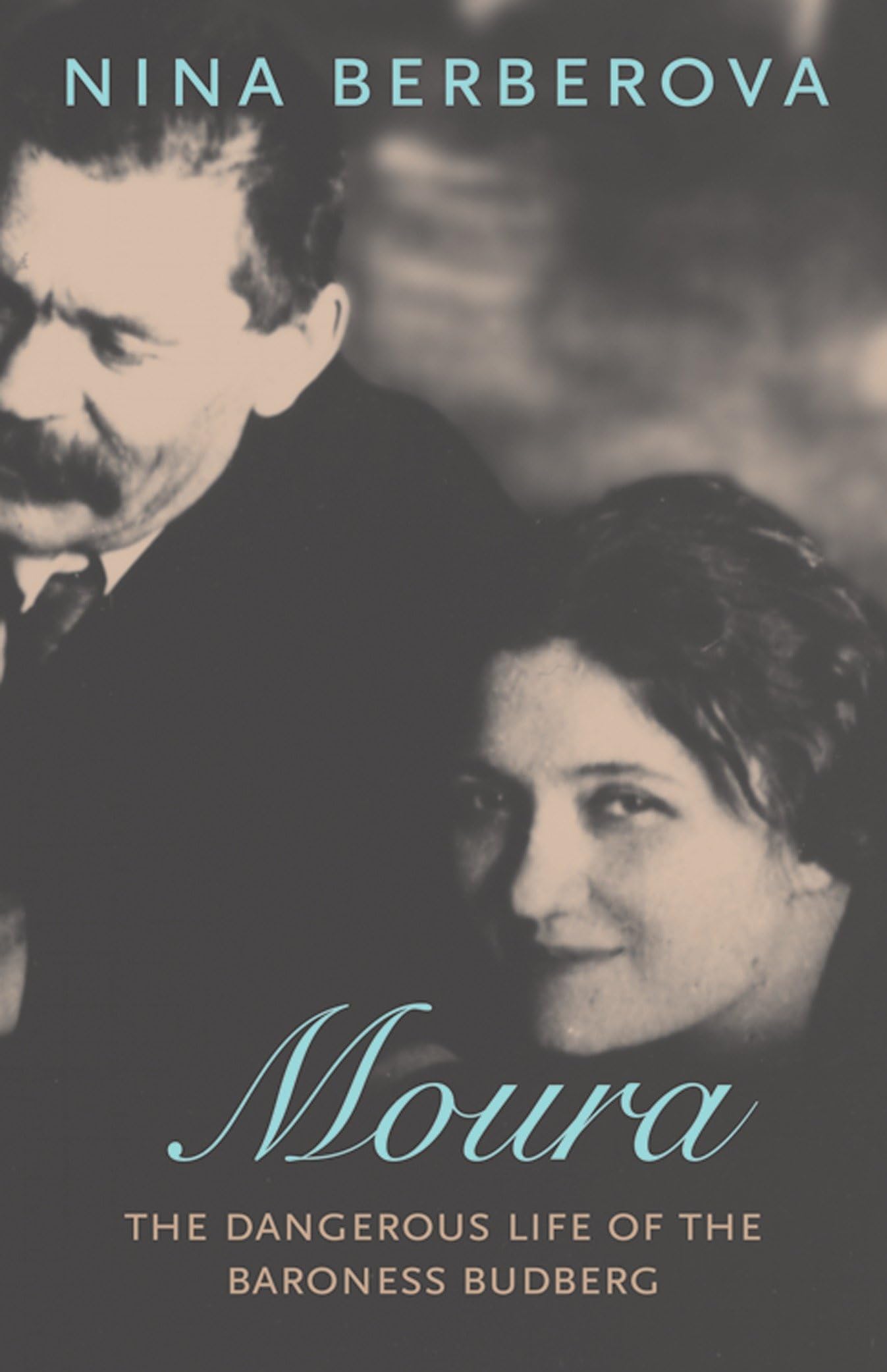



Baroness Maria Ignatievna Zakrevskaya Benckendorff Budberg hailed from the Russian aristocracy and lived in the lap of luxury—until the Bolshevik Revolution forced her to live by her wits. Thereafter her existence was a story of connivance and stratagem, a succession of unlikely twists and turns. Intimately involved in the mysterious Lockhart affair, a conspiracy which almost brought down the fledgling Soviet state, mistress to Maxim Gorky and then to H.G. Wells, Moura was a woman of enormous energy, intelligence, and charm whose deepest passion was undoubtedly the mythologization of her own life. Recognized as one of the great masters of Russian twentieth-century fiction, Nina Berberova here proves again that she is the unsurpassed chronicler of the lives of Soviet émigrés. In Moura Budberg, a woman who shrouded the facts of her life in fiction, Berberova finds the ideal material from which to craft a triumph of literary portraiture, a book as engaging and as full of life and incident as any one of her celebrated novels. Berberova's Tattered Cloak (1991) is a cherished work of Russian emigre literature, as is her scintillating autobiography, The Italics Are Mine (1992). Her own favorite book was this dramatic, richly descriptive, and historically illuminating biography of a fellow Russian refugee and a woman for all seasons, Moura Budberg, a work just now published in English. Berberova (1901-93) met the smart, tough, and resourceful Moura, a slender woman with a "feline smile," when they were both part of the celebrated writer Maxim Gorky's unconventional household during the turbulent 1920s, and Berberova never forgot the highly influential yet persistently enigmatic baroness. Ultimately, Moura--multilingual, alluring, and invincible--was involved not only with Gorky but also with the daring diplomat Robert Bruce Lockhart (his story alone is worth a book) and H. G. Wells. Given the volatile times and Moura's masterful practice of the art of survival, Berberova takes on a complex and compelling tale of political upheaval, espionage, sexual passion, and all the suffering wrought by war, poverty, oppression, and exile, and tells it brilliantly with empathy and panache. Donna Seaman Copyright © American Library Association. All rights reserved "Nina Berberova, canny witness and survivor, tells a story that offers the satisfactions of history and the intimacy and strangeness of her extraordinary fiction. She brings to life not only the unknowable Baroness Budberg—probable spy, sometime translator and film scenarist—but her unlikely trio of lovers—the British agent Bruce Lockhart, Maxim Gorky and H.G. Wells." — Honor Moore “In this fascinating late work by a writer of genius, the encounter of biographer and subject—the Baroness, lover of Wells as well as Gorky, suspected spy and double agent—is among the most mysterious and vital in twentieth-century literature. Nina Berberova was a gourmand of the ‘juiciness’ of secrets, the tingle of lies and silence. She claims to have left herself out of her portrait of Moura, whom she knew and whom she admired for her refusal to be a victim. But the book is permeated with what feels to the reader like an enduring power-struggle. Is this an indictment, or a love-song? Nina, in seizing Moura’s life-story, emerges as the victor.” —Kennedy Fraser, author of Ornament and Silence “Nina Berberova, canny witness and survivor, tells a story that offers the satisfactions of history and the intimacy and strangeness of her extraordinary fiction. She brings to life not only the unknowable Baroness Budberg—probable spy, sometime translator and film scenarist—but her unlikely trio of lovers—the British agent Bruce Lockhart, Maxim Gorky and H.G. Wells.” —Honor Moore, author of The White Blackbird “Although Moura’s life provides the thread of this biography, Berberova enriches the story with pen portraits of revolutionaries, spies, international financiers and what seem like half the characters from an Eric Ambler thriller.” — Michael Dirda, The Washington Post Book World “Moura is revealed as a true femme fatale, capable not only of enchanting men but of luring them into turbulent, even dangerous waters. Berberova can sometimes bring herself to admire Moura’s courage and sangfroid; she can even acknowledge her undoubted charm. But she produces a chilling portrait of a woman who scrupled at very little in order to achieve her goal, which was basically her survival in circumstances as favorable as possible. Moura certainly kept her head when all about her were losing theirs, but once you have read Nina Berberova’s pungent portrait of her, you cannot help thinking at least a little bit about those people who did not succeed in keeping theirs. And this is not the least of Berberova’s accomplishments in her admirably humane book.” — Martin Rubin, Washington Times “Berberova’s [ ] own favorite book was this dramatic, richly descriptive, and historically illuminating