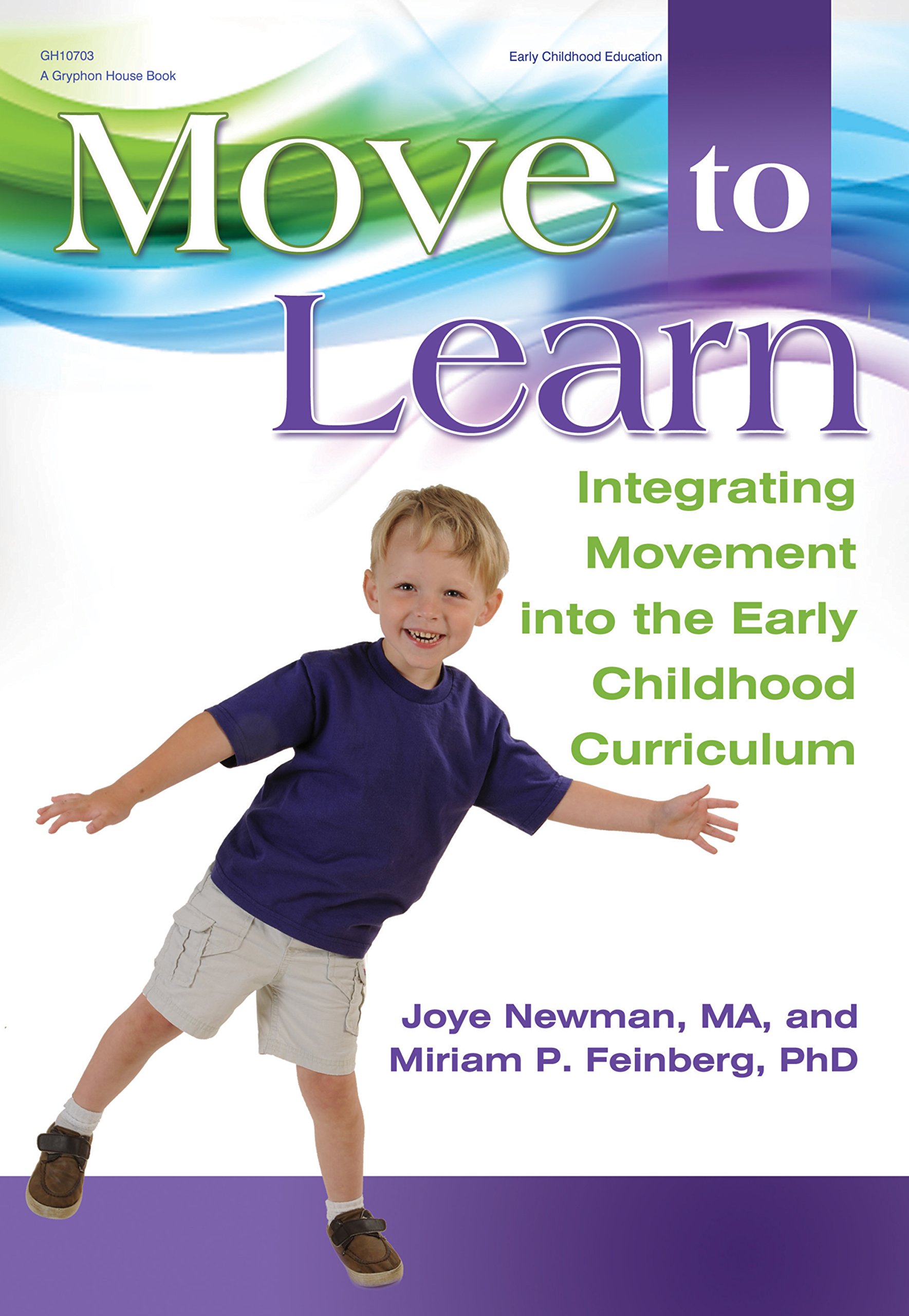
Move to Learn: Integrating Movement into the Early Childhood Classroom
$14.95
by Joye Newman



Winner of the Creative Child Awards' Preferred Choice Award, Tillywig Toy Awards' Brain Child Award, and Academic's Choice Smart Book Award. When we imagine happy young children, we picture exuberant and unbridled movement. Not only is movement natural, it is also necessary for optimal physical, cognitive, emotional, and social development. Moving children are developing children. With Move to Learn , educators can easily turn their classrooms into an environment that encourages movement activities rich in sensory, perceptual, and visual-motor experiences. Through simple strategies and activities, Move to Learn seamlessly integrates fine and gross motor-skill development across the early childhood curriculum. With most activities listed in order of difficulty, choosing the right one is easy! Regardless of the number of children, the physical classroom size, or the quality or quantity of equipment available, the ideas in Move to Learn are flexible enough to get every classroom moving. To children, movement is not only natural, it's essential. It is a huge part of how they take in the world around them as well as their earliest form of communication and self-expression. It is how they learn. This book provides educators with a variety of classroom and outdoor activities that integrate fine and gross motor-skill development across the early childhood curriculum (language and literacy, math, science, social studies, creative representations, and social skills). Throughout, cognitive and motor activities are presented as one, a unified approach that engages kids deeply. That extraordinary level of absorption is one of the reasons children take in information more fully and freely where movement is involved. The carefully conceived activities feel strikingly rich and spontaneous in their execution and are designed work for any classroom, regardless of physical space or number of children. --Tillywig Toy Awards, 2015 This book features ways to add movement into early childhood curriculum. Pre-k children do better with movement and exploration included with day to day learning. They can't sit and focus for long periods of time like older children. The activities are easy to implement and add interactivity and fun in the classroom. --Academics Choice Award, 2015 The activities are easy to follow. This is my second year assisting with pre-k in our local school district. We did Let's Go Fishing in the classroom. The kids loved that one. --Academics Choice Award, 2015 When we imagine happy young children, we picture exuberant and unbridled movement. Not only is movement natural, it is also necessary for optimal physical, cognitive, emotional, and social development. Moving children are developing children. With Move to Learn , educators can easily turn their classrooms into an environment that encourages movement activities rich in sensory, perceptual, and visual-motor experiences. Through simple strategies and activities, Move to Learn seamlessly integrates fine and gross motor-skill development across the early childhood curriculum. With most activities listed in order of difficulty, choosing the right one is easy! Regardless of the number of children, the physical classroom size, or the quality or quantity of equipment available, the ideas in Move to Learn are flexible enough to get every classroom moving. When we imagine happy young children, we picture exuberant and unbridled movement. Not only is movement natural, it is also necessary for optimal physical, cognitive, emotional, and social development. Moving children are developing children. With Move to Learn , educators can easily turn their classrooms into an environment that encourages movement activities rich in sensory, perceptual, and visual-motor experiences. Through simple strategies and activities, Move to Learn seamlessly integrates fine and gross motor-skill development across the early childhood curriculum. With most activities listed in order of difficulty, choosing the right one is easy! Regardless of the number of children, the physical classroom size, or the quality or quantity of equipment available, the ideas in Move to Learn are flexible enough to get every classroom moving. Joye Newman is a perceptual motor therapist and the director of Kids Moving Company, a popular creative movement company in Bethesda, Maryland. In her spare time, she enjoys Israeli folk dancing, reading, and knitting (but not all at once). Miriam P. Feinberg is a teacher trainer, curriculum writer, and parent educator. She lives in Silver Spring, Maryland, with her husband and thoroughly enjoys her adult children and six fabulous grandchildren.