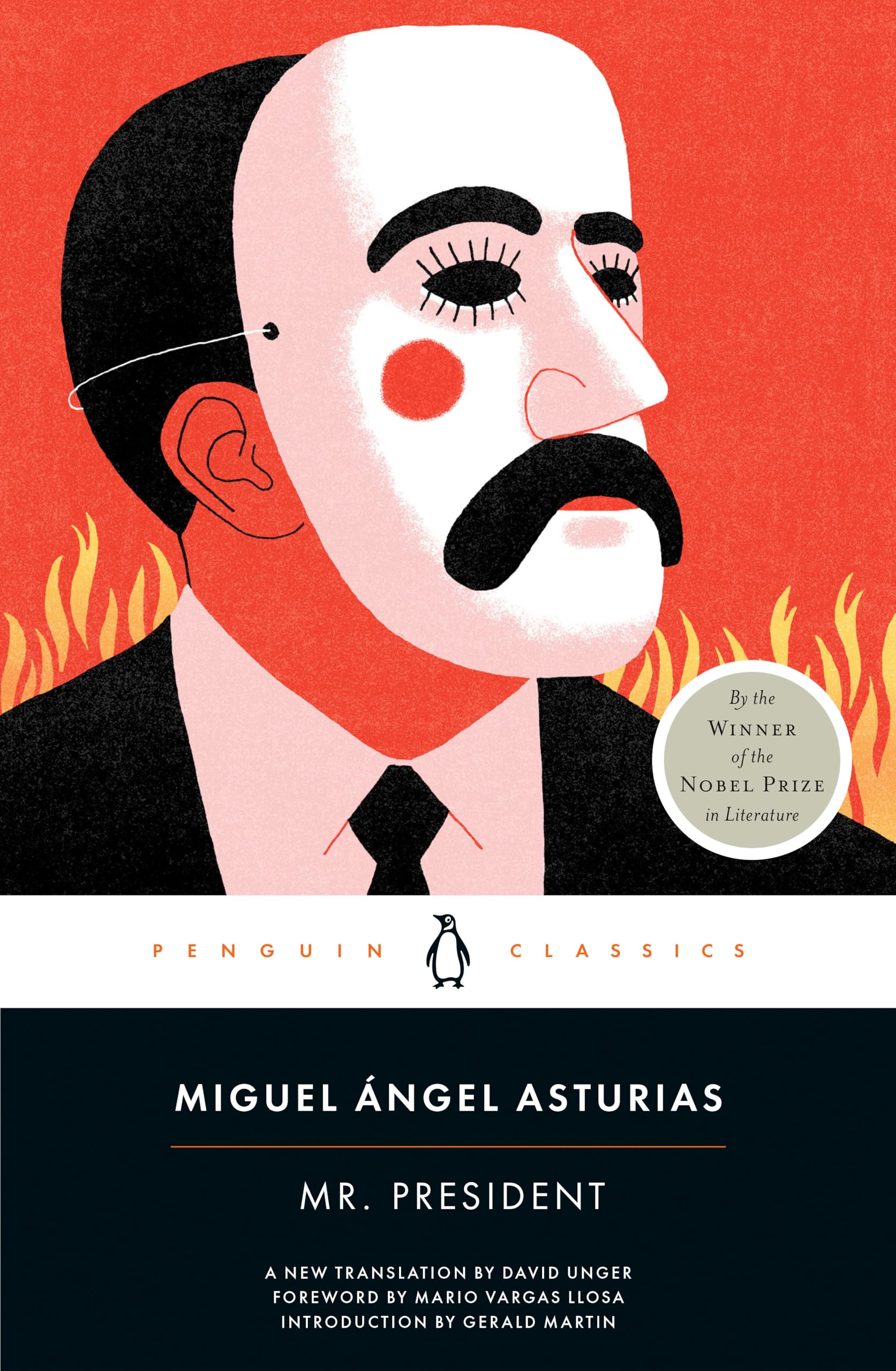



“[A] brilliant translation . . . Electrifying vividness animates every page.” ―Claire Messud, Harper’s Magazine “A formidable new English translation.” ― The New Yorker “[A] masterful translation.” ― The Washington Post Nobel Prize–winning Guatemalan author Miguel Ángel Asturias’s masterpiece—the original Latin American dictator novel and pioneering work of magical realism—in its first new English translation in more than half a century, featuring a foreword by Nobel laureate Mario Vargas Llosa Also available from Penguin Classics: Miguel Ángel Asturias’s visionary epic of ecological devastation, capitalist exploitation, and Indigenous wisdom, Men of Maize In an unnamed country, an egomaniacal dictator schemes to dispose of a political adversary and maintain his grip on power. As tyranny takes hold, everyone is forced to choose between compromise and death. Inspired by life under the regime of President Manuel Estrada Cabrera of Guatemala, where it was banned for many years, and infused with exuberant lyricism, Mayan symbolism, and Guatemalan vernacular, Nobel Prize winner Miguel Ángel Asturias’s magnum opus is at once a surrealist masterpiece, a blade-sharp satire of totalitarianism, and a gripping portrait of psychological terror. For more than seventy-five years, Penguin has been the leading publisher of classic literature in the English-speaking world. With more than 2,000 titles, Penguin Classics represents a global bookshelf of the best works throughout history and across genres and disciplines. Readers trust the series to provide authoritative texts enhanced by introductions and notes by distinguished scholars and contemporary authors, as well as up-to-date translations by award-winning translators. “[A] brilliant translation . . . Shakespearean in scale . . . Electrifying vividness animates every page. . . . What makes Mr. President extraordinary is not simply its enduring subject, but also its operatic and inventive multiform style . . . equally cinematic and poetic. It is reminiscent of Kafka and Beckett in its surreal flights within the consciousnesses of the mad or dying, or within the narrative of myth. . . . The novelʼs vision is relentlessly dark . . . but its execution is exhilarating, daring, even wild. Asturiasʼs boldness is repeatedly arresting, and his descriptions unforgettable. . . . [An] extraordinary and darkly prescient satire of life under brutal dictatorship.” ― Claire Messud, Harper’s Magazine “[A] masterful translation . . . Reading Mr. President , it’s impossible not to think about the current, sad situation in Guatemala, where endemic corruption, lawlessness, savage drug traffickers, heartless human smugglers, and staggering economic inequality . . . have driven hundreds of thousands of Guatemalans to attempt risky illegal entry into the United States. . . . But Asturias knew how to moderate those horrors by, thankfully, releasing the tension with absurd or scathingly mocking scenes.” ― The Washington Post “A formidable new English translation [that] may return [Asturias] to the status that is his due. This time, the story speaks not only to Latin America’s cycles of tyranny but to a United States and a Europe confronting, for the first time since it was published, in 1946, a new wave of authoritarian leaders on the rise. . . . What makes Mr. President a ‘tour de force of great originality,’ as the Peruvian novelist Mario Vargas Llosa notes in a foreword to the new translation, is not its plot but its use of language, with invented words, songs, rhythms, and ‘astonishing metaphors.’ ” ― The New Yorker “One of the most important and influential works of modern Latin American literature, a kind of urtext for the celebrated generation of novelists that followed Asturias . . . Given its brilliance and influence, it continues to be a mystery why Mr. President remains less known in the English-speaking world than the many novels it inspired. . . . Even a cursory reading of David Unger’s new translation . . . establishes why it has had such an enormous impact. . . . Asturias . . . wrote especially beautiful descriptions of both rural landscapes and the sounds and smells of urban life. Unger reproduces these passages magnificently. . . . Set pieces . . . are so vivid that they almost seem to have come from a movie projector. . . . Thanks to Unger’s translation, the anglophone reader can finally be let in on the secret that Latin Americans . . . have always known: Mr. President is a canonical work, doomed to remain timely and topical until the conditions that generated it finally disappear.” — The New York Review of Books “Brings to life a nameless hell on earth where freedom is only possible through exile or death.” ― The New York Times Book Review “[With this] masterful, clear new translation . . . a new generation of North American readers will gain access to [Asturias’s] witty, influential, and wrongly maligned masterpiece. . . . The praise for Unge